
Responsible Gambling Support in the United States
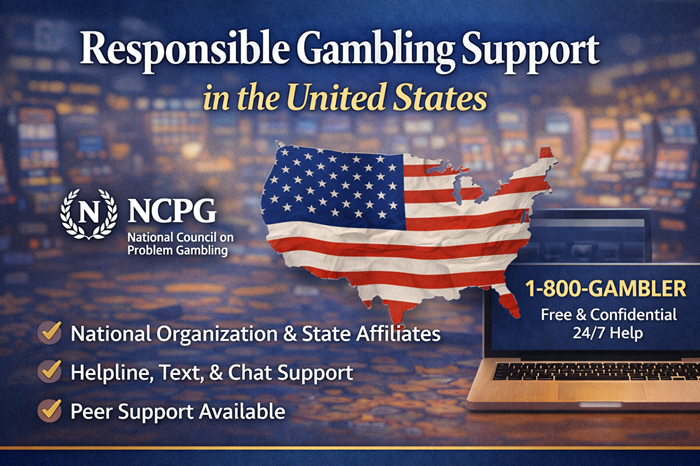
Responsible gambling support in the United States is provided through a combination of national organizations, state-level programs, and independent peer-support groups. These resources are designed to help individuals understand gambling risk, access confidential support, and reduce harm—without judgment or obligation.
This page explains how responsible gambling support works in the U.S. and where to find reliable help.
For a broader list of international resources, see our
👉 Responsible Gaming Resources page.
How Gambling Support Is Structured in the U.S.
Unlike some countries with centralized national systems, gambling support in the U.S. operates through a network model:
- A national coordinating organization
- State-specific affiliates and programs
- Independent peer-support groups
- Community and healthcare partners
This structure allows support to be adapted to local laws, resources, and populations.
National-Level Gambling Support
National Council on Problem Gambling (NCPG)
The National Council on Problem Gambling is the leading nonprofit organization addressing gambling-related harm in the United States.
Key role
- National education and prevention
- Research and advocacy
- Coordination of the National Problem Gambling Helpline
- Support for state affiliate programs
NCPG treats problem gambling as a public health issue, not a moral or legal failing.
The National Problem Gambling Helpline (1-800-GAMBLER)
Helpline: 1-800-GAMBLER (1-800-426-2537)
Availability: 24/7 | Phone, text, and chat
Coverage: All U.S. states and territories
The National Problem Gambling Helpline provides:
- Free, confidential support
- Trained, non-judgmental advisers
- Referrals to local and state-specific resources
Calls and messages are anonymous, and there is no requirement to commit to treatment.
State-Level Gambling Support Programs
Most U.S. states operate or fund gambling support programs, often in partnership with NCPG affiliates.
These programs may include:
- State-specific helplines
- Counseling and treatment referrals
- Public education campaigns
- Self-exclusion program administration
Availability and services vary by state, but helpline advisers can direct callers to appropriate local resources.
Peer Support and Community-Based Help
In addition to professional services, many people in the U.S. choose peer-based support options such as Gamblers Anonymous.
Peer support groups typically offer:
- Regular in-person or online meetings
- Shared experience and mutual support
- Anonymous participation
These groups operate independently and can complement professional or educational resources.
Prevention and Early Intervention
Responsible gambling support in the U.S. places strong emphasis on early awareness and prevention, including:
- Education about gambling risk and probability
- Recognition of early warning signs
- Tools such as deposit limits and self-exclusion
- Encouragement to seek help before harm escalates
Early engagement often reduces long-term financial and emotional impact.
When U.S. Gambling Support Resources May Help
U.S.-based resources may be appropriate if:
- Gambling feels stressful or difficult to control
- You are chasing losses or hiding gambling activity
- Gambling is affecting finances, work, or relationships
- You are concerned about someone else’s gambling
Support is available whether concerns are mild or severe.
Confidentiality and Independence
Most U.S. gambling support services:
- Do not share information with casinos
- Do not report callers to authorities
- Do not promote gambling activity
Their purpose is support, education, and harm reduction.
Editorial Transparency
This page is provided for informational and educational purposes only.
Support services, availability, and eligibility may vary by state.
For a broader overview of independent gambling support organizations and tools, visit our
👉 Responsible Gaming Resources page.