
Emotional Triggers and Gambling: Stress, Escapism, and Risk
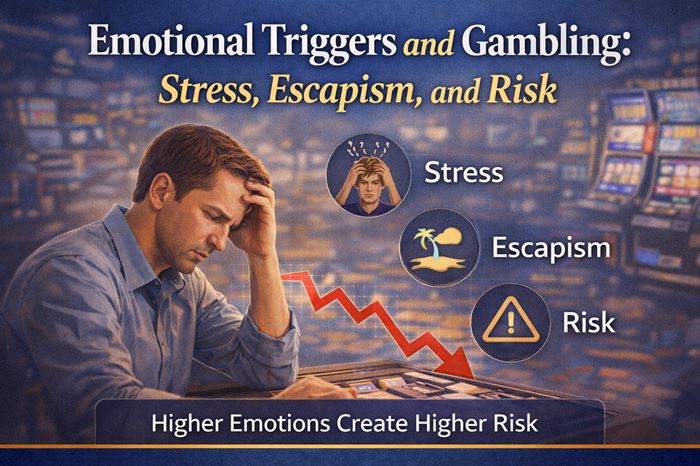
Gambling decisions are not driven by odds alone. Emotional states play a powerful role in how, when, and why people gamble—and they often influence risk far more than most players realize.
This article explains how emotional triggers such as stress, escapism, and mood regulation affect gambling behavior, why these triggers increase risk, and how awareness supports responsible decision-making.
For independent support resources and education, see our
👉 Responsible Gaming Resources page.
What Are Emotional Triggers?
An emotional trigger is a feeling or mental state that increases the urge to gamble, often without conscious planning.
Common gambling-related triggers include:
- Stress or anxiety
- Boredom or restlessness
- Loneliness or social isolation
- Frustration after a difficult day
- Desire to escape thoughts or emotions
Triggers do not mean someone intends to gamble excessively—they simply lower resistance to risk.
Why Stress Is a Powerful Gambling Trigger
Stress narrows focus and increases the desire for immediate relief. Gambling can appear appealing because it:
- Temporarily distracts attention
- Provides stimulation or excitement
- Creates a sense of control or momentum
Under stress, people are more likely to:
- Ignore preset limits
- Stay longer than planned
- Take larger or riskier bets
The relief is usually short-lived, but the financial and emotional consequences may last longer.
Gambling as Escapism
Escapism refers to using an activity to avoid uncomfortable thoughts or emotions.
Gambling environments are particularly effective for escapism because they:
- Are immersive and fast-paced
- Reduce awareness of time passing
- Replace internal thoughts with external stimuli
When gambling becomes a primary escape, risk increases because decisions are no longer about entertainment—they are about avoiding something else.
Mood Regulation and the Illusion of Control
Some people gamble to:
- Improve a low mood
- Regain confidence
- Feel productive or “active”
Wins can briefly reinforce this effect, creating the impression that gambling helps manage emotions. Losses, however, often:
- Intensify stress
- Increase urgency
- Trigger chasing behavior
This cycle can quietly shift gambling from a leisure activity into an emotional coping mechanism.
Why Emotional Gambling Increases Risk
Emotional states change how people evaluate outcomes.
When emotions are elevated:
- Short-term outcomes feel more important than long-term results
- Losses feel personal rather than statistical
- Stopping feels harder, even when play is no longer enjoyable
These conditions make impulsive decisions more likely, regardless of game knowledge or experience.
Emotional Triggers vs. Intentional Play
Intentional gambling usually involves:
- Planned budgets
- Time limits
- Awareness of risk
Emotionally triggered gambling often involves:
- Unplanned sessions
- Ignoring limits
- Playing longer than intended
- Gambling to change how one feels
The difference is not discipline, but emotional context.
Recognizing Emotional Triggers Early
Awareness is one of the most effective risk-reduction tools.
Questions that help identify emotional triggers include:
- “Am I gambling to feel better or to be entertained?”
- “Would I still play if I felt calm or content?”
- “Am I avoiding something by playing right now?”
Honest answers can help interrupt patterns before harm develops.
Reducing Risk When Emotions Are High
Helpful strategies include:
- Avoiding gambling during periods of high stress or fatigue
- Setting limits before emotional states shift
- Taking breaks when play feels urgent rather than enjoyable
- Using cooling-off or self-exclusion tools when needed
For some individuals, education alone is enough to restore balance. Others may benefit from confidential guidance or support.
Support and Perspective
Independent organizations provide education and confidential support for people who feel emotions are influencing their gambling.
Resources referenced on our
👉 Responsible Gaming Resources page offer non-judgmental assistance, whether concerns are mild or significant.
Reaching out early is often easier—and more effective—than waiting for stress to escalate.
Editorial Transparency
This page is provided for informational and educational purposes only.
It does not encourage gambling activity or provide financial advice.
Understanding emotional triggers is intended to support awareness, prevention, and responsible decision-making.