
Roulette Education Hub: How to Understand Roulette Without Myths or Systems
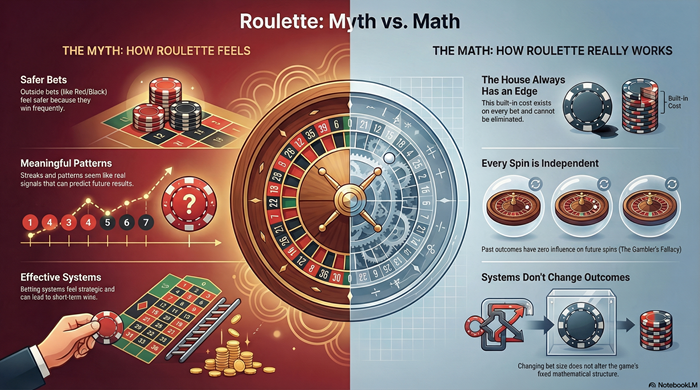
Roulette is often presented as simple, balanced, and intuitive. In reality, it is governed by fixed mathematical structures that never adapt to player behavior. This series exists to explain those structures clearly, without myths, strategies, or promises.
Everything here is probability-first and educational. There is no betting advice, no system promotion, and no attempt to make roulette appear beatable. The goal is understanding: how roulette works, why it feels misleading, and why common beliefs fail under scrutiny.
Start Here: The Complete Explanation
If you want a single, authoritative explanation of how roulette works from end to end, start with the pillar page below. It brings together all of the core ideas explored throughout this series.
How Roulette Really Works: Odds, House Edge, and Why Systems Fail
Foundations: How Roulette Is Built
These articles explain the basic structure of roulette and where the casino’s advantage comes from. They focus on wheel design, probabilities, and why every bet carries a built-in cost.
- What Is the House Edge in Roulette?
- European vs American Roulette: Odds, Zeros, and the Cost of an Extra Pocket
Why Roulette Feels Fair (But Isn’t)
Roulette feels balanced because outcomes are familiar and wins occur regularly. These articles explain why that feeling is deceptive and how perception diverges from probability.
- Why Outside Bets in Roulette Feel Safer (But Aren’t)
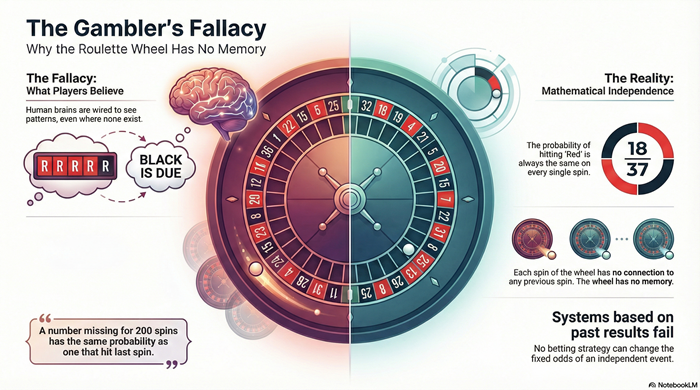
- The Gambler’s Fallacy and Roulette Independence Explained
Randomness, Variance, and Patterns
Short-term results in roulette often appear meaningful. These articles explain how randomness actually behaves and why streaks, swings, and apparent patterns are expected—and misleading.
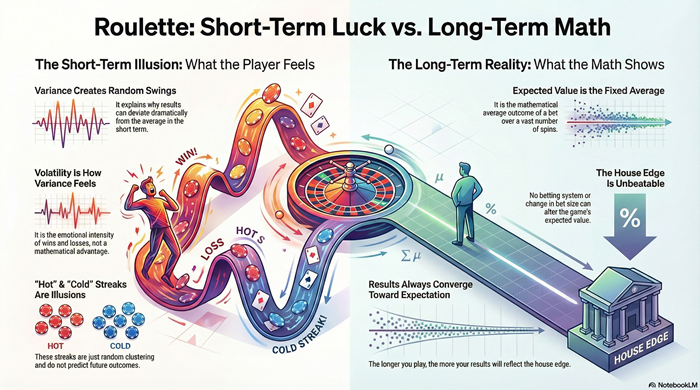
- Variance, Volatility, and Why Short-Term Roulette Results Mislead
- Why Roulette “Patterns” Appear (and Why They Aren’t Real)
Predictability and Reality
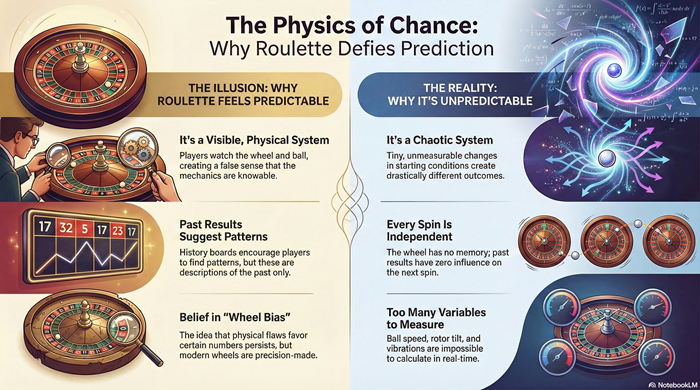
Because roulette is a physical game, it often feels close to predictable. This article explores the limits of prediction, the role of physics, and why real-world conditions prevent reliable forecasting.
Systems, Progressions, and Why They Fail
Betting systems persist because they sometimes win in the short term. These articles explain why changing bet size or structure does not change expectation—and why system success does not survive long-term play.
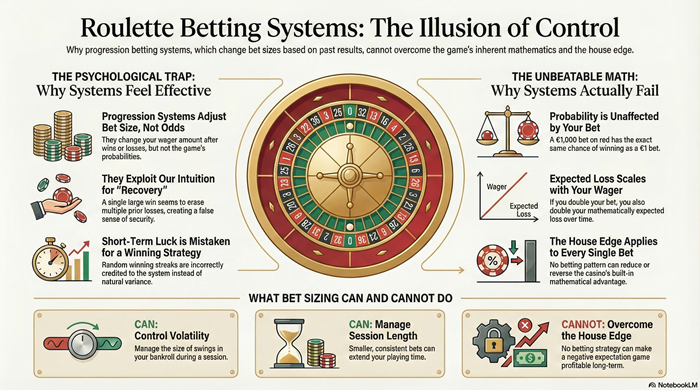
- Why Progression Systems and Bet Sizing Can’t Change Roulette Outcomes
- Do Roulette Systems Ever Work? Short-Term Success vs. Long-Term Reality
How to Use This Series
You can read these articles in order or jump to specific topics. Each one stands on its own, but the ideas reinforce each other. No single article provides an advantage; understanding comes from seeing how house edge, independence, variance, and perception fit together.
The pillar page ties everything into a complete explanation, while the individual articles explore each concept in isolation.
What This Series Does Not Do
To be explicit, this roulette series does not:
- Offer betting strategies or tips
- Promote roulette systems
- Claim winning methods exist
- Suggest ways to beat the game
Its purpose is explanation, not instruction.