
How Gambling Addiction Develops: Risk Factors, Warning Signs, and Support
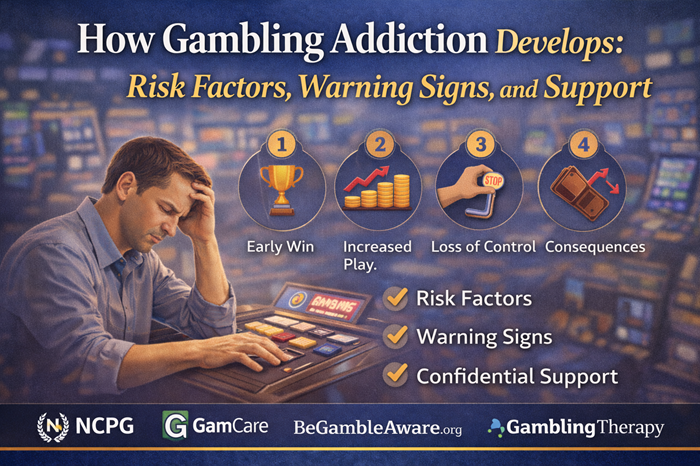
Gambling addiction does not begin suddenly. It typically develops gradually, shaped by a combination of risk factors, repeated behaviors, and changes in emotional response to gambling.
This article explains how gambling addiction can develop over time, the warning signs to watch for, and where to find confidential, independent support.
For trusted organizations and additional resources, see our
👉 Responsible Gaming Resources page.
What Is Gambling Addiction?
Gambling addiction—often referred to as problem gambling or gambling disorder—is a behavioral condition in which gambling becomes difficult to control despite negative consequences.
It is characterized less by how often someone gambles and more by:
- Loss of control
- Continued gambling despite harm
- Increasing emotional reliance on gambling
Gambling addiction is recognized by health organizations as a behavioral health issue, not a moral failing.
How Gambling Addiction Develops Over Time
Addiction usually follows a progressive pattern, though not everyone experiences every stage.
1️⃣ Early Exposure and Reinforcement
Initial gambling experiences may involve:
- Enjoyment or excitement
- Social participation
- Occasional wins that feel meaningful
Early wins can create strong emotional memories that influence future behavior.
2️⃣ Increased Frequency or Intensity
Over time, gambling may:
- Occur more frequently
- Involve higher stakes
- Become a regular response to boredom or stress
At this stage, gambling still feels voluntary, but patterns begin to form.
3️⃣ Emotional Dependence
Gambling may start to serve emotional purposes, such as:
- Stress relief
- Escapism
- Mood improvement
- Distraction from problems
This shift increases vulnerability to loss of control.
4️⃣ Loss of Control and Compulsion
As behavior escalates, individuals may:
- Gamble longer than intended
- Chase losses
- Ignore limits
- Feel unable to stop despite wanting to
At this stage, consequences often appear, but stopping feels difficult.
Common Risk Factors
Certain factors can increase susceptibility, though no single factor causes addiction.
Psychological Factors
- Chronic stress or anxiety
- Depression or mood disorders
- Impulsivity or risk-seeking traits
Environmental Factors
- Easy access to gambling
- High-speed or continuous-play games
- Gambling as a common social activity
Behavioral Factors
- Chasing losses
- Gambling during emotional distress
- Increasing stakes to maintain excitement
Risk factors increase vulnerability but do not guarantee addiction.
Warning Signs to Watch For
Early recognition can reduce harm. Common warning signs include:
- Gambling longer or more often than planned
- Difficulty stopping or taking breaks
- Hiding or minimizing gambling activity
- Chasing losses to “get back to even”
- Irritability or restlessness when not gambling
- Financial stress linked to gambling
Warning signs often appear before severe financial consequences.
Why It Can Be Hard to Stop
Gambling addiction is reinforced by:
- Intermittent rewards (wins arrive unpredictably)
- Emotional relief during play
- Cognitive distortions (beliefs about luck or control)
These mechanisms make gambling behavior persistent, even when outcomes are negative.
Addiction vs. Recreational Gambling
Recreational gambling typically includes:
- Clear time and spending limits
- Ability to stop comfortably
- Gambling for entertainment
Addictive gambling is marked by:
- Loss of control
- Emotional reliance
- Continued play despite harm
The difference lies in control and impact, not frequency alone.
Support and Treatment Options
Effective support focuses on education, behavioral change, and emotional support.
Options may include:
- Confidential helplines
- Counseling or therapy
- Peer support groups
- Self-exclusion and access controls
Independent organizations provide guidance without judgment or obligation.
Where to Find Help
Confidential support is available through independent organizations such as:
- National Council on Problem Gambling
- GamCare
- BeGambleAware
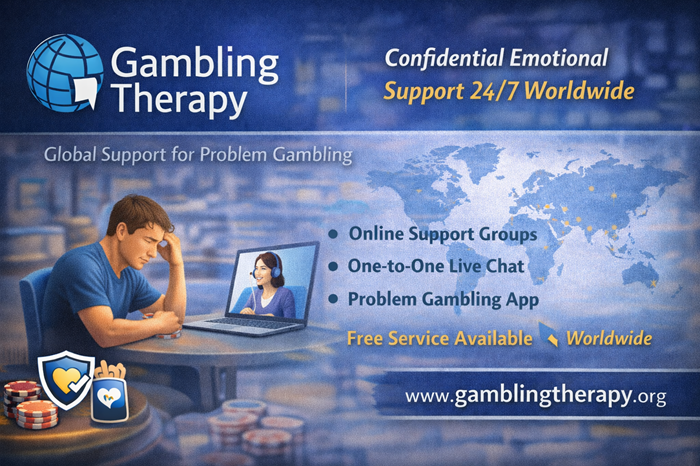
- Gambling Therapy
These organizations offer education, emotional support, and treatment pathways.
A full list is available on our
👉 Responsible Gaming Resources page.
Early Support Makes a Difference
Seeking help does not require a crisis. Many people contact support services simply to:
- Ask questions
- Understand patterns
- Get perspective
- Explore options
Early conversations are often the most effective form of prevention.
Editorial Transparency
This page is provided for informational and educational purposes only.
It does not diagnose conditions or provide medical advice.
The goal is to support awareness, prevention, and informed decision-making.