
UK Casino Bonuses and UKGC Regulation: What Players Are Actually Protected From
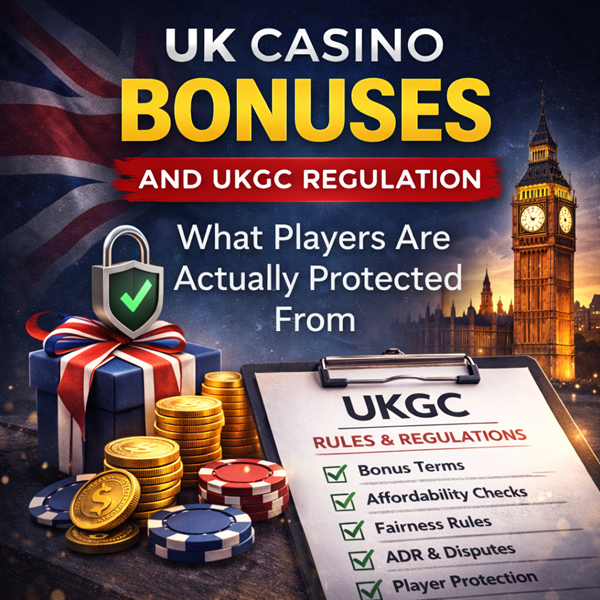
Most UK players know that the casinos they use are regulated. The UKGC logo sits in the footer, the licence number is there if you look for it, and the words “fully licensed and regulated” appear in the marketing with a confidence that implies someone is watching out for you. And to be fair, someone is. The UK Gambling Commission sets real standards, enforces them with real consequences, and has made the UK one of the most structured gambling markets in the world.
But there’s a gap between “regulated” and “protected in every way you might assume.” Understanding that gap — specifically which parts of the bonus system the UKGC governs, and which parts it leaves entirely to the operator — is one of the most practically useful things a UK player can learn. It changes how you read bonus terms, how you respond when something goes wrong, and whether you know what steps are actually available to you when a dispute arises.
This isn’t about being cynical about the regulator or the industry. It’s about having an accurate picture. And accurate pictures tend to serve you better than reassuring but vague ones.
What the UKGC Actually Does — and What It Doesn’t
The UKGC is a licensing and compliance regulator, not a consumer complaints body. It sets the rules that operators must follow, monitors whether they’re following them, and takes action when they aren’t. What it doesn’t do is review individual bonus offers before they go live, adjudicate specific disputes between players and casinos, or instruct a casino to pay out your winnings in a particular case.
When you contact the UKGC with a complaint about a specific casino, they’ll tell you clearly that their role is regulatory, not individual dispute resolution. Your complaint becomes intelligence — data they hold about that operator’s behaviour, which may inform future scrutiny. It won’t get your money back.
That doesn’t mean the UKGC is toothless. The enforcement record tells a different story. Operators have been fined tens of millions of pounds for consumer protection failures, unfair bonus practices, and inadequate responsible gambling systems. Those enforcement actions are public, searchable, and worth checking before you deposit at any casino you haven’t used before.
For individual disputes, the UK system has a separate mechanism: ADR — Alternative Dispute Resolution. Every UKGC-licensed casino must be a member of an approved ADR scheme, and ADR decisions are binding on the operator. That’s the route that actually resolves your specific problem. We’ll come back to it properly below.
The Licence Conditions That Actually Affect Bonus Terms
The UKGC publishes a document called the Licence Conditions and Codes of Practice — the LCCP — which sets out what licensed operators must do. Several provisions in it directly shape the bonus terms you see when you visit a UK casino.
One of the most important is the requirement around fairness and transparency. Key bonus information — the wagering requirement, the time limit, any maximum win cap — must be prominently disclosed before you opt in, not buried in a terms and conditions document three clicks away. This is why UK casinos now show summary boxes before you claim. It’s not good practice they chose voluntarily; it’s a regulatory expectation.
Another significant requirement concerns your deposit. Accepting a bonus cannot create conditions on your ability to withdraw your own money. If you deposit £100, receive a £100 bonus, and then decide the wagering requirement isn’t achievable, you should be able to withdraw your £100 deposit — even if you lose the bonus in doing so. Before 2018 this wasn’t always how it worked. UKGC guidance changed it.
The Consumer Rights Act 2015 adds a layer that operates independently of gambling regulation. Bonus terms are consumer contracts, and terms that create a significant imbalance between your rights and the casino’s — and weren’t made sufficiently prominent — can be challenged as unfair. Ambiguous terms are interpreted in your favour under UK law. That’s not a theoretical protection; it’s one that ADR adjudicators apply in real disputes.
Affordability Checks: Why They Happen and What to Do When One Hits Mid-Bonus
If you’ve been playing at a UK casino for a while and suddenly find your account restricted, there’s a decent chance an affordability check has been triggered. These checks exist because the UKGC requires operators to identify players whose spending patterns suggest the gambling may be causing financial harm — and to act on those signals rather than simply accepting the revenue.
From a player’s perspective, they can feel invasive and poorly timed. From a regulatory perspective, they reflect a genuine and well-evidenced policy concern. Both things are true.
What makes affordability checks particularly relevant to bonus players is timing. If a check is triggered while you have an active bonus with wagering requirements in progress, the restriction can prevent you from completing those requirements — and the bonus expiry timer may keep running in the background. Here’s what to do if that happens:
- Contact support immediately, explain that an affordability check has been triggered while a bonus is active, and ask specifically whether the expiry timer can be paused pending the review.
- Get that conversation in writing — a chat transcript or an email confirmation. Don’t rely on a verbal assurance from a support agent.
- If the casino refuses to pause the timer and the bonus expires as a direct result of their own review process, document everything and treat it as a dispute.
The UKGC’s expectation is that affordability checks are handled fairly. A bonus being forfeited because the casino triggered a review is not a fair outcome. It may not happen to most players, but knowing how to respond when it does is the difference between accepting a bad situation and challenging it properly.
What “Fair and Transparent” Actually Means in Practice
These words appear often in gambling regulation, and they mean more than they might sound like. Transparency in the regulatory sense means players must be able to understand the key conditions of a bonus before they commit. The UKGC has been progressively specific about what this requires — not just that terms exist somewhere, but that they’re visible at the point of claiming in a format a reasonable person would actually read.
Fairness draws on the Consumer Rights Act. A term that gives the casino unreviewable discretion — the right to void your bonus for broadly defined “irregular play,” for instance — sits in uncomfortable territory under consumer protection law, especially when that discretion is exercised selectively after a large win. It doesn’t mean every such term is automatically unenforceable, but it does mean it can be challenged.
The maximum bonus bet rule is where many disputes originate. Most UK casino bonuses cap your stake at £5 per spin during bonus play. Exceed it even once — even by accident, even on a single spin — and the operator may void the bonus and any associated winnings. The rule is legal and permitted. But:
- It must be clearly disclosed before you opt in — not just buried in the full terms document.
- It must be applied consistently — a casino cannot ignore it when you lose and invoke it only when you win.
- If you believe the rule wasn’t adequately disclosed or was applied selectively, that’s the basis for a formal dispute.
ADR adjudicators have found in players’ favour on exactly these grounds. The rule existing doesn’t automatically mean the casino is entitled to apply it in every circumstance.
How the ADR Dispute Process Actually Works
This is the mechanism that most UK players don’t use — because most players don’t know it exists or how it works. Every UKGC-licensed casino must be a member of an approved ADR scheme. If you have a dispute that the casino won’t resolve to your satisfaction, you can take it to their ADR provider. The adjudicator reviews both sides, applies the law and the relevant terms, and makes a determination. That determination is binding on the casino.
The process has a mandatory first step: you must go through the casino’s own complaints process before escalating. Give the casino a formal written complaint. If they don’t respond within eight weeks, or if their response doesn’t satisfy you, escalate to ADR. The casino’s ADR provider should be listed in their terms and conditions.
To build the strongest possible ADR complaint, documentation is everything. Before you’re ever in a dispute, develop the habit of:
- Screenshotting bonus terms at the moment you opt in — the summary box and the full terms document.
- Saving all chat transcripts and emails with support throughout any bonus period.
- Noting the exact dates and times of key events — when you claimed the bonus, when the restriction appeared, when you made contact.
An ADR submission that says “I believe the casino treated me unfairly” is much less effective than one that says “On this date, I claimed a bonus. The key terms displayed at opt-in did not include the maximum bet restriction that the casino is now citing. Here is a screenshot of those terms. Here is the chat transcript from support.” The more specific and evidenced your complaint, the stronger your position.
ADR can award practical remedies — withheld winnings, account reinstatement, specific corrections. It cannot award compensation for distress or consequential losses. But for the specific financial wrong at the centre of most bonus disputes, it’s the most direct path to resolution.
UKGC-Licensed vs. Offshore Casinos: What the Difference Actually Means
Some players actively seek out offshore casinos — ones without a UKGC licence — because the bonus terms tend to be more generous. Lower wagering requirements, higher match percentages, more eligible games. The appeal is real. But it comes with a specific set of tradeoffs that are worth understanding clearly before you decide the offshore bonus is worth it.
When you play at a UKGC-licensed casino, you have access to the ADR process, the protection of the Consumer Rights Act, and the general accountability that comes from operating under a licence that can be suspended or revoked. When you play at an unlicensed offshore casino, you have whatever protections their own terms provide, interpreted by whatever dispute resolution mechanism they’ve chosen — and the practical enforceability of any outcome is limited.
Verifying whether a casino holds a current UKGC licence takes thirty seconds. The UKGC maintains a public register on their website. You search by operator name, and the register either shows a current licence or it doesn’t. If a casino claims to be UKGC-licensed and doesn’t appear in the register, that’s a serious red flag.
If you’re unsure what to look for in a bonus offer before committing to any operator, licensed or otherwise, this overview of what to check before claiming a casino bonus covers the full evaluation process in one place.
Self-Exclusion, Gamstop, and the Offshore Gap
Gamstop is the national self-exclusion scheme for UK online gambling. Register with Gamstop, and every UKGC-licensed operator is required to block you from opening or using an account — for the full duration of your exclusion period. It’s free, it works across the entire licensed market, and it’s one of the most genuinely useful responsible gambling tools available to UK players.
The limitation — and it matters — is that Gamstop only covers UKGC-licensed operators. An offshore casino that doesn’t hold a UK licence is completely outside its scope. This creates what regulators call the offshore gap: a player who has self-excluded via Gamstop can still access offshore casinos during their exclusion period. The policy response has been partial — payment blocking, advertising restrictions — but not complete.
If you self-exclude and are then contacted by a casino with a bonus offer, that’s a serious breach. UKGC-licensed operators are required to cease all marketing to self-excluded players. Report it to the UKGC and to the casino. When you self-exclude, your real money deposit balance must be returned to you. Bonus balances will be forfeited — that’s consistent with the purpose of exclusion — but your deposited funds are yours and must be returned promptly.
Where the UK System Still Has Gaps
It would be dishonest to write about UK gambling regulation without acknowledging where it falls short. The framework is strong compared to most markets. It is not comprehensive.
There is no cap on wagering requirements for UK online casino bonuses. An operator can legally offer a 60x wagering requirement as long as it’s disclosed. A 60x requirement on a £100 bonus means wagering £6,000. On typical slots with a 4% house edge, the expected cost of that wagering is £240 — more than double the bonus amount. Disclosure makes it legal. It doesn’t make it a good deal.
Bonus expiry can cause players to lose winnings they genuinely generated during bonus play. If you accumulate winnings during a bonus period that are conditional on completing the wagering requirement, and the bonus expires before you complete it, those winnings go with it. Expiry terms must be disclosed — and they are — but losing conditional winnings to a timer is an outcome the current regulatory framework hasn’t chosen to prohibit.
Operator discretion over bonus abuse determinations remains wide. A casino that voids your bonus for alleged irregular play is making that determination itself. The ADR process provides a mechanism to challenge it, and adjudicators do sometimes find in the player’s favour — but the initial call is the operator’s. If you play within clearly stated rules, maintain records, and avoid patterns that could be characterised as exploitative, you’re in a stronger position if a challenge becomes necessary.
What the Gambling Act Review Means for Bonus Players
The UK government’s review of the 2005 Gambling Act produced a white paper in 2023 that set out a significant reform agenda. Several elements directly affect how bonuses will work in the coming years.
Online slot stake limits — proposed at between £2 and £15 per spin for most players — will reshape the economics of slot bonuses and therefore how wagering requirements are structured. Lower stake limits mean slower wagering progress, which means either longer expiry windows or lower wagering requirements to keep bonuses achievable.
The affordability check framework is being standardised. The current patchwork of different thresholds across different operators is being replaced with a more consistent system — lighter-touch automated checks at lower spending levels, more detailed review at higher ones. More players will encounter affordability checks than currently do, and the triggers will be more predictable.
The overall direction of UK gambling regulation is toward a more conservative but more trustworthy market. Bonuses will continue to get smaller relative to their historical values. The environment around those bonuses — the dispute mechanisms, the transparency requirements, the responsible gambling framework — will continue to improve. For players primarily motivated by bonus value, that’s a frustrating trajectory. For players primarily motivated by trust, it’s a positive one.
How to Read a UK Casino Bonus With Clear Eyes
After all of this, the most practical thing you can take away is a different relationship with the moment you’re about to claim a bonus. That moment — when the promotional content looks appealing and the claim button is right there — is exactly when the careful read matters most.
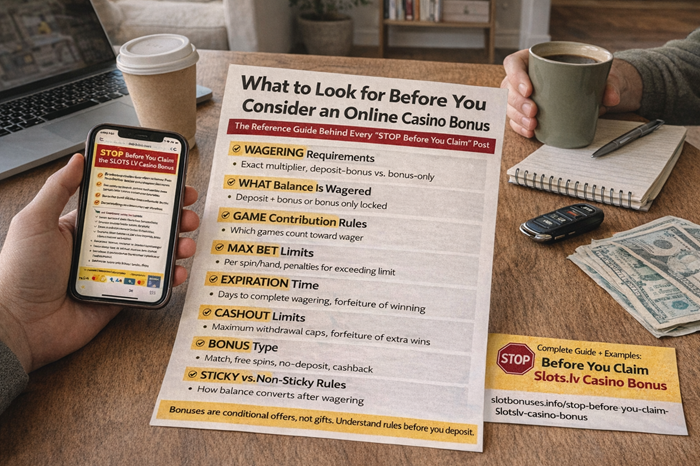
Before you claim any UK casino bonus, make sure you have clear answers to the following:
- What is the wagering requirement, and does it apply to the bonus only or to your deposit as well?
- What games can you use to wager, and what is the contribution rate for the specific game you plan to play?
- What is the maximum bet per spin during bonus play, and is it above your normal stake level?
- What is the time limit, and when does it start — from claiming, or from first play?
- Is there a maximum amount you can withdraw from bonus winnings?
- What happens to your deposit if you want to withdraw it before completing the wagering requirement?
If the terms aren’t clear enough to answer any of those questions definitively, that itself is information. A bonus whose terms you can’t fully understand before claiming is a bonus that’s more likely to produce a dispute than a rewarding session.
The UK regulatory framework gives you real tools — ADR, consumer protection law, the UKGC’s own standards. Using them starts with knowing what you agreed to when you clicked claim.