
Why Parlays Are So Dangerous
Parlays are one of the most popular bets in sports betting. They promise large payouts from small stakes and feel efficient, logical, and skill-based. Each individual selection often appears reasonable, and combining them feels like smart optimization rather than added risk.
Structurally, parlays are among the most damaging bets a casual bettor can make.
They do not simply increase risk. They compound disadvantage.
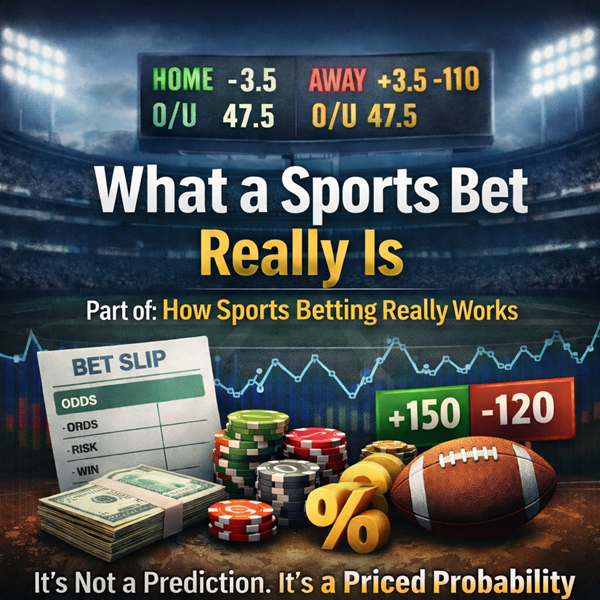
This article is part of a broader educational guide explaining how sports betting works at a structural level, including odds pricing, implied probability, expected value, variance, and why certain bets are inherently risky. For the full overview, see How Sports Betting Really Works: Odds, Expected Value, and Why Parlays Are So Dangerous.
Why Parlays Feel So Appealing
Parlays align perfectly with human intuition.
If several outcomes seem likely, combining them feels reasonable. If each leg has value on its own, stacking them feels efficient. The low cost of entry further reduces psychological resistance.
Several factors reinforce this appeal:
- Small stakes reduce the emotional cost of losing
- Large payouts create memorable wins
- Winning parlays feel earned rather than lucky
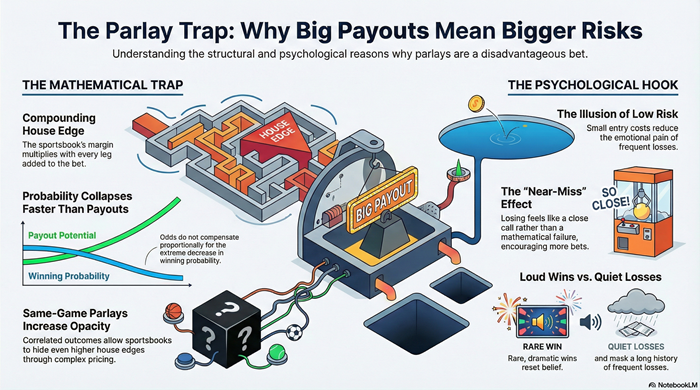
- Losing parlays feel close rather than wrong
Variance amplifies these effects. Long losing streaks feel tolerable. Occasional wins feel extraordinary.
None of this reflects value. It reflects psychology.
What Actually Happens When Bets Are Combined
Each individual bet in a parlay already includes a margin for the sportsbook. That margin does not disappear when bets are combined.
It multiplies.
When probabilities are multiplied, the sportsbook’s edge compounds faster than the payout grows. The expected value of the parlay deteriorates rapidly as legs are added.
Even when each selection appears fairly priced, the combined structure becomes increasingly unfavorable.
This is why parlays generate such consistent profit for sportsbooks despite producing occasional dramatic wins for bettors.
Why “High Risk, High Reward” Misses the Point
Parlays are often defended as high-risk, high-reward bets. That framing is incomplete.
The issue is not risk alone. It is negative expectation.
A risky bet can still be fairly priced. A parlay is not. The odds do not compensate proportionally for the collapse in probability.
The reward grows. The price worsens faster.
This distinction is easy to miss because payouts dominate attention while probability fades into the background.
Why Same-Game Parlays Don’t Fix the Problem
Same-game parlays feel more sophisticated. Outcomes appear related, which suggests efficiency rather than randomness.
Sportsbooks account for this.
When outcomes are correlated, pricing is adjusted. Correlation changes structure, not expectation. The house edge remains embedded and often increases due to complexity.
Same-game parlays replace simplicity with opacity. They do not restore value.
How Variance Keeps Parlays Alive
Parlays survive because variance supports them emotionally.
- Long losing streaks feel normal
- Near misses feel meaningful
- Occasional wins reset belief
These wins arrive rarely but loudly. Losses arrive quietly and frequently. Over time, the cost is spread thinly enough to avoid clarity.
This pattern makes parlays feel frustrating rather than mathematically flawed.
Why Parlays Are Heavily Promoted
Sportsbooks promote parlays aggressively because they are structurally reliable.
They increase handle, amplify margin, and concentrate disadvantage while maintaining bettor engagement. The occasional large payout functions as marketing rather than threat.
From a sportsbook perspective, parlays are efficient.
From a bettor perspective, they are costly.
Why Avoiding Parlays Changes Perspective
Understanding why parlays are dangerous reframes sports betting.
- Big payouts stop feeling generous
- Close losses stop feeling unlucky
- Complexity stops feeling clever
- Discipline stops meaning restriction
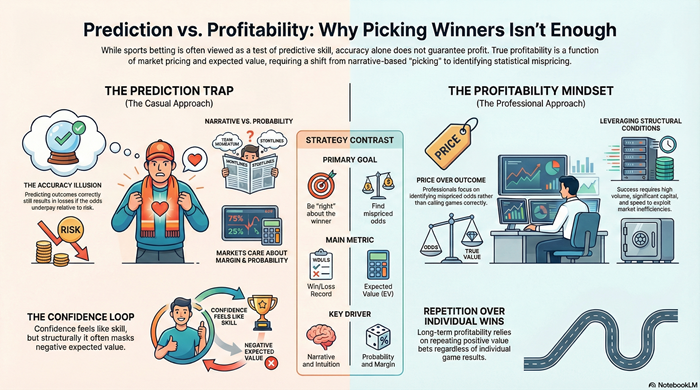
Parlays do not fail because bettors choose the wrong teams. They fail because of how probability and pricing interact.
Understanding this does not improve outcomes. It improves interpretation.
And interpretation is what prevents enthusiasm from becoming erosion.