
Why Your Video Poker Strategy Might Be Failing: The Truth Behind the Screen
Introduction
Video poker might look like just another flashy machine on the casino floor, but it is a completely different animal than a standard slot. It is a game built on a foundation of structured mathematics and fixed probabilities where your personal decisions actually change the outcome. Success isn’t about finding a “lucky” seat; it’s about understanding how your choices interact with the specific numbers printed on the screen.
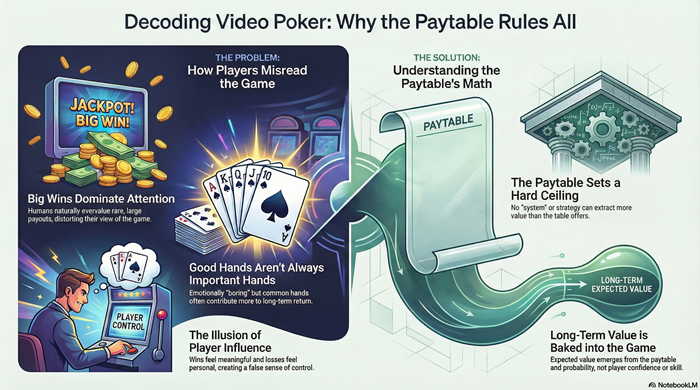
The Paytable is the Game, Not the Title
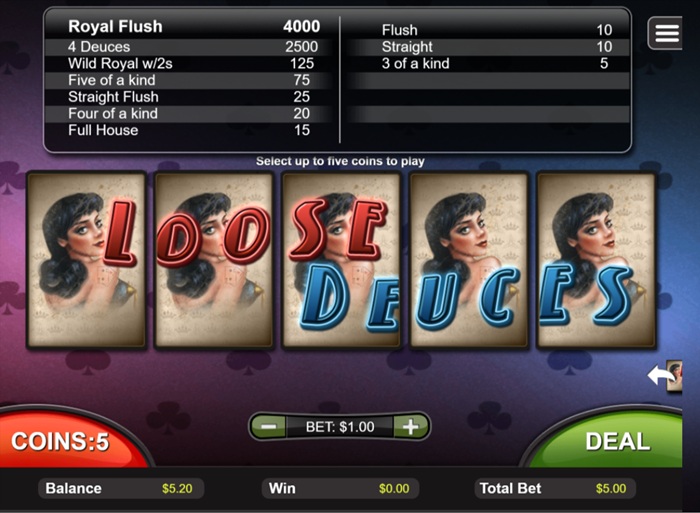
Look, I see people make the same mistake every night: they think the name on the machine is all that matters. You’ll see rows of games labeled “Jacks or Better,” but those titles are just a label for the hand rankings. The real math—the stuff that determines if you’ll actually have a chance to walk away a winner—is hidden in the paytable. You could be sitting at a machine that looks identical to the one next to it, yet it might be programmed to pay back significantly less because of one or two tiny changes to the payout schedule.
For example, a “Full-Pay” Jacks or Better machine pays 9 credits for a full house and 6 for a flush. This setup offers a solid 99.5% long-term return if you play your cards right. But if you sit at an “8/5” version, that return drops to about 97.3%. That’s a 2.2% gap. It might not feel like much on one hand, but over a long session, it’s the difference between keeping your bankroll alive and watching it disappear.
- A “9/6” Jacks or Better machine—often called Full-Pay—offers a significantly higher return than an “8/5” version.
- Casinos can legally offer different paytables for the exact same game title.
- The long-term math of the game is defined entirely by these printed payout numbers, not the flashy signs above the machine.
Why Your Choices Actually Matter
Unlike a slot machine where the result is set the moment you pull the handle, video poker puts you in the driver’s seat. We call it a “thinking player’s game” for a reason. The software deals five cards from a virtual deck, but the real game starts when you decide what to keep. Your choices change the deck. You’re literally reshuffling the odds with every “hold” button you press.
This is why “optimal strategy” is your best friend. It isn’t about some secret trick to win the next hand; it’s about making the decision that gives you the highest average return over thousands of hands. Casual play—just holding what “feels” right—can drop your return by two percent or more compared to perfect play. You aren’t just guessing; you are managing a mathematical system to get the best value for your money.
The Illusion of Hot Streaks and Near Misses
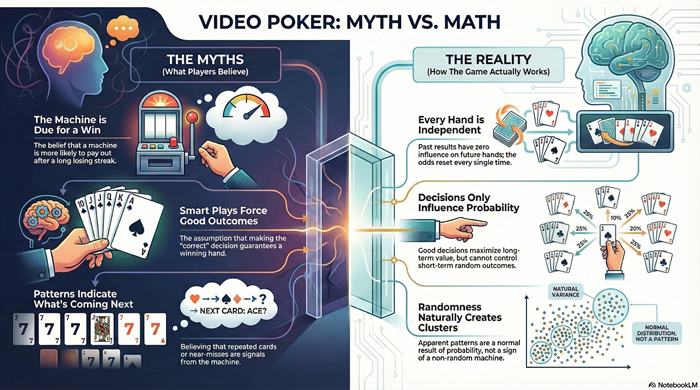
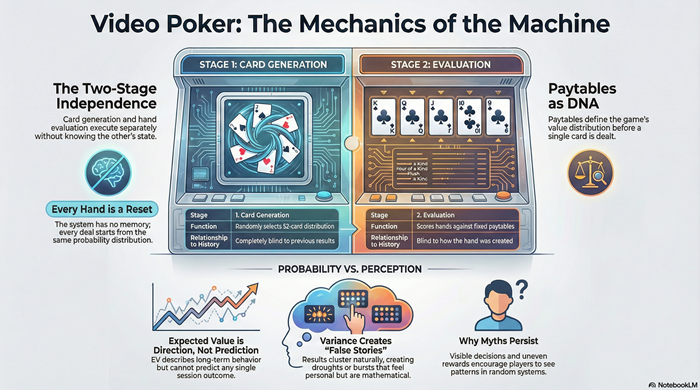
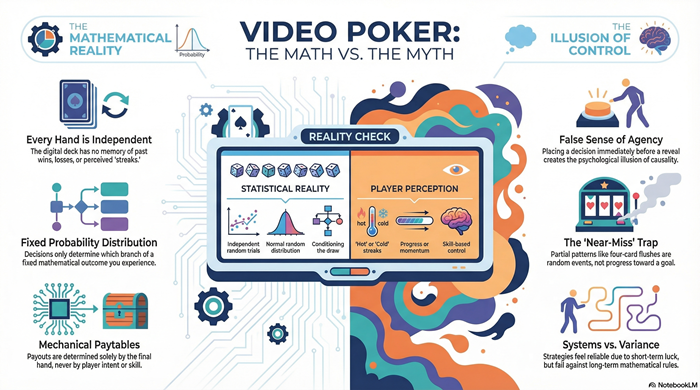
It’s easy to get caught up in the feeling that a machine is “warming up” or that a big win is “due.” I’ve watched plenty of players get four cards to a Royal Flush, miss it, and then stay glued to the seat because they think the machine is teasing them. Here’s the straight talk: the machine doesn’t have feelings, and it definitely doesn’t have a memory. Every single hand is an independent event controlled by a Random Number Generator (RNG) that doesn’t care if you just lost ten times in a row.
A machine doesn’t “cycle” through hot and cold phases. Those near-misses aren’t signs of progress; they are just random outcomes in a game of chance. The odds of hitting a Royal Flush are about 1 in 40,000, and those odds apply to every single hand you play. It doesn’t matter what happened five minutes ago. The RNG produces a fresh shuffle for every deal, so your chances never “build up” over time.
The “Bonus Game” and High Denomination Trap
Don’t let flashy titles like “Double Bonus” or “Triple Bonus” trick you. These games aren’t a gift from the casino. To pay for those rare, giant four-of-a-kind prizes, the house often slashes the payouts on the hands you hit most often. For instance, many bonus games drop the payout for two-pair from 2 credits down to 1. Since you hit two-pair roughly once every eight hands, that small drop is a massive hit to your bankroll. The “Bonus” isn’t free money; it’s a trade-off that makes the swings much more painful.
The same logic applies to moving from quarters to dollars. Just because you’re betting more doesn’t mean the odds have improved. Unless the paytable itself is better on the higher-limit machine, you’re just increasing the size of your losses. A bad paytable is a bad paytable, whether you’re playing for pennies or hundred-dollar bills.
- Frequent hands like two-pair occur once every eight hands and impact your bankroll far more than rare four-of-a-kind bonuses.
- Higher bets increase the size of your swings but do not change the underlying probability of the cards being dealt.
- Always check the full paytable rather than being swayed by the word “Bonus” or the denomination of the machine.
Added Information
An ebook called “Top 10 Myths About Video Poker: Paytables, Strategy, and What Most Players Miss” with more details on this subject is also available for FREE on Google Books and AudioBook.