
Know When to Quit Playing The Slot
Play a Slot Machine Session?
There’s No Magic Number — But There Is a Right Framework
Ask ten different players how long a slot session should last and you’ll get ten different answers. An hour. Until the money runs out. Until I’m up 50%. Until it stops being fun.
All of those are valid in their own way. But none of them are a plan. And playing without a plan is the single biggest reason sessions end badly — not because slots are cruel, but because without a structure, most people keep going longer than they intended, spend more than they meant to, and finish feeling worse than they should.
The good news is that a sensible framework takes about two minutes to set up. You don’t need a spreadsheet. You just need to answer three questions before you start: What’s my budget? How long do I want to play? What’s the game I’m sitting down at?
Matching Your Bankroll to Realistic Playtime
This is where most players go wrong. They bring £50 to a game with a £2 minimum spin, assume that’ll last a while, and then wonder why they’re cashing out after twenty minutes.
The basic maths is simple. Take your session budget, divide it by your bet size, and you get a rough spin count. At 500 spins per hour — which is a fairly typical pace for online slots — you can estimate roughly how long that budget will last at the game’s theoretical cost per spin.
| Session Budget | Bet Size | Spin Count | Estimated Playtime (500 spins/hr) |
|---|---|---|---|
| £50 | £0.20 | 250 spins | ~30 minutes |
| £50 | £0.50 | 100 spins | ~12 minutes |
| £100 | £0.50 | 200 spins | ~24 minutes |
| £100 | £0.20 | 500 spins | ~1 hour |
| £200 | £0.50 | 400 spins | ~48 minutes |
These figures assume you lose every spin, which won’t happen — wins will come in along the way and extend things. But this worst-case view is useful for grounding your expectations. If you want a two-hour session, your bet size needs to reflect that. Playing at too high a stake for your budget is the most common reason sessions end sooner and more painfully than they needed to.
Your session budget should ideally cover at least 200 spins at your chosen stake. That’s enough runway to actually experience the game’s variance — including both the quiet spells and the better moments.
How Volatility Affects Session Length Planning
Your bankroll isn’t the only variable. The game you’re playing matters too. A high volatility slot can go a long time without a significant win. If your session budget is tight, that quiet stretch can wipe you out before the game has had a chance to do anything interesting.
Low and medium volatility games are generally better suited to shorter bankrolls and fixed session budgets. They pay more regularly — the wins are smaller, but they keep you in the game. High volatility games are better approached with a bigger budget and genuine patience for the dry spells. Going into a high variance game with 50 spins worth of budget is a setup for frustration.
- Low volatility — suits smaller budgets and time-limited sessions. Steadier rhythm, less dramatic swings.
- Medium volatility — works well for most session structures. A reasonable middle ground.
- High volatility — needs a bigger spin budget. Plan for 150+ spins minimum to give the game room to breathe.
Loss Limits — How to Set One That Actually Sticks
A loss limit is simply the maximum amount you’re willing to lose in a session before you stop. The concept is straightforward. The execution is where it falls apart for most people.
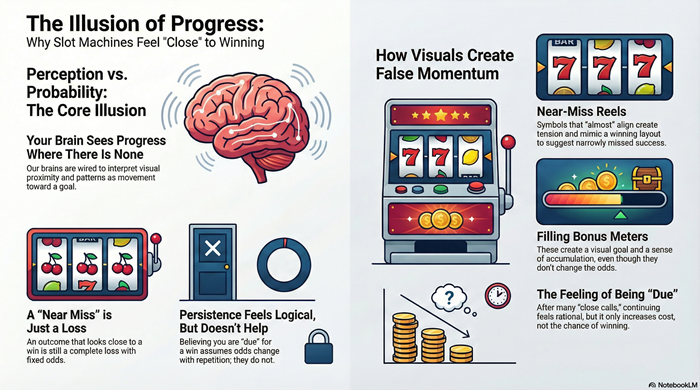
The reason limits get ignored isn’t usually greed — it’s optimism. You’re down £40, you feel like things are about to turn, and you tell yourself just a little more. That feeling is normal. It’s also the exact moment a limit is supposed to protect you from yourself.
The most effective loss limits are ones you set before you start, not during. Write it down if it helps. Set a deposit limit on your casino account so the decision is made for you. The goal isn’t to prevent you from having a bad session — that’ll happen regardless. The goal is to make sure a bad session stays manageable.
A reasonable starting point: set your loss limit at your session budget and don’t reload. If the money’s gone, the session is over. Simple, clean, and much easier to stick to than a mid-session rule you’re making up under pressure.
Win goals are the flip side of loss limits — a target at which you cash out ahead. They’re personal and optional, but they’re worth thinking about. Walking away up 50% feels a lot better than riding a good session back to zero. If you hit a number that feels like a good result, there’s no rule that says you have to keep going.
The Psychology of Playing Too Long
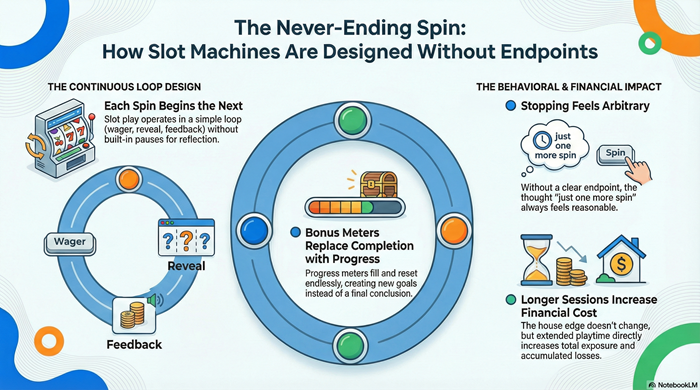
Sessions have a way of stretching. You sit down for an hour and look up to find two and a half have passed. Online, it’s even easier — there’s no walk back to the car, no natural break point.
Fatigue affects decision-making. After a long session, players tend to increase their bet sizes to try to recover losses faster, or chase wins with money they hadn’t planned to spend. Neither of those things is rational, but they’re both very human. Tired, frustrated, or over-excited — all three states produce worse decisions than fresh and focused.
A few things that genuinely help. Set a timer before you start — not as a hard stop, but as a prompt to check in with yourself. Take a break after an hour regardless of how things are going. And if you notice you’re no longer enjoying yourself, that’s usually a cleaner signal to stop than any number you could have set in advance.
- Decide your session length and budget before you open the game — not mid-session.
- Set a deposit or loss limit on your account so the decision is made ahead of time.
- Use a timer as a check-in reminder, especially during online sessions where time passes quickly.
- Take breaks. Even five minutes away from the screen resets your perspective.
- If you’re no longer having fun, that’s a valid reason to stop — no loss limit required.
- Chasing losses rarely ends well. A bad session is a bad session. Walk away and come back fresh.
- 1. Set your budget and bet size before you start — aim for at least 200 spins of coverage.
- 2. Match your game’s volatility to your bankroll. High variance games need more runway.
- 3. Set a loss limit before you open the game. Reload decisions made under pressure are usually bad ones.
- 4. Consider a win goal too — a point at which you’re happy to walk away ahead.
- 5. Use account tools (deposit limits, session timers) to take willpower out of the equation.
- 6. If you’re not enjoying it, stop. The game will be there another day.
Where to Play — Casinos With Good Account Tools
The best online casinos make it easy to set the limits you need. All three below are fully licensed, offer responsible gambling account controls, and have strong reputations with US players.
Super Slots has one of the best overall packages — a massive game library, fast crypto withdrawals, and weekly promotions that reward regular play. Read the full Super Slots Casino Review for everything covered.
Slots LV is a well-regarded option for players who want a clean experience with reliable payouts and a strong slot selection. Our Slots LV Review has the full breakdown.
And if you’d like to try things out before putting real money in, the exclusive offer at Slots Capital gives you 50 Free Spins with no deposit — a genuinely low-pressure way to get a feel for a new casino. See the Slots Capital Review for the full picture, and check the Slots Capital promotions page to see what’s currently running.
Pick your casino, set your session budget, and play at a stake that gives you proper time on the reels.
Super Slots → Slots LV → exclusive offer — 50 Free Spins →Slots Capital — See All Promotions