
Why Chasing Losses Feels Logical—and Why It Fails
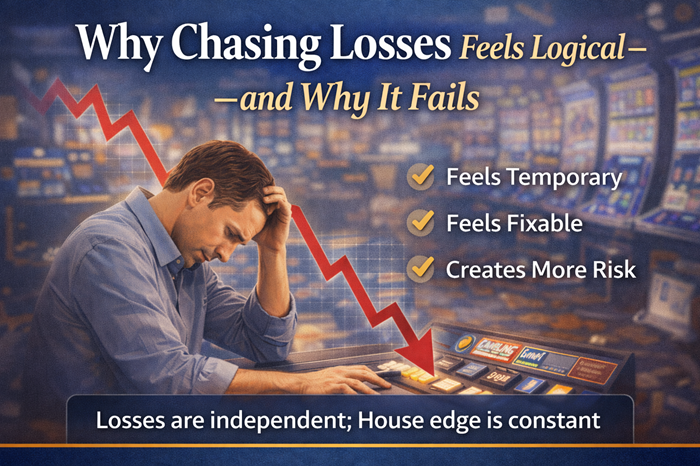
“Chasing losses” is one of the most common gambling behaviors—and one of the most misunderstood. To the person experiencing it, chasing often feels reasonable, temporary, and fixable. From a mathematical and psychological standpoint, however, it reliably leads to greater loss and stress.
This article explains why chasing losses feels logical, why it fails in practice, and how understanding this pattern supports responsible gambling decisions.
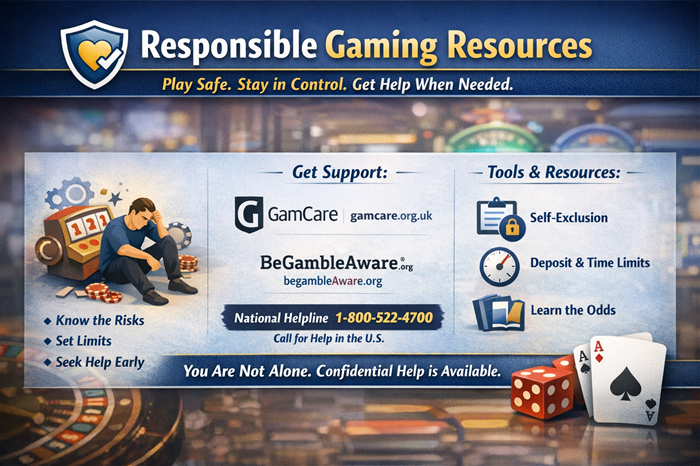
For broader support resources and education, see our
👉 Responsible Gaming Resources page.
What Does “Chasing Losses” Mean?
Chasing losses refers to increasing bets or continuing to gamble with the goal of recovering previous losses, rather than playing for entertainment.
Common examples include:
- Betting more after a losing streak
- Extending a session beyond planned limits
- Switching games or strategies to “win it back”
- Viewing a loss as something that must be corrected
Chasing is defined by intent, not bet size.
Why Chasing Losses Feels Rational
Chasing losses isn’t caused by ignorance or carelessness. It emerges from normal human thinking patterns under stress.
1️⃣ Losses Feel Unfinished
A loss creates a strong sense of imbalance—mentally, it feels like something is “owed back.” Continuing to gamble feels like completing an unfinished task.
2️⃣ Short-Term Memory Dominates
People tend to focus on recent outcomes, not long-term averages. After several losses, it can feel like a win is approaching—even when each outcome is independent.
3️⃣ Effort Creates Commitment
Once time or money has been invested, stopping can feel like “giving up.” Continuing feels like protecting what’s already been spent, even though past losses cannot be changed.
4️⃣ Wins Are More Memorable Than Losses
Most players can recall a time when chasing worked briefly. Those memories carry more emotional weight than the many times it did not, reinforcing the behavior.
Why Chasing Losses Always Fails
From a mathematical perspective, chasing losses does not change outcomes.
Outcomes Are Independent
In casino games, previous results do not influence future ones. Each spin, hand, or roll starts fresh, regardless of what happened before.
House Edge Never Changes
Increasing bets increases exposure to the house edge, not the chance of recovery. Over time, the expected result remains negative.
Variance Increases Emotional Pressure
As bets rise, swings become larger. This increases stress, urgency, and impulsive decision-making—making rational stopping harder.
Losses Compound Faster Than Wins
Recovering a loss requires a higher percentage gain than the original loss itself. This creates a structural disadvantage that worsens with continued play.
Chasing Losses vs. Strategic Play
It’s important to distinguish chasing losses from:
- Planned session bankrolls
- Fixed entertainment budgets
- Strategy-based play within defined limits
Chasing begins when decisions are driven by emotion and recovery goals, rather than preset boundaries.
Psychological Cost of Chasing
Beyond money, chasing losses often leads to:
- Increased anxiety and stress
- Difficulty enjoying future wins
- Reduced sense of control
- Guilt or secrecy around play
These effects can appear before financial harm becomes obvious.
When Awareness Matters Most
Recognizing chasing behavior early allows players to:
- Step away before losses escalate
- Re-establish time and spending limits
- Use tools such as cooling-off periods or self-exclusion
- Seek information or support without urgency
Early awareness is a core principle of responsible gambling.
What Helps Break the Pattern
Effective approaches include:
- Setting session limits before play begins
- Viewing losses as the cost of entertainment, not mistakes
- Taking breaks after losing sessions
- Using tools that restrict access when emotions are elevated
For some people, simply understanding why chasing feels convincing reduces its power.
Support and Perspective
If chasing losses feels difficult to stop—or begins to cause stress—confidential support and educational resources are available.
Independent organizations listed on our
👉 Responsible Gaming Resources page can help individuals understand patterns, regain perspective, and explore next steps without pressure.
Editorial Transparency
This page is provided for informational and educational purposes only.
It does not provide financial advice or encourage gambling behavior.
Understanding gambling psychology is intended to support informed, responsible decision-making.