
Slot Machine Hold Percentage Explained
Hold Percentage?
The Number the Casino Cares About Most
Most players are at least vaguely familiar with RTP — return to player. It’s the percentage of wagered money a slot pays back over time. A 96% RTP game returns £96 for every £100 wagered, in theory. That part gets talked about a lot.
Hold percentage is the other side of the same coin. If a game has a 96% RTP, its hold percentage is 4%. That’s the slice the casino keeps. It sounds simple, and in principle it is. But the way hold percentage works in practice — and what it actually means for your real-money sessions — is worth understanding properly.
This is the number casino operators use to forecast revenue. It’s how a slot floor gets planned, how machines get evaluated, and how casinos decide which games stay and which ones get replaced. Understanding it from a player’s perspective gives you a clearer picture of what you’re actually signing up for every time you sit down.
Hold Percentage vs RTP — They’re the Same Number, Differently Framed
Here’s the simple version: RTP and hold percentage are two ways of expressing the same built-in game maths.
RTP is written from the player’s perspective — it tells you what proportion comes back. Hold percentage is written from the casino’s perspective — it tells you what proportion stays. A game with a 94% RTP has a 6% hold. A game with a 97% RTP has a 3% hold. They’re not separate calculations, just different ways of describing the same relationship.
Hold % = 100% minus RTP. A slot with 95% RTP has a 5% hold. That 5% is the casino’s theoretical profit margin on every pound wagered through that machine — calculated across millions of spins.
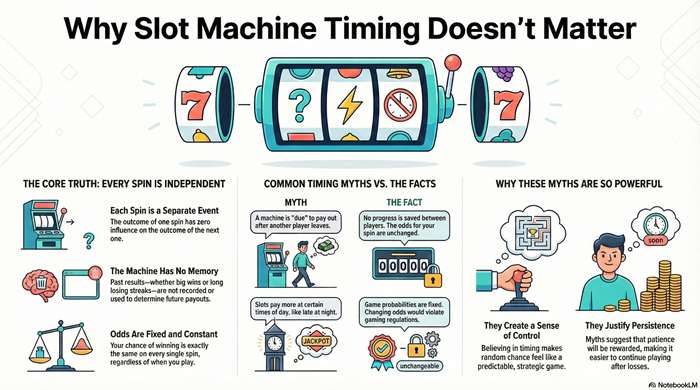
Where it gets interesting is the word “theoretical.” The hold percentage is a long-run statistical average, not a per-session guarantee. Over a short session — even a fairly long one — the actual results can look nothing like the maths. You might win significantly more than you wagered, or lose far more than the hold percentage would suggest. That’s variance. The hold only smooths out over an enormous number of spins.
What Hold Percentage Looks Like in Real Numbers
Let’s make this concrete. Say you’re playing a slot with a 5% hold (95% RTP) at £1 per spin, and you’re averaging 500 spins per hour. That’s £500 wagered per hour. The theoretical cost of playing that game for an hour is 5% of £500 — £25.
That’s not what you’ll definitely lose. It’s what the game is mathematically designed to cost on average over a huge number of similar sessions. On any given hour, you might be up £80 or down £120. But if you played that same session a thousand times, the average loss would settle close to that £25 figure.
| RTP | Hold % | Theoretical cost — £1 stake, 500 spins/hr | Theoretical cost — £2 stake, 500 spins/hr |
|---|---|---|---|
| 97% | 3% | £15 per hour | £30 per hour |
| 96% | 4% | £20 per hour | £40 per hour |
| 95% | 5% | £25 per hour | £50 per hour |
| 94% | 6% | £30 per hour | £60 per hour |
| 92% | 8% | £40 per hour | £80 per hour |
These figures assume you’re wagering fresh money each spin, which isn’t exactly how it works when you’re reinvesting wins. But as a rough guide to the theoretical cost of a session, this framing is genuinely useful. It helps you set a realistic session budget rather than just bringing a random amount and hoping for the best.
Why Some Lower-RTP Games Can Feel More Generous
This is the part that surprises people. You’d assume a game with a higher RTP always feels better to play. But that’s not necessarily true, and volatility is the reason.
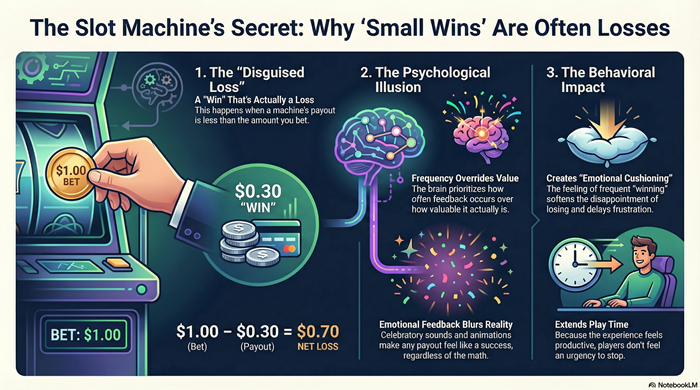
A 96% RTP low volatility game might pay small wins frequently enough that your balance stays relatively stable throughout a session. A 97% RTP high volatility game might go 300 spins without anything meaningful happening, then land one large payout. Same or better maths on paper, but one of those experiences feels significantly more punishing while it’s happening.
On the flip side, a 93% RTP game built around frequent small wins can feel quite generous during a session — even though the underlying maths is considerably worse for the player. Volatility shapes the experience. RTP and hold percentage describe the long-run outcome.
How a game feels in a single session is driven mostly by volatility. How much it costs you over thousands of sessions is driven by the hold percentage. Both matter, but they answer different questions.
Where to Find RTP Information Before You Play
At a well-run online casino, RTP is usually available in the game’s info screen or pay table — the same place you’d check symbol values and bonus rules. Reputable software providers publish their game RTPs, and many casinos list them in their game descriptions or on a dedicated page.
Some games offer variable RTPs, where the percentage changes depending on which casino hosts the game. This is more common than most players realise. A game might run at 96% on one platform and 94% elsewhere. The pay table figure is the one that counts for wherever you’re actually playing.
- Check the game’s info or pay table screen — RTP is usually listed there directly.
- If it’s not shown in-game, look for a dedicated RTP or game rules page on the casino’s site.
- Be aware that the same game can have different RTPs on different platforms.
- Licensed casinos are required to make RTP information available — if it’s hidden, that’s a red flag.
What This Means for Your Bankroll in Practice
Knowing the hold percentage won’t change the outcome of any individual spin. But it does give you something more useful than that — a realistic framework for planning a session.
If you know a game’s hold percentage and roughly how many spins you take per hour, you can work out a session budget that reflects what the game actually costs to play rather than just guessing. That’s not pessimistic thinking. It’s just playing with your eyes open.
The other practical takeaway is this: choosing a higher-RTP game genuinely does matter over time. The difference between a 94% and a 97% RTP might sound small, but on a typical session it translates to a meaningful difference in theoretical cost. Everything else being equal, lower hold is better for the player.
- 1. Hold percentage is simply 100% minus RTP — the same game maths viewed from the casino’s side.
- 2. It’s a theoretical long-run average, not a guaranteed per-session outcome.
- 3. Multiply your hourly wager by the hold % to estimate the theoretical cost of an hour’s play.
- 4. Higher RTP (lower hold) is better for players, all else being equal.
- 5. Volatility affects how a session feels — hold percentage affects what it costs over the long run.
- 6. Licensed casinos are required to make RTP data available — always check before you play.
Where to Play — Casinos That Are Transparent About Their Games
The best casinos make it easy to find RTP information and host games from reputable, independently audited software providers. All three below tick those boxes, and they’re all well-regarded by US players.
Super Slots carries a wide range of slots from established providers, with transparent game information and some of the best ongoing promotions around. If you want to explore games across a wide range of hold percentages and volatility levels, this is a strong starting point. Read our full Super Slots Casino Review before you deposit.
Slots LV is worth considering if you want a clean, well-organised casino with a solid library of high-RTP games and reliable payouts. Our Slots LV Review covers all the details.
And if starting without a deposit appeals to you, the exclusive offer at Slots Capital gets you 50 Free Spins with no money down — a risk-free way to try the games before you commit. See the Slots Capital Review for the full picture, and check the Slots Capital promotions page to see what’s currently running.
Now you know what the hold percentage means — choose a fair game, set a realistic budget, and play at a casino you can trust.
Super Slots → Slots LV → exclusive offer — 50 Free Spins →Slots Capital — See All Promotions