
How Slot Odds Are Determined
🎰📐 Many slot players believe odds are influenced by timing, machine behavior, or recent wins. Some think certain machines are “due,” while others believe odds change depending on how long a slot has gone without paying. These ideas persist because slot outcomes feel reactive — but the reality is much simpler and far less flexible.
Slot odds are determined before a game is released, locked in by design, and enforced by mathematics. Once a slot is live, neither the casino nor the player can change the odds of any outcome. To understand why that is, you have to look at how slots are built at a structural level. As explained in our guide on how slot machines really work, slot outcomes are governed by fixed probabilities, not player behavior.
This article explains how slot odds are created, what determines the likelihood of wins and losses, why odds don’t change during play, and how misunderstandings about odds lead to costly myths.
What “Slot Odds” Actually Means
When people talk about slot odds, they are usually referring to the probability of specific outcomes.
These outcomes include:
- Any win occurring
- A particular symbol combination appearing
- A bonus feature triggering
- A jackpot being hit
Each of these outcomes has a mathematically defined probability. That probability does not fluctuate based on:
- How much you’ve lost
- How long you’ve been playing
- Who played before you
- What time of day it is
Odds are static. Experience is not.
The Role of the RNG in Determining Odds
At the center of every slot machine is a Random Number Generator (RNG).
The RNG:
- Continuously generates numbers
- Selects a number the instant you press spin
- Maps that number to a predefined outcome
The RNG does not “decide” odds. It selects outcomes according to the odds already programmed into the game.
This distinction matters.
The RNG ensures randomness, but the probability weighting behind outcomes is what defines the odds.
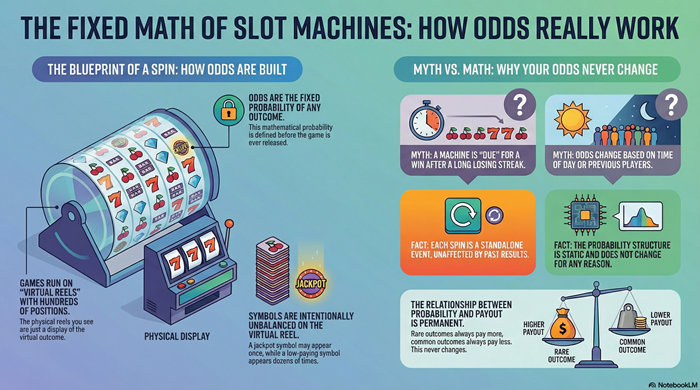
Virtual Reels and Probability Weighting
Slot machines do not operate on the physical reels players see.
Instead, they use virtual reels that may contain:
- Hundreds or thousands of virtual positions
- Unequal distribution of symbols
- Heavily weighted low-value outcomes
For example:
- A low-paying symbol may appear on dozens of virtual reel positions
- A jackpot symbol may appear on only one
This imbalance is intentional. It is how slots create rare, high-paying outcomes while maintaining a predictable house edge.
The visual reel is simply a display. The odds live behind it.
How Payout Tables Shape Slot Odds
Every slot has a payout table that specifies:
- Which symbol combinations pay
- How much they pay
- How rare they are
Odds are determined by the relationship between probability and payout.
Rare outcomes pay more because they occur less often. Common outcomes pay less because they occur more often. The balance between these two forces defines both RTP and volatility.
Nothing about this balance changes during play.
Why Slot Odds Do Not Change Over Time
One of the most persistent myths is that slot odds change as machines “warm up” or “cool down.”
They do not.
Slot odds:
- Do not improve after losses
- Do not worsen after wins
- Do not reset daily
- Do not depend on coin-in
Each spin is a standalone event with the same probability structure as the one before it.
Long losing streaks feel meaningful because they are emotionally uncomfortable — not because the odds are shifting.
How Bonus Features Affect Odds
Bonus features often confuse players because they appear separate from the base game.
In reality:
- Bonus triggers have defined probabilities
- Bonus payouts are already included in RTP
- Features do not “build” toward activation
A slot with frequent bonuses has those bonuses priced into the game. A slot with rare bonuses does too — just differently.
The presence of a bonus feature does not make a slot more generous. It changes how returns are delivered.
Progressive Jackpots and Odds
Progressive slots deserve special mention.
Progressive jackpots:
- Pool a portion of wagers
- Grow over time
- Reset after being hit
The odds of hitting a progressive jackpot:
- Are extremely low
- Do not improve as the jackpot grows
- Are independent of prior spins
The jackpot size increases potential payout, not probability.
Large jackpots create excitement, not better odds.
Why “Near Misses” Confuse Perception of Odds
Near misses are outcomes that look close to winning but are not.
They:
- Trigger emotional responses
- Create a sense of progress
- Encourage continued play
Near misses do not reflect increased probability. They are design elements that visually cluster symbols in ways that feel meaningful.
The odds were never closer — they were fixed from the start.
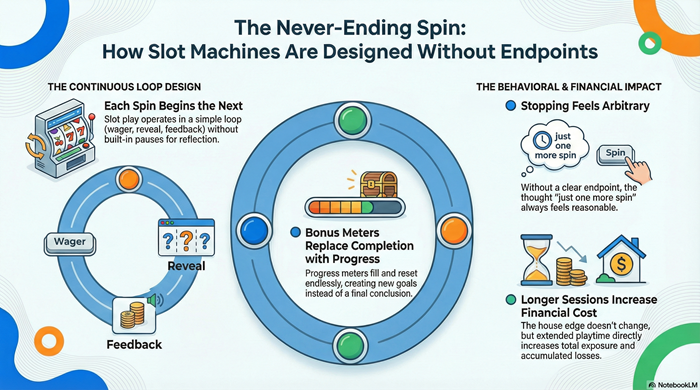
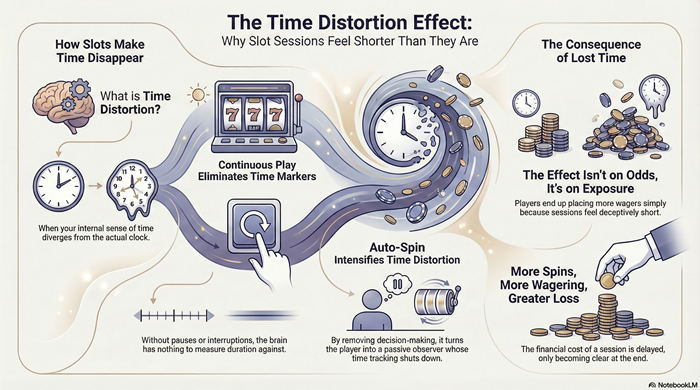
How Speed of Play Affects Perceived Odds
Fast play environments distort perception.
When spins happen rapidly:
- Losses accumulate faster
- Wins cluster more noticeably
- Volatility feels exaggerated
Players often misattribute this effect to odds changing, when it is actually exposure increasing.
More spins per hour means more outcomes — good or bad — in less time.
Why Casinos Emphasize Experience Over Odds
Casinos rarely advertise slot odds because:
- Odds favor the house regardless
- Experience drives engagement
- Math is less compelling than visuals
Instead, casinos emphasize:
- Themes
- Animations
- Features
- Jackpots
None of these affect odds. They affect how losses feel.
What Understanding Slot Odds Actually Gives You
Understanding slot odds does not:
- Improve winning chances
- Reveal patterns
- Create advantage
What it does provide is:
- Realistic expectations
- Resistance to myths
- Awareness of cost
- Better stopping decisions
Knowledge doesn’t change the game. It changes how long you stay in it.
Continue Learning About Slot Machines
If you want to see how slot odds fit into the broader structure of slot design and randomness, these guides explain the related mechanics that shape outcomes:
- How Slot Machines Really Work
- What Is RTP in Slot Machines?
- Slot Volatility Explained (Low vs Medium vs High)
- RNG Explained: Are Slots Truly Random?
Each of these articles focuses on one core component of slot machines and explains why timing, streaks, and machine behavior do not influence outcomes.
Final Thought: Odds Are Fixed, Feelings Are Not
Slot machines are not adaptive systems. They do not respond to persistence, belief, or frustration.
The odds were decided before you sat down. What changes during play is not probability — it’s perception.
Understanding that distinction doesn’t make slots profitable. It makes them transparent.
Transparency is the only real advantage a player can have.