
The Near-Miss Illusion in Keno and Why It Feels Personal
This article is part of our complete guide on How Keno Really Works: Probability, Payouts, and Why “Almost Winning” Feels So Close, which explains keno probability, house edge, variance, and why common myths fail.
Introduction
Keno produces an unusually strong sense of being close. Tickets often show many matched numbers, just one short of a higher tier, or outcomes that look nearly complete. These results feel meaningful, even personal, despite having no effect on future draws.
That feeling is not accidental, but it does not require intent or adjustment by the game. It arises from how human perception interacts with keno’s structure. Understanding the near-miss illusion explains why these outcomes feel powerful even though the mathematics remain unchanged.
The Near-Miss Illusion in Keno and Why It Feels Personal
What a Near-Miss Actually Is
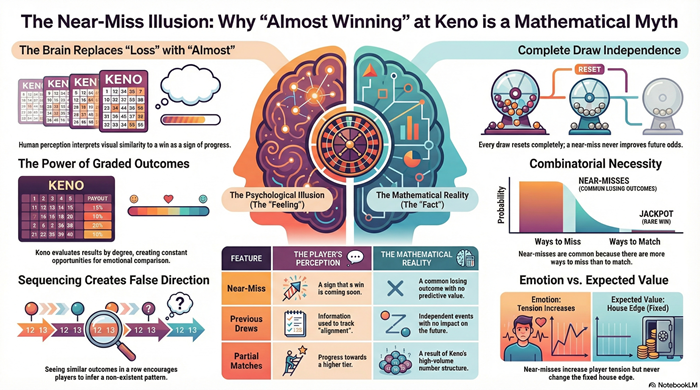
A near-miss is an outcome that resembles a win without being one. It feels close, but it is not closer in any probabilistic sense than other losing outcomes.
In keno, a ticket that matches most of its numbers is still a losing ticket with respect to higher-tier payouts. The draw did not “almost” produce a winning result. It produced exactly one outcome from a large set, and that outcome failed to meet a specific condition.
Closeness exists only after the result is known.
Why Keno Produces So Many Near-Misses
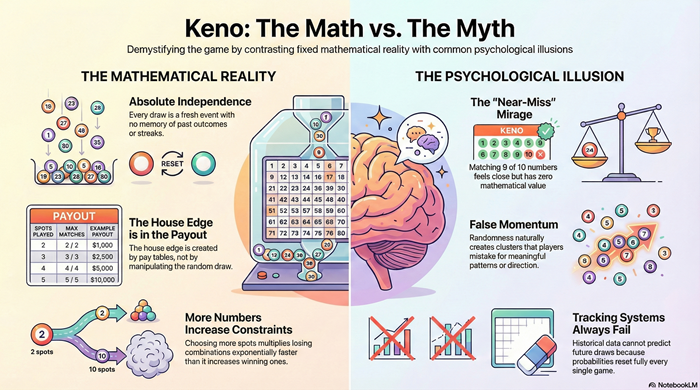
Keno draws many numbers at once and evaluates them against many chosen numbers. This creates a wide range of partial outcomes.
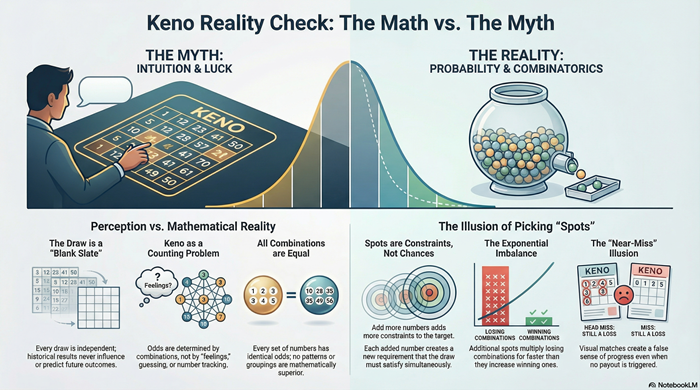
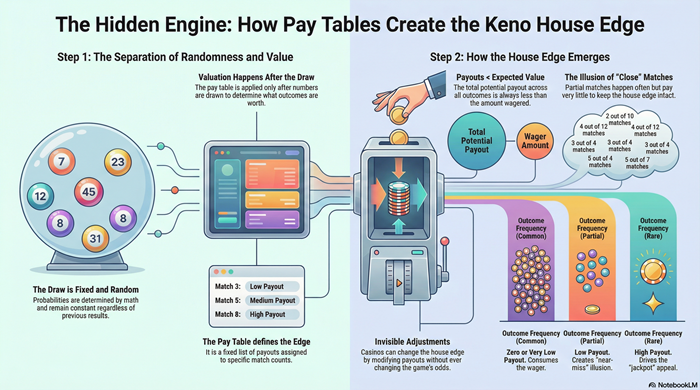
Combinatorially, there are far more ways to miss by one or two numbers than there are ways to match everything exactly. Near-misses are common because exact matches are rare, not because the game is responding or adjusting.
The structure guarantees frequent partial overlap. Near-misses are a mathematical consequence of the system, not an anomaly.
Why Matching Most of Your Numbers Feels Meaningful
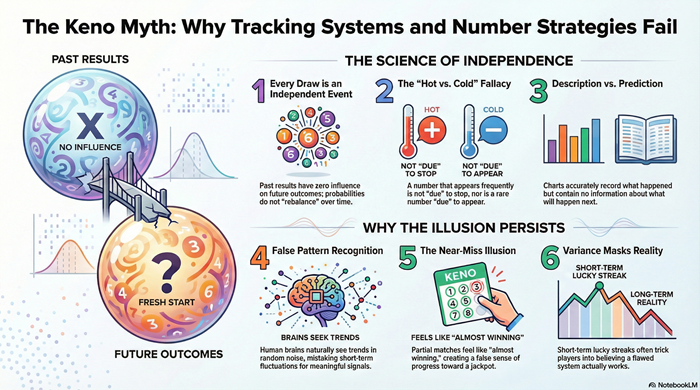
Human perception evaluates outcomes by similarity. Results that look like success are processed differently than clear failures, even when their probabilities and consequences are the same.
A ticket that matches many numbers visually resembles a winning configuration. That resemblance triggers reward-related interpretation, even though the missing condition is decisive.
Keno reinforces this effect by displaying all matches clearly, inviting comparison between what happened and what could have happened. The brain fills in the gap and labels it “almost.”
Why Near-Misses Feel Like Progress
Progress implies movement toward a future result. In keno, no such movement exists.
Each draw is independent. A near-miss does not improve the odds of the next draw, does not indicate alignment, and does not reduce future requirements. The probability structure resets completely every time.
The sense of progress comes from sequencing, not from mathematics. Seeing similar outcomes in a row encourages the mind to infer direction where none exists.
Why This Effect Is Stronger in Keno Than Other Games
Keno produces graded outcomes rather than simple wins and losses. Results are evaluated by degree, not just success.
This grading creates constant opportunities for comparison. A one-number difference feels important because the game makes it visible, not because it is probabilistically meaningful.
Frequent draws and large number sets amplify this effect, producing repeated opportunities for near-miss interpretation.
What Near-Misses Change — and What They Don’t
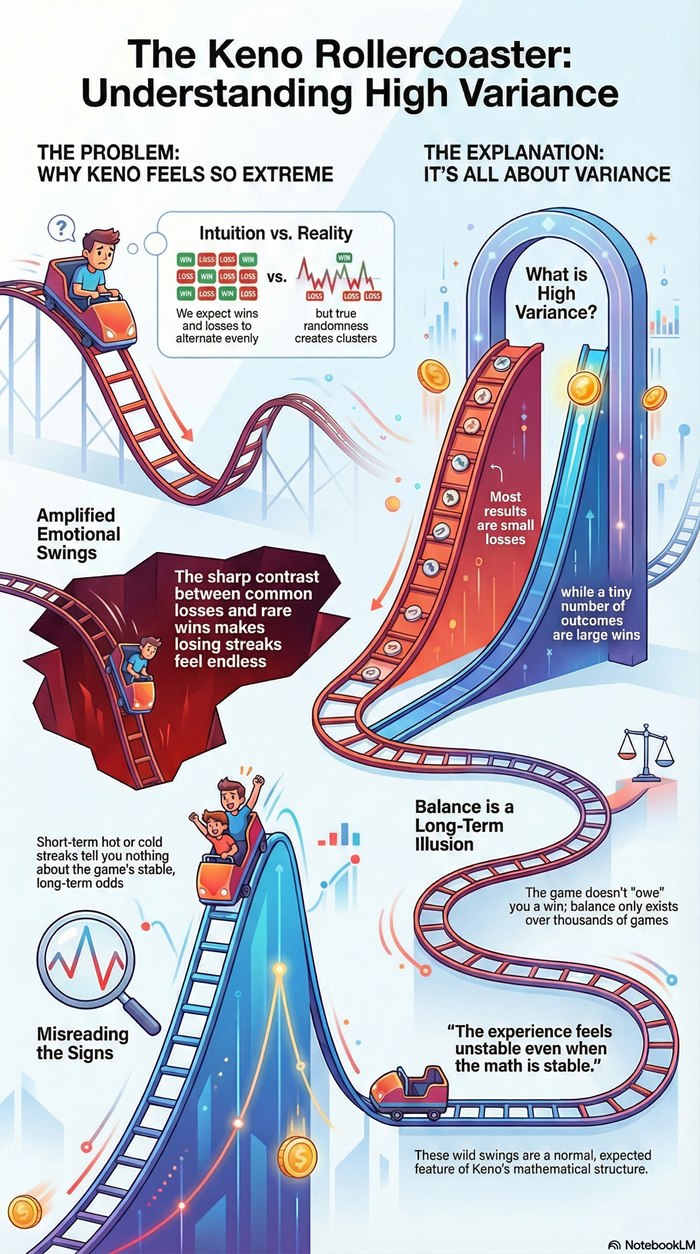
Near-misses change emotional response. They increase attention, tension, and memory.
They do not change:
- future probabilities
- independence of draws
- expected value
- house edge
Understanding this distinction separates how keno feels from how it works. The reaction is real. The implication is not.