
Why Outside Bets in Roulette Feel Safer (But Aren’t)
Roulette appears simple on the surface, but its outcomes are driven by fixed mathematical structures that rarely match player intuition. Understanding those structures requires separating perception from probability.
This article is part of our complete guide on How Roulette Really Works: Odds, House Edge, and Why Systems Fail, which explains roulette odds, house edge, wheel types, and why betting systems fail.
What Are “Outside Bets” in Roulette?
Outside bets are wagers placed on broad groupings of numbers rather than individual outcomes. Common examples include:
- Red or black
- Odd or even
- High (19–36) or low (1–18)
- Dozens and columns
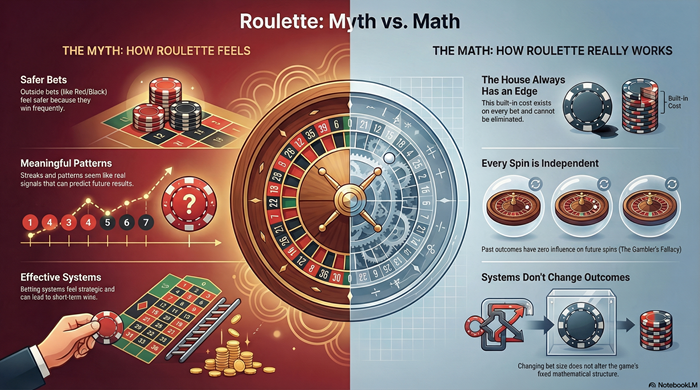
These bets cover many numbers at once and pay lower amounts than inside bets. Because they win more frequently, many players assume they are safer, smarter, or more sustainable.
Mathematically, this assumption is false.
The Psychological Appeal of Frequent Wins
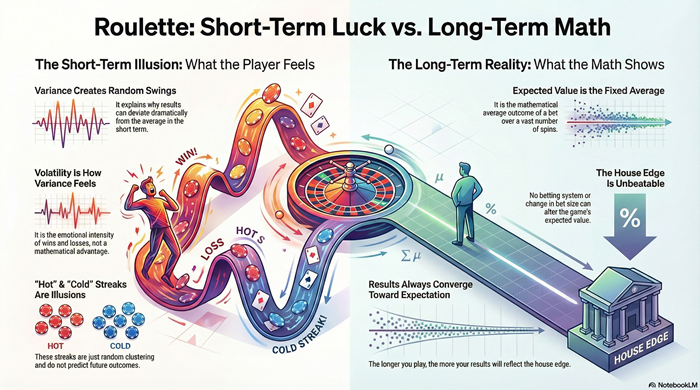
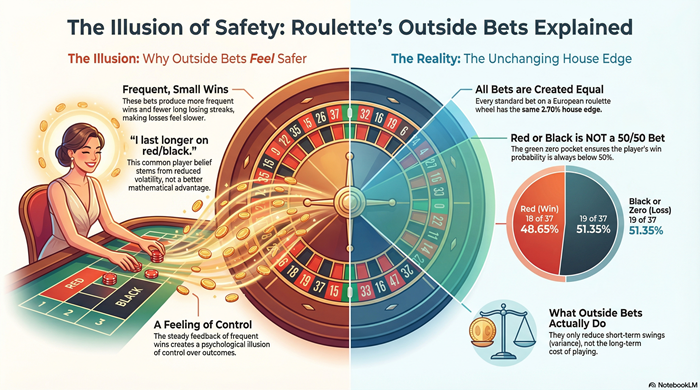
Outside bets produce more frequent small wins and fewer long losing streaks compared to inside bets. This has two effects:
- Losses feel slower and less dramatic
- Players feel more “in control” of outcomes
Neither effect changes expected value.
The sensation of safety comes from variance, not from better odds.
Expected Value Is Identical Across All Bets
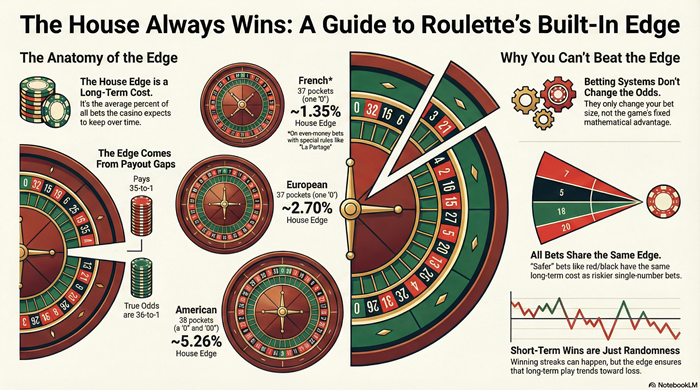
On a given roulette wheel, every standard bet has the same house edge.
European Roulette Example
- House edge: 2.70%
- Applies equally to:
- Straight-up bets
- Red/black
- Odd/even
- Dozens
- Columns
The structure of the bet changes how often you win and how much you win, but not how much you lose on average over time.
Outside bets reduce volatility. They do not reduce cost.
Why Red/Black Is Not a 50/50 Bet
Red and black feel like coin flips. They are not.
European Roulette Breakdown
- 18 red numbers
- 18 black numbers
- 1 zero
Win probability:
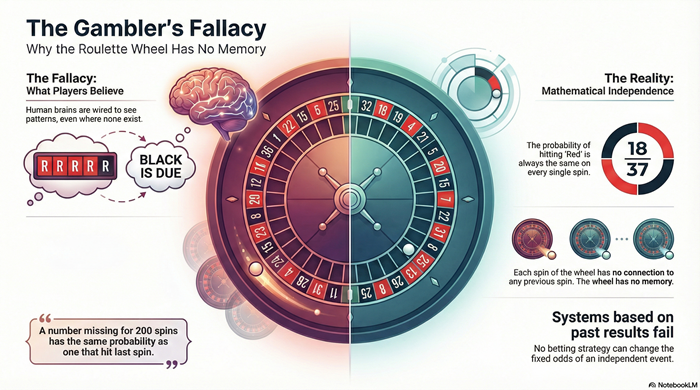
18 ÷ 37 ≈ 48.65%
Loss probability:
19 ÷ 37 ≈ 51.35%
That single zero is enough to maintain the house edge.
On American roulette, two zero pockets make the imbalance even larger.
“Safer” Does Not Mean “Better”
Outside bets change how losses are distributed, not whether losses occur.
- Inside bets: fewer wins, larger swings
- Outside bets: more wins, smaller swings
Over many spins, both converge to the same expected loss rate for the same total amount wagered.
This is why players often say things like:
- “I last longer on red/black”
- “I lose slower with even-money bets”
Both statements can be true without implying any mathematical advantage.
Why Betting Systems Love Outside Bets
Most roulette betting systems rely on outside bets because they:
- Produce frequent feedback (wins feel reinforcing)
- Support progressive staking (small wins mask growing risk)
- Create the illusion of recovery after losses
Systems built on outside bets feel stable right up until they aren’t. When losses occur, they arrive suddenly and decisively, because the underlying probabilities never changed.
The system fails not because the bet type is wrong, but because no bet escapes the house edge.
Independence Removes Any “Safety” Over Time
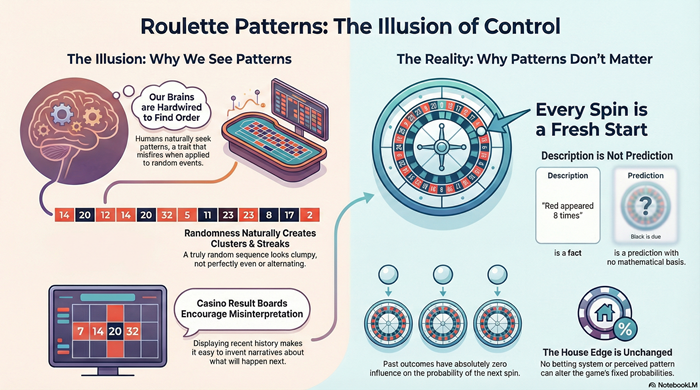
Each roulette spin is independent:
- Previous reds do not affect future blacks
- A zero does not become less likely after absence
- Long streaks do not increase the chance of reversal
Outside bets do not “smooth out” probability. They only smooth out perception.
The wheel does not care how calm the betting pattern feels.
Why This Misconception Persists
Outside bets feel safer because humans evaluate risk emotionally, not statistically.
- Frequent wins feel like progress
- Small losses feel manageable
- Rare large losses are discounted or rationalized
Roulette exploits this perfectly by offering bets that feel intuitive but remain mathematically uncompromising.
Understanding this distinction is essential to understanding why roulette systems fail—especially those marketed as conservative or low-risk.
What Outside Bets Actually Do
Outside bets:
- Reduce variance
- Increase session longevity (sometimes)
- Improve emotional comfort
They do not:
- Improve expected value
- Reduce the house edge
- Create long-term advantage
This difference between comfort and cost is one of the most important concepts in roulette.
Related Articles in This Roulette Series