

How Roulette Really Works: Odds, House Edge, and Why Systems Fail
A clear, probability-based explanation of how roulette really works, including odds, house edge, wheel types, and why betting systems fail.
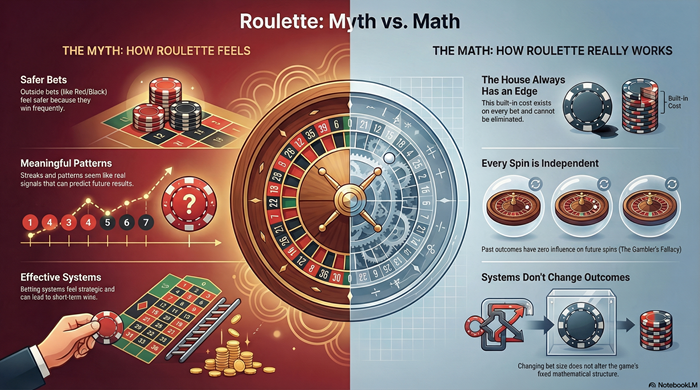
Roulette is often presented as simple, balanced, and intuitive. In reality, it is governed by fixed mathematical structures that never adapt to player behavior. This series exists to explain those structures clearly, without myths, strategies, or promises.
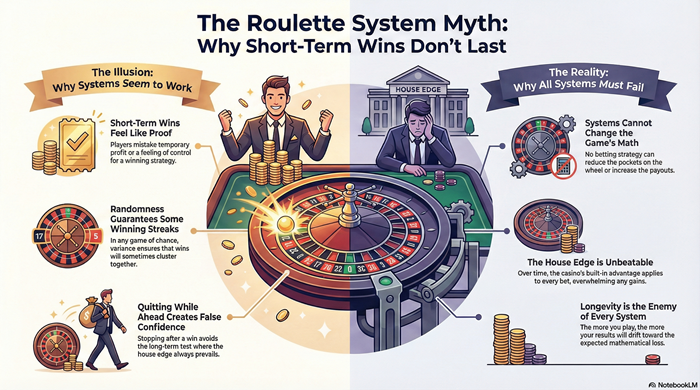
Roulette systems can succeed briefly because of variance, not because they work. Learn why short-term wins donβt survive long-term play.
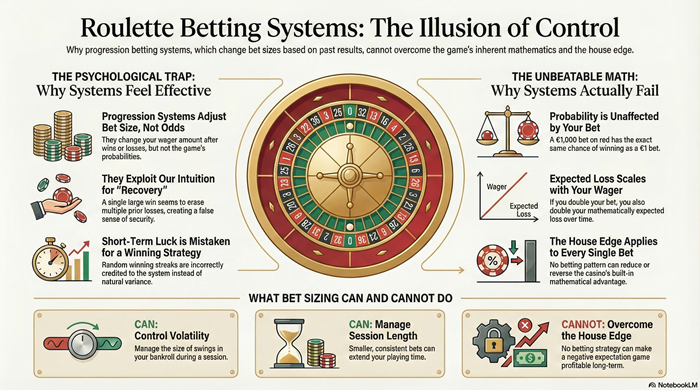
Progression systems adjust bet size, not probability. Learn why changing stakes can alter volatility but never change rouletteβs expected loss.
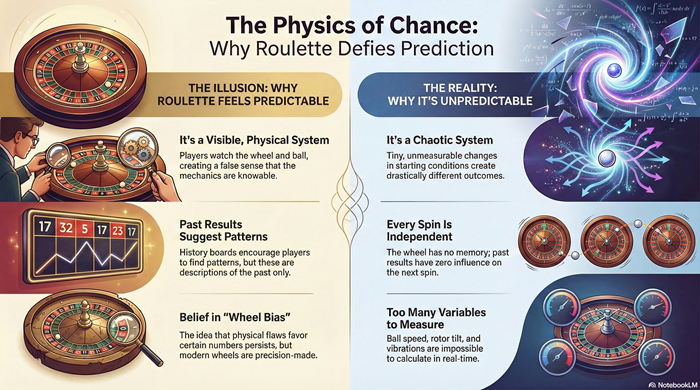
Roulette feels predictable because itβs physical, but chaos and independence make real prediction impossible. Learn why physics explains randomness without defeating it.
Roulette patterns feel meaningful, but they arise naturally from randomness. Learn why streaks and clusters donβt predict outcomes or change the house edge.
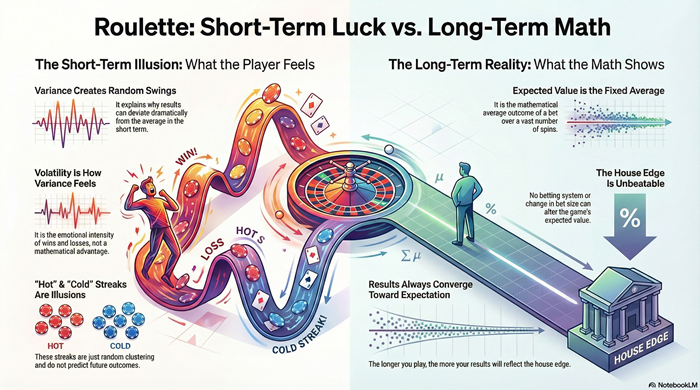
Variance explains why roulette results swing wildly in the short term without changing long-term loss. Learn why volatility misleads and expectation always wins.
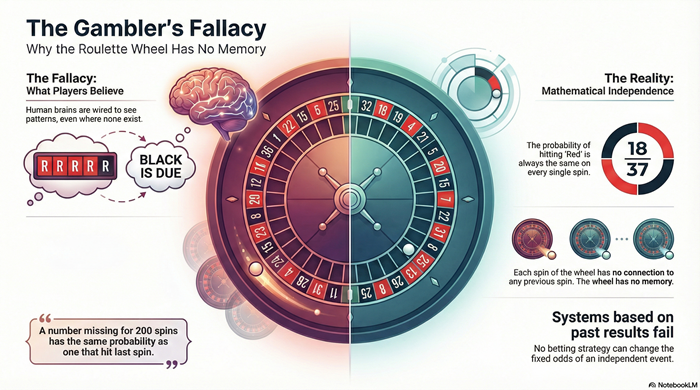
The gamblerβs fallacy assumes roulette outcomes correct themselves over time. Learn why each spin is independent and why βdueβ outcomes donβt exist.
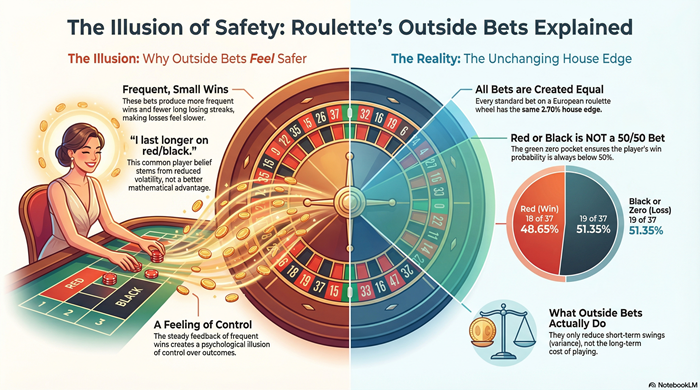
Outside bets in roulette feel safer because they win more often, but they carry the same house edge as all other bets. Learn why comfort doesnβt change cost.
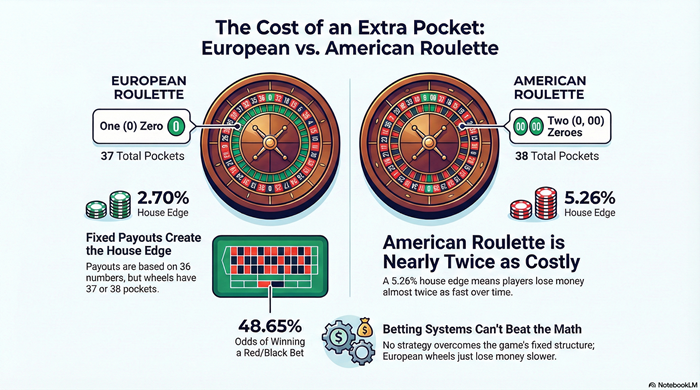
European and American roulette look similar, but one extra zero nearly doubles the house edge. Learn how wheel design changes odds and long-term cost.
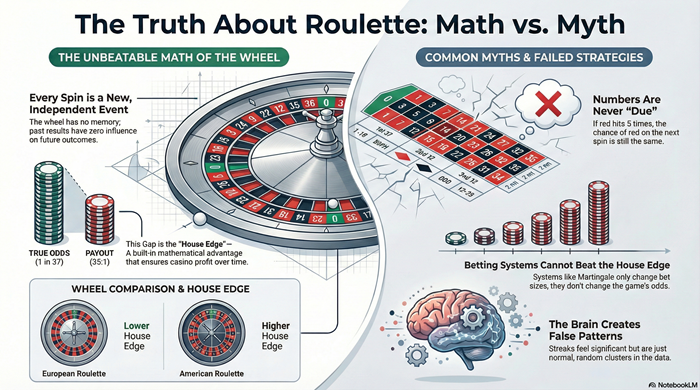
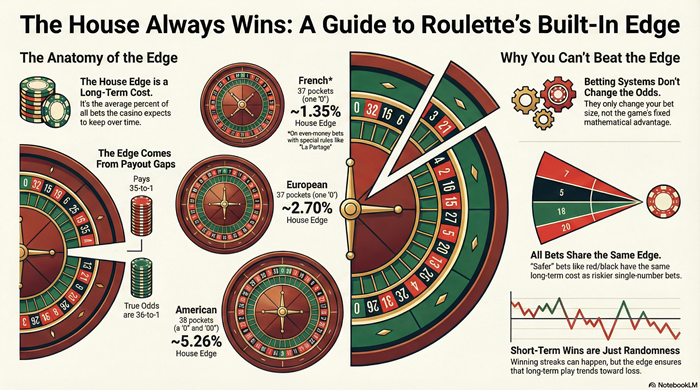
This article explains what the house edge in roulette is, how itβs created, why wheel type matters, and why no betting system can overcome it.