
The 25 Most Popular Blackjack Systems — And Why None of Them Actually Work
Blackjack has a reputation that no other casino game quite shares. Before evaluating these systems, it’s important to understand that basic blackjack strategy already defines the mathematically optimal way to play each hand, making most systems unnecessary from the start. It feels logical. It feels skill-based. And because players make decisions, it creates the powerful illusion that the game can be beaten with the right system.
Over the years, this belief has produced dozens of blackjack systems—betting patterns, strategy tweaks, and so-called “tricks” that promise to turn a house game into a player’s game. Some of these systems are old enough to predate modern casinos. Others are constantly repackaged on YouTube and gambling blogs as “new discoveries.”
In this article, we’ll walk through 25 of the most well-known blackjack systems, explain what each one claims to do, and—most importantly—why none of them actually work in the long run.
🧮 First, the Rule Every System Breaks
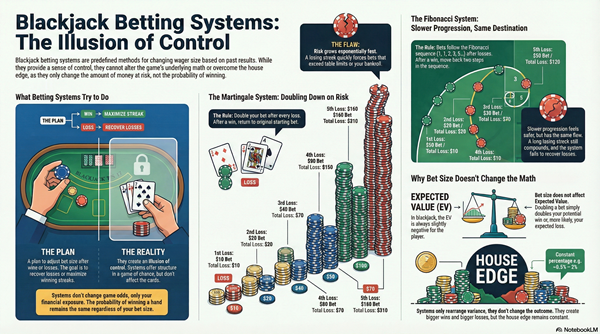
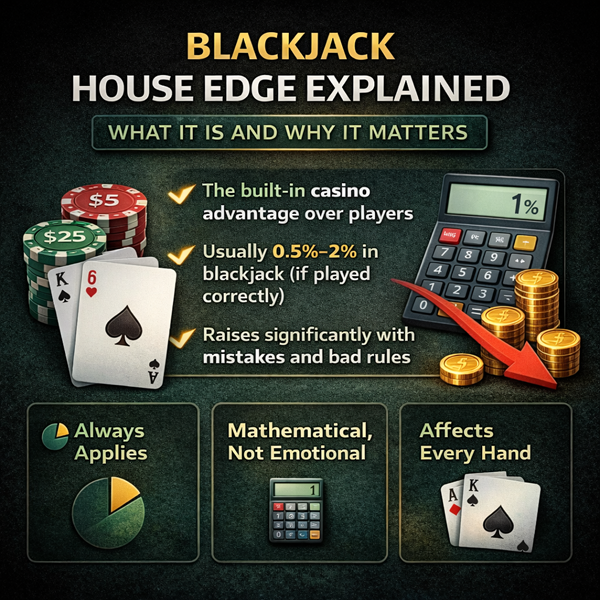
Before diving into individual systems, one truth must be understood: betting systems do not change the house edge.
Blackjack outcomes are governed by expected value. No matter how you rearrange your bets, if each hand carries a negative expectation, the long-term result remains negative. Systems can change variance, not math.
With that foundation in place, let’s break them down.
🃏 Card Counting Systems (Often Misunderstood)
1️⃣ Hi-Lo System
The Hi-Lo system tracks high and low cards to estimate when the deck favors the player.
Why it doesn’t work for most players:
While theoretically sound, the edge gained is extremely small, requires flawless execution, long hours, and faces casino countermeasures. Most players abandon discipline or get backed off long before any real profit appears.
2️⃣ KO (Knock-Out) Count
An unbalanced counting system designed to be simpler than Hi-Lo.
Why it doesn’t work:
Simplicity comes at the cost of precision. The reduced accuracy shrinks the already tiny advantage and makes bankroll swings harder to manage.
3️⃣ Omega II
A multi-level counting system assigning different values to cards.
Why it doesn’t work:
Its complexity leads to errors under casino conditions. Mental fatigue destroys the marginal advantage faster than players expect.
4️⃣ Zen Count
Another advanced count aiming for higher accuracy.
Why it doesn’t work:
Like Omega II, it assumes perfect execution in a noisy, fast-paced environment. Reality rarely cooperates.
5️⃣ Red 7
A beginner-friendly unbalanced system.
Why it doesn’t work:
Ease of use reduces precision, and the casino edge remains largely intact.
6️⃣ Revere Count
A classic multi-level count used historically.
Why it doesn’t work:
Modern rules, multiple decks, and continuous shuffling machines neutralize much of its value.
7️⃣ Hi-Opt I
Focuses on non-ace cards.
Why it doesn’t work:
Requires side-counting aces, which adds complexity and error risk.
8️⃣ Hi-Opt II
A more precise version of Hi-Opt I.
Why it doesn’t work:
Increased precision brings increased mental strain, making consistency nearly impossible over time.
9️⃣ Wong Halves
Uses fractional card values for extreme precision.
Why it doesn’t work:
Mental math errors overwhelm the theoretical edge for most players.
🔟 Halves Count
Similar to Wong Halves with slight variations.
Why it doesn’t work:
Accuracy collapses under fatigue, distraction, and real-world play speed.
1️⃣1️⃣ Uston SS
One of the most complex and powerful systems ever created.
Why it doesn’t work:
Its power exists almost entirely on paper. Casinos are designed to break players long before mastery pays off.
1️⃣2️⃣ Zen+
An enhanced Zen variation.
Why it doesn’t work:
Marginal improvement does not overcome modern casino safeguards.
💰 Betting Progression Systems (The Biggest Trap)
1️⃣3️⃣ Martingale
Double your bet after every loss.
Why it doesn’t work:
Losing streaks are inevitable. Table limits and finite bankrolls guarantee catastrophic failure.
1️⃣4️⃣ Reverse Martingale (Paroli)
Double after wins.
Why it doesn’t work:
Winning streaks are unpredictable. One loss wipes out multiple gains.
1️⃣5️⃣ D’Alembert
Increase bets slowly after losses.
Why it doesn’t work:
Slow loss is still loss. The house edge remains unchanged.
1️⃣6️⃣ Reverse D’Alembert
Increase after wins, decrease after losses.
Why it doesn’t work:
Creates inconsistent bet sizing with no mathematical benefit.
1️⃣7️⃣ Fibonacci System
Bets follow the Fibonacci sequence.
Why it doesn’t work:
A losing streak grows bets exponentially while expectation stays negative.
1️⃣8️⃣ Labouchère (Cancellation System)
Cross off numbers after wins.
Why it doesn’t work:
Long losing streaks force massive bets that erase earlier progress.
1️⃣9️⃣ Reverse Labouchère
Add numbers after wins.
Why it doesn’t work:
Relies on streaks that cannot be predicted or controlled.
2️⃣0️⃣ 1-3-2-6 System
A short progression designed to lock profits.
Why it doesn’t work:
Short-term success does not change long-term expectation.
2️⃣1️⃣ Oscar’s Grind
Slowly increases bets until a small profit is reached.
Why it doesn’t work:
Eventually encounters a downswing that wipes out gradual gains.
2️⃣2️⃣ Parlay System
Let winnings ride.
Why it doesn’t work:
House edge compounds as bets increase.
2️⃣3️⃣ Flat Betting
Same bet every hand.
Why it doesn’t work:
Flat betting minimizes volatility but cannot overcome negative expectation.
🧠 Strategy-Based Myths
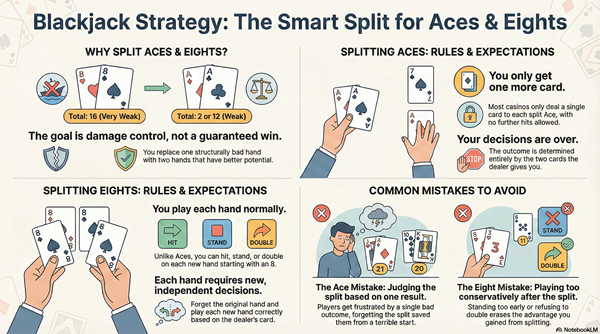
2️⃣4️⃣ Basic Strategy Deviations Without Count
Players alter basic strategy based on gut feeling.
Why it doesn’t work:
Basic strategy is already optimal. Deviations increase the house edge.
2️⃣5️⃣ “Pattern” or “Dealer Bust” Systems
Assume dealers follow streaks or cycles.
Why it doesn’t work:
Each hand is independent. The deck has no memory.
🏛️ Why Casinos Don’t Fear Any of These Systems
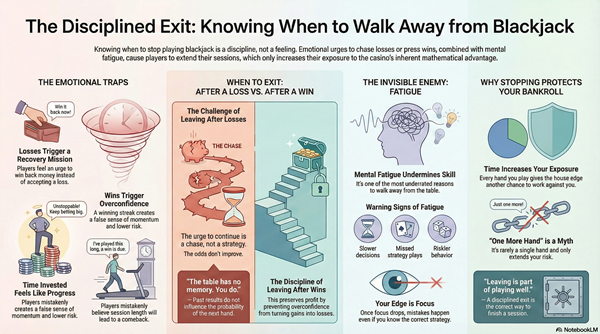
Casinos are not threatened by systems because systems don’t attack the source of their edge. They simply rearrange bets, emotions, and timing. In fact, system players tend to stay longer, bet more aggressively, and chase losses—all behaviors that increase casino profit.
🔚 Final Verdict: Why Blackjack Systems Persist
Blackjack systems survive because they promise control in an uncertain game. They offer structure, hope, and emotional comfort—even when the math quietly works against them.
The only true way to “win” at blackjack is to understand its limits:
- Play perfect basic strategy
- Control bankroll and expectations
- Treat the game as entertainment, not income
Anything beyond that isn’t a system—it’s a story.