
Blackjack House Edge Explained: What It Is and Why It Matters
📉 Most blackjack players know the term house edge, but very few truly understand what it means — or how deeply it affects their results. The house edge isn’t a trick, a rule, or a betting system. It’s the mathematical backbone of the game, quietly influencing every decision, win, and loss.
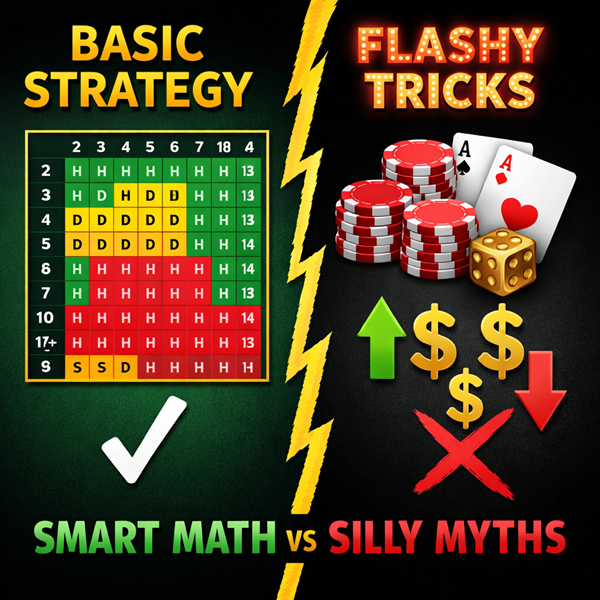
Before worrying about systems, streaks, or betting patterns, it’s essential to understand this concept. As explained in our Blackjack Basic Strategy guide, every correct decision in blackjack is designed to minimize the house edge under a specific set of rules. Without understanding the edge, players can’t accurately judge tables, strategies, or even their own performance.
This article breaks down what the blackjack house edge is, how it’s created, and why it matters far more than most players realize.
🧠 What Is the House Edge in Blackjack?
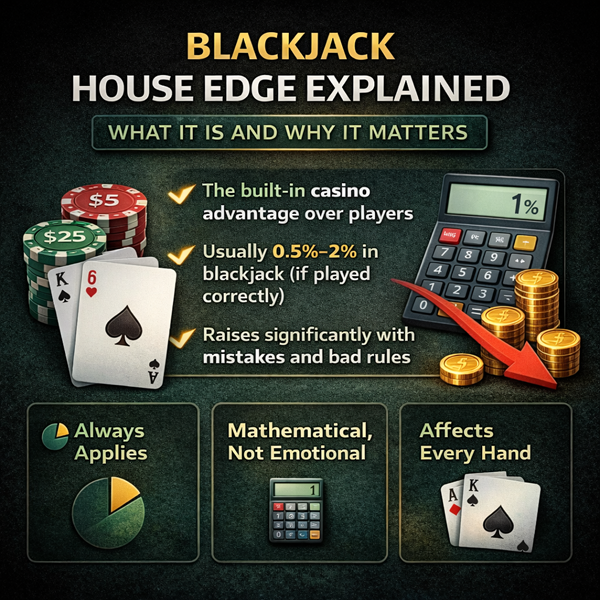
The house edge is the casino’s built-in mathematical advantage over the player, expressed as a percentage of each bet. It represents the average amount the casino expects to win over the long run.
For example:
- A 1% house edge means the casino expects to earn $1 for every $100 wagered
- This expectation applies over thousands of hands, not short sessions
The house edge does not guarantee that the casino wins every hand. It guarantees that, over time, the math favors the house.
📊 How the House Edge Actually Works
The house edge is calculated using expected value. Each possible outcome of a hand is assigned a probability and a payout. When all outcomes are combined, the result is a slight negative expectation for the player.
What’s important to understand is this:
- The edge applies to every dollar wagered
- It does not care how you bet
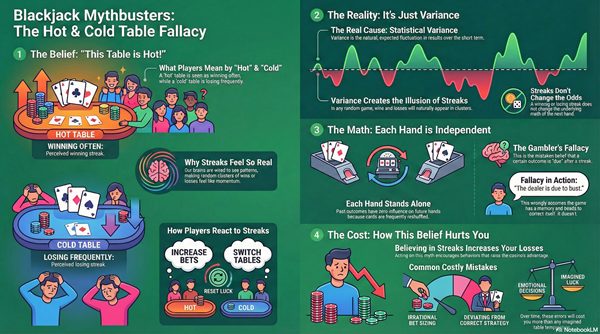
- It does not react to streaks or emotions
This is why betting systems fail. They rearrange wagers without changing the underlying expectation.
🃏 What Is the House Edge in Blackjack Specifically?
Blackjack has one of the lowest house edges in the casino — if played correctly.
Approximate house edge ranges:
- Perfect basic strategy, good rules: ~0.5%
- Average casual play: 2%–4%
- Poor rules or mistakes: 5% or higher
Small mistakes compound quickly. Each incorrect decision increases the house edge, often without the player realizing it.
⚠️ How Player Decisions Increase the House Edge
The house edge is not fixed for every player. It changes based on how you play.
Common actions that raise the edge include:
- Ignoring basic strategy
- Standing on hands that should be hit
- Failing to double in strong situations
- Playing side bets
- Misunderstanding soft vs hard hands
Each deviation slightly increases the casino’s advantage. Over time, those increases add up to significant losses.
🏛️ How Blackjack Rules Affect the House Edge
Rules are one of the most important — and most ignored — factors in blackjack.
Rule variations that reduce the house edge:
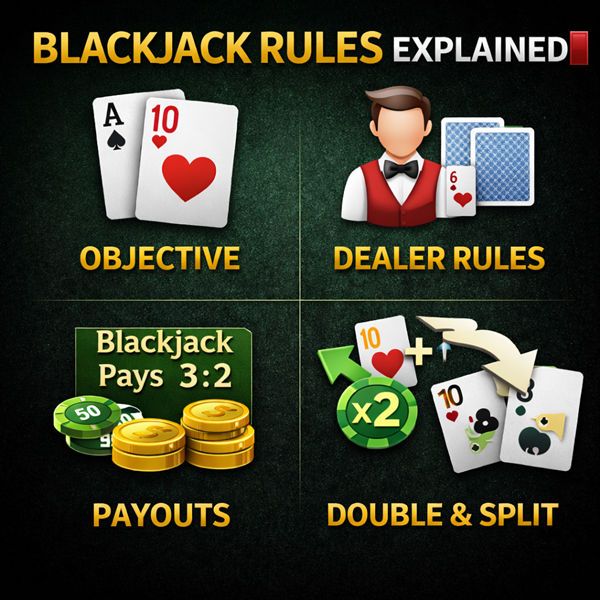
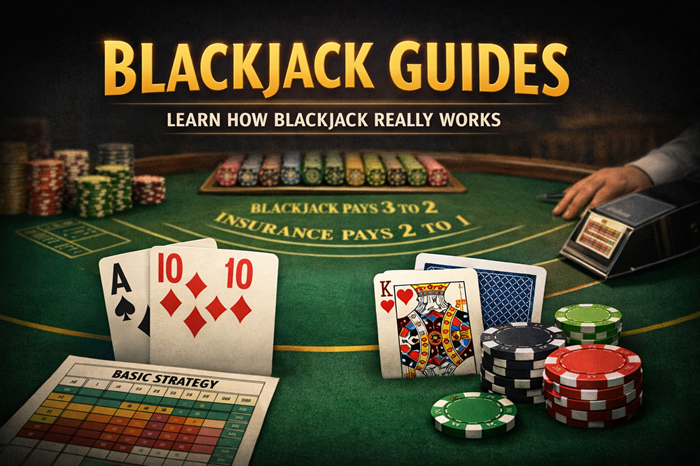
- Blackjack pays 3:2
- Dealer stands on soft 17 (S17)
- Double after split allowed
- Late surrender available
Rule variations that increase the house edge:
- Blackjack pays 6:5
- Dealer hits soft 17 (H17)
- Restricted doubling
- No surrender
Two tables can look identical and still differ dramatically in profitability because of small rule differences.
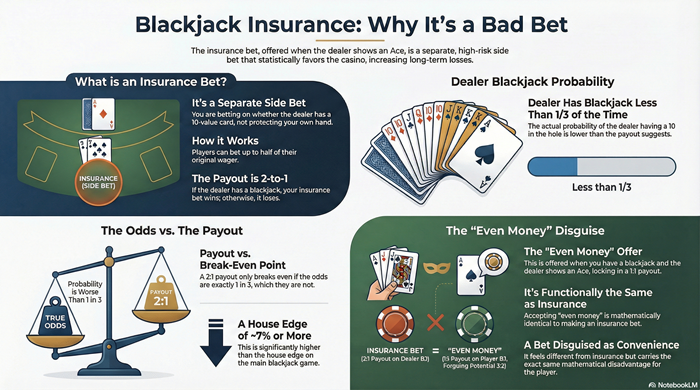
💥 Why Side Bets Have a Higher House Edge
Side bets are optional wagers placed alongside the main blackjack bet. They often advertise high payouts, but those payouts come with a cost.
Typical house edges on side bets:
- 21+3: often 3%–7%
- Perfect Pairs: often 5%–10%
These bets do not benefit from basic strategy. They exist entirely outside the low-edge structure of blackjack and are one of the fastest ways to increase overall losses.
🧪 Why the House Edge Doesn’t Feel Real in the Short Term
One reason players dismiss the house edge is that short-term results are noisy. Players can:
- Win multiple sessions in a row
- Lose while playing perfectly
- See “bad” strategies appear to work
This is variance at work. The house edge operates quietly over time. It doesn’t announce itself after each hand.
Understanding this helps explain why:
- Winning sessions don’t prove a strategy works
- Losing streaks don’t mean you’re playing wrong
🧠 House Edge vs Skill: What Players Can and Can’t Control
Players cannot eliminate the house edge, but they can influence its size.
You control:
- Strategy accuracy
- Table and rule selection
- Avoidance of side bets
You cannot control:
- Card order
- Dealer outcomes
- Short-term variance
Basic strategy exists to push what can be controlled as far as possible in the player’s favor.
📌 Why the House Edge Is the Only Number That Matters
Many players focus on:
- Winning streaks
- Bet size
- Session results
The house edge ignores all of that.
It answers one question:
How much does this game cost per dollar wagered over time?
Once you understand that number, everything else becomes clearer — including why blackjack systems fail and why discipline matters more than creativity.
🔚 Final Thought: Respect the Edge
The house edge is not an enemy to be defeated. It’s a reality to be managed.
Players who understand it:
- Choose better tables
- Make fewer mistakes
- Stay calm during losses
- Avoid false hope in systems
Those who ignore it chase patterns, blame luck, and slowly bleed money without understanding why.
Blackjack rewards players who respect the math — even when it’s uncomfortable.
🔗 Recommended Internal Links