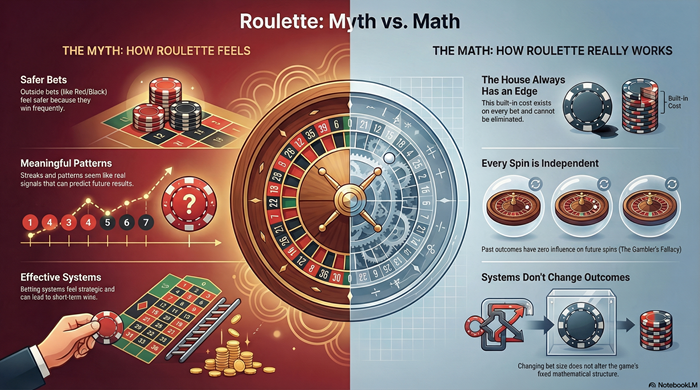

Variance, Volatility, and Why Short-Term Roulette Results Mislead
Roulette outcomes often feel meaningful in the short term. A quick win can feel like confirmation, while a sudden loss feels like bad timing. These reactions come from confusing variance with expectation—two concepts that describe very different things.
This article is part of our complete guide on How Roulette Really Works: Odds, House Edge, and Why Systems Fail, which explains roulette odds, house edge, wheel types, and why betting systems fail.
What Variance Means in Roulette
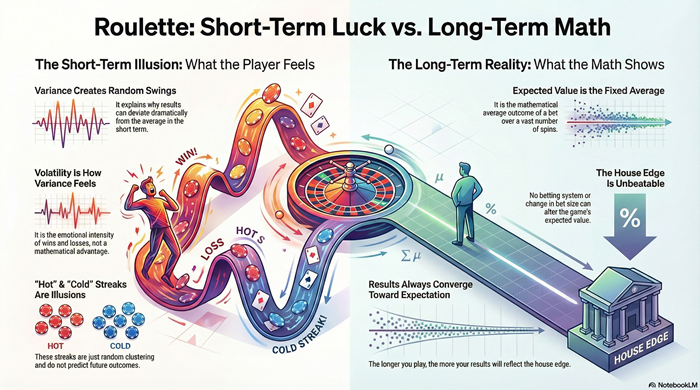
Variance describes how much actual results can deviate from expected results in the short term. In roulette, variance explains why players can win or lose dramatically without changing the underlying math of the game.
High variance means outcomes fluctuate widely around the average. Low variance means outcomes cluster more tightly. Neither affects the house edge.
Volatility Is About Experience, Not Advantage
Volatility is how variance feels to the player. It reflects the emotional intensity of wins and losses rather than their mathematical significance.
In roulette:
- Inside bets feel highly volatile
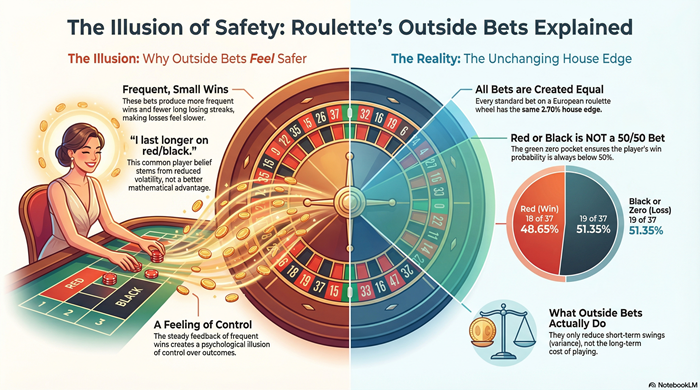
- Outside bets feel calmer and more stable
- Both lose at the same expected rate over time
Volatility changes the experience of play, not the cost.
Why Short-Term Results Feel So Persuasive
Short-term outcomes are vivid and emotionally charged. Humans naturally give more weight to recent and dramatic events than to abstract averages.
Short sessions:
- Are dominated by randomness
- Can produce extreme outcomes
- Mask long-term expectation
A player can win several sessions in a row without contradicting the house edge in any way.
Expected Value Operates in the Background
Expected value describes the average outcome over a very large number of spins. It is not designed to predict individual sessions or short runs.
In roulette:
- Expected value is fixed by the wheel
- Variance determines how long it takes to see it
- No strategy accelerates or reverses it
Short-term deviation is not evidence of advantage.
Why Systems Exploit Variance Confusion
Many roulette systems appear effective because they perform well during favorable variance. Early wins feel like proof that something works.
These systems rely on:
- Selective memory of wins
- Ignoring long-run averages
- Attributing success to method rather than randomness
When variance turns negative, the system is blamed on timing, not structure.
The Role of Bet Size and Perceived Control
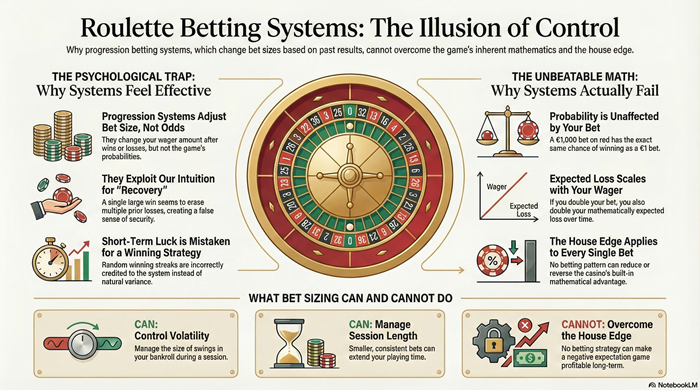
Changing bet size does not change expected value, but it does change volatility. Larger bets amplify swings, making outcomes feel more meaningful.
This leads to:
- Overconfidence after wins
- Panic after losses
- The illusion that control affects results
Variance reacts to bet size. Probability does not.
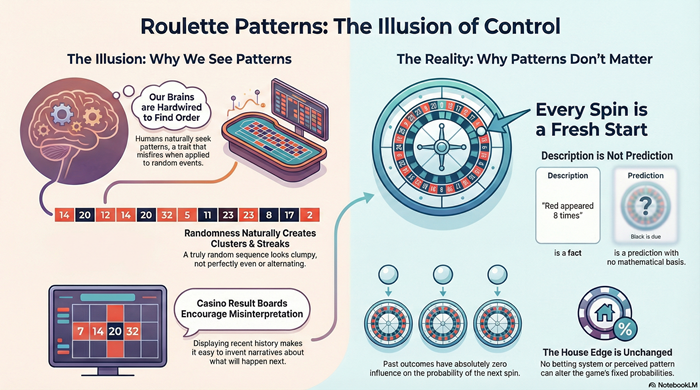
Why “Hot” and “Cold” Sessions Are Illusions
A “hot” session is simply a stretch of positive variance. A “cold” session is negative variance. Neither implies future direction.
- Winning streaks do not predict losses
- Losing streaks do not predict recovery
- Randomness allows clustering without meaning
The labels describe experience, not probability.
Variance Does Not Cancel the House Edge
Variance can delay losses, compress them, or disguise them—but it cannot remove them.
Over time:
- Results converge toward expectation
- House edge reasserts itself
- Short-term stories lose relevance
The longer the play, the smaller the role variance has relative to expectation.
Why This Matters for Understanding Roulette
Understanding variance explains why roulette feels beatable while remaining mathematically uncompromising.
It clarifies:
- Why people win without advantage
- Why systems feel effective briefly
- Why confidence is not evidence
Variance explains how outcomes unfold, not why they are inevitable.
What Variance Can and Cannot Tell You
Variance can:
- Explain short-term swings
- Describe emotional experience
- Account for streaks and clusters
Variance cannot:
- Predict outcomes
- Create advantage
- Change expectation
Separating variance from expectation is essential for understanding roulette honestly.