
Do Roulette Systems Ever Work? Short-Term Success vs. Long-Term Reality
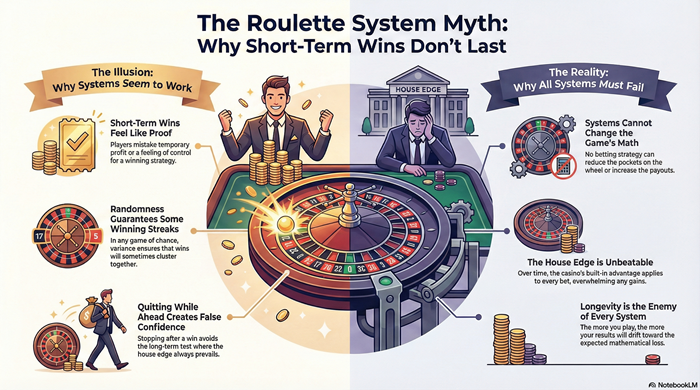
Roulette systems often appear to work because players sometimes win—sometimes repeatedly. Those wins feel validating, especially when they follow a clear set of rules. The mistake is treating short-term success as evidence of a method rather than as a normal feature of randomness.
This article is part of our complete guide on How Roulette Really Works: Odds, House Edge, and Why Systems Fail, which explains roulette odds, house edge, wheel types, and why betting systems fail.
What People Mean When They Say a System “Works”
When players claim a roulette system works, they usually mean one of three things:
- It produced a profit over a short period
- It reduced losses compared to previous sessions
- It felt controlled and repeatable
None of these definitions address long-term expectation. A system can feel effective without being mathematically sound.
Why Short-Term Wins Are Inevitable
In any random process with variance, some outcomes will be favorable in the short term. Roulette is no exception.
Short-term success occurs because:
- Variance allows outcomes above expectation
- Wins cluster unpredictably
- Losses are not evenly spaced
Winning does not require an edge. It requires only time and chance.
The Difference Between Performance and Expectation
Performance describes what happened in a sample. Expectation describes what happens on average over time.
- A system can perform well temporarily
- Expectation remains negative throughout
- Performance does not alter probability
Confusing these two ideas is the core reason roulette systems appear credible.
Why Systems Fail Over Time
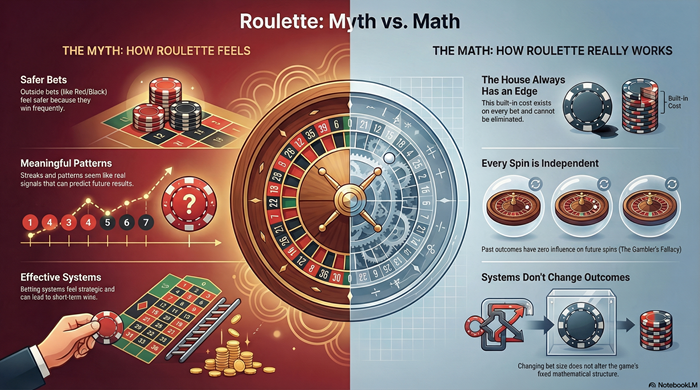
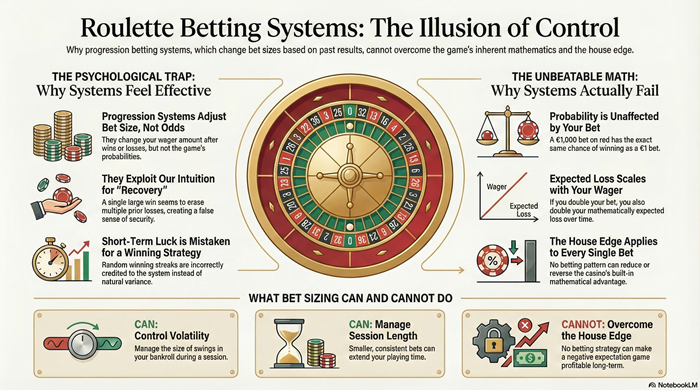
Roulette systems fail because none of them change the structure of the game.
They do not:
- Reduce the number of pockets on the wheel
- Increase payouts to fair levels
- Alter independence between spins
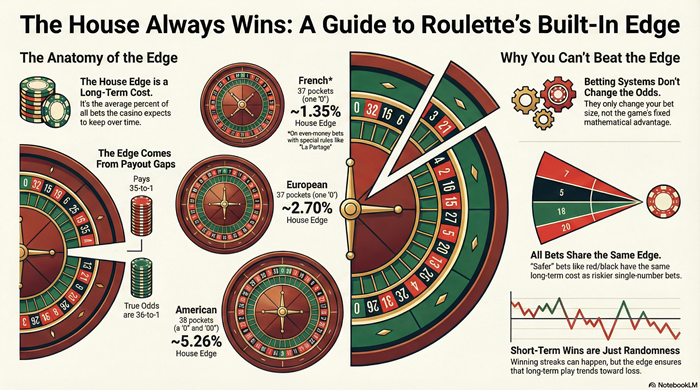
As play continues, the house edge applies to every unit wagered, eventually overwhelming any favorable variance.
Survivorship Bias Keeps Systems Alive
Only successful stories are shared. Failed attempts disappear quietly.
This creates a distorted picture:
- Wins are visible and repeated
- Losses are private or rationalized
- Systems appear more effective than they are
A system’s reputation often reflects marketing and memory, not math.
Why Stopping Early Feels Like Proof
Many players stop playing after a win and attribute success to the system. This reinforces belief while avoiding the long-term test.
Stopping early:
- Locks in variance
- Prevents convergence to expectation
- Creates false confidence
If play had continued, results would almost certainly drift toward the expected loss.
No System Survives Unlimited Play
If a system truly worked, its success would scale with time and exposure. In roulette, the opposite happens.
With enough spins:
- Variance diminishes relative to expectation
- The house edge dominates
- System structure becomes irrelevant
Longevity is the enemy of every roulette system.
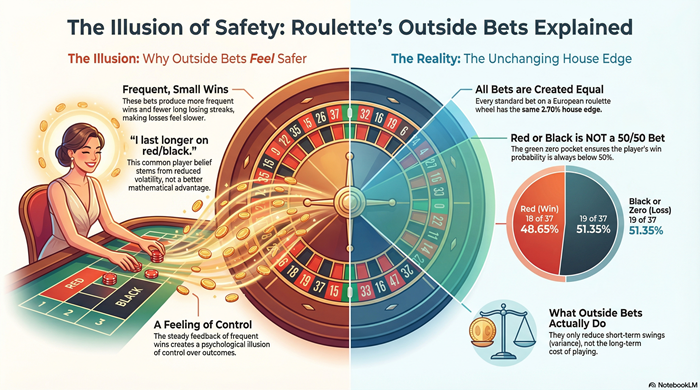
Why Some Systems Feel “Low Risk”
Systems marketed as conservative often rely on outside bets, slow progression, or frequent resets. These features reduce volatility, which feels safer.
What they actually do:
- Delay losses
- Reduce emotional stress
- Make failure less visible
They do not improve odds.
The Role of Discipline and Skill
Discipline can control behavior, but it cannot control probability. Skill in roulette is limited to understanding the game, not influencing outcomes.
Discipline can:
- Limit exposure
- Prevent impulsive decisions
- Improve awareness
It cannot create advantage where none exists.
What “Working” Really Means in Roulette
If “working” means understanding outcomes honestly, then education works. If it means producing consistent profit, no roulette system qualifies.
Roulette systems:
- Can win short term
- Cannot win long term
- Fail structurally, not tactically
This distinction is essential.
Why This Clarifies the Entire Series
Every topic in this series points to the same conclusion from a different angle:
- House edge explains cost
- Independence explains unpredictability
- Variance explains short-term success
- Systems fail because none of these change
Roulette is not deceptive. It is consistent.
What Understanding Systems Actually Provides
Understanding why systems fail:
- Ends the search for formulas
- Explains conflicting experiences
- Aligns expectation with reality
The game becomes clearer, not kinder.