
Implied Probability in Sports Betting Explained
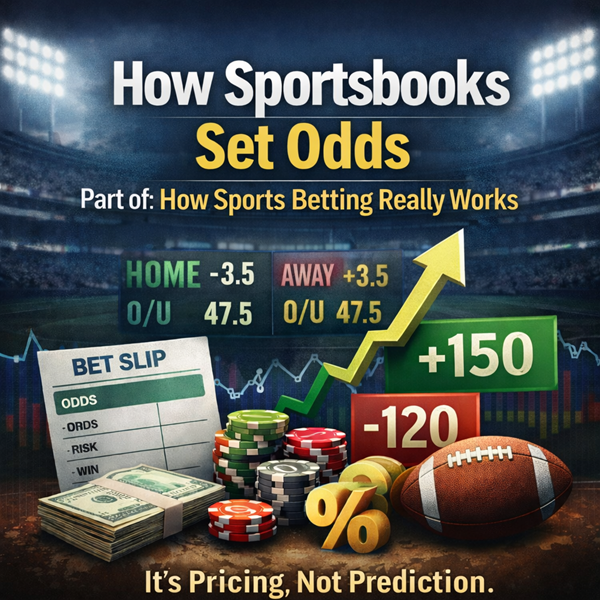
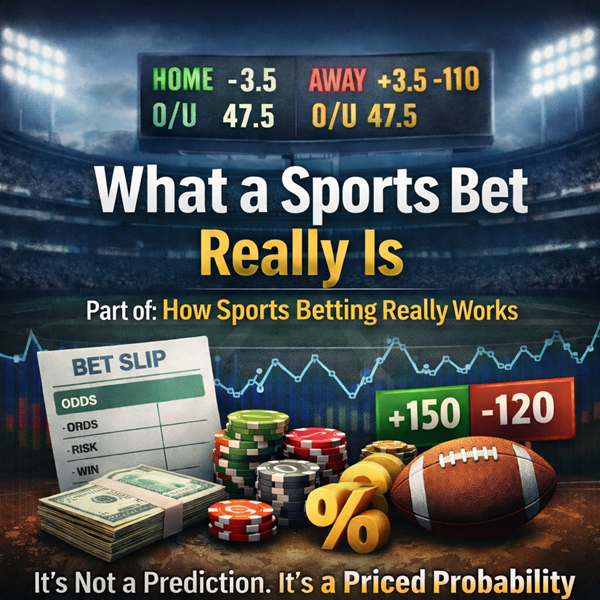
Odds look simple. They show how much you can win and how much you need to risk. Because of that, most bettors treat odds as rewards rather than prices.
That framing hides what odds are actually communicating.
Every set of betting odds implies a probability. Whether a bettor calculates it or not, that probability is always there. Understanding implied probability is one of the clearest ways to see how sports betting is structured and why confidence and outcomes so often conflict.
This article is part of a broader educational guide explaining how sports betting works at a structural level, including odds pricing, expected value, variance, and why certain bets are inherently risky. For the full overview, see How Sports Betting Really Works: Odds, Expected Value, and Why Parlays Are So Dangerous.
What Implied Probability Really Means
Implied probability answers a simple question: how often does this outcome need to occur for this bet to break even?
Odds are not just offers. They are statements about likelihood, adjusted to include a margin for the sportsbook. Implied probability translates those odds back into the percentage chance an outcome is assumed to have.
This translation removes emotion from the bet. It replaces excitement or comfort with a threshold that can be evaluated.
Why Odds Feel Different Than Probability
Large payouts feel attractive. Small payouts feel safe. Neither feeling reflects probability accurately.
A bet with long odds implies a low likelihood, even if the payout looks generous. A bet with short odds implies a very high likelihood, even if the outcome feels obvious.
Implied probability exposes this tradeoff. It shows that attractive payouts usually require rare outcomes, and familiar outcomes often require unrealistically high certainty to justify their price.
How the Vig Distorts Implied Probability
Implied probability becomes especially revealing when all outcomes in a market are considered together.
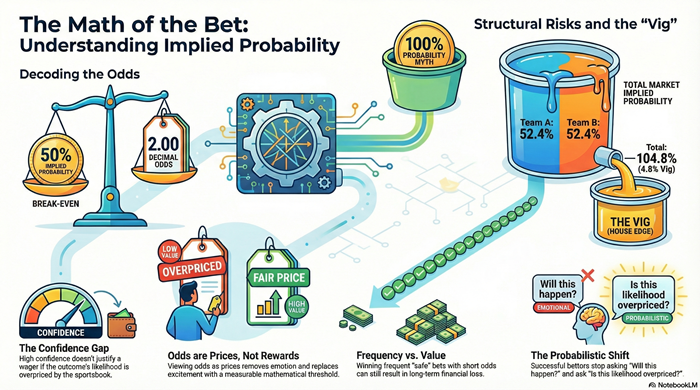
When probabilities are calculated from sportsbook odds and added up, they exceed 100 percent. That excess represents the vig.
This is one of the clearest ways to see the house edge in action. The sportsbook is not simply estimating what will happen. It is slightly inflating the implied likelihood of every outcome to ensure a margin.
Each bet looks reasonable in isolation. Taken together, the structure becomes obvious.
Why Confidence Doesn’t Matter
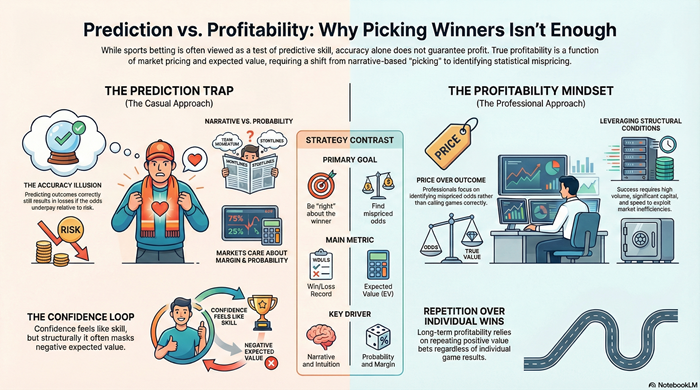
Many bettors believe that strong confidence should justify a wager. Implied probability shows why this belief fails.
If the odds imply that an outcome needs to occur more frequently than it realistically will, the bet is unfavorable regardless of confidence. Belief does not alter the price. It only alters willingness to accept it.
This is why bettors can feel certain and still lose consistently. The price already assumes that certainty and then some.
Short Odds, Big Misconceptions
Short odds are often misunderstood as low risk. Because these bets win frequently, they feel safe and disciplined.
Implied probability reveals the hidden cost. Short odds require outcomes to occur at extremely high rates just to break even. Even small overestimations of certainty create negative expectation.
This explains why bettors can win many bets and still lose money overall. Frequency of wins is not the same as value.
Why Implied Probability Changes How Bets Are Evaluated
Once odds are viewed as implied probabilities rather than rewards, betting decisions change.
The question stops being “Will this happen?” and becomes “Is this likelihood overpriced?”
Most bettors never make this shift. They evaluate bets narratively and emotionally. Sportsbooks evaluate them probabilistically and structurally.
That difference explains much of the outcome gap.
Why This Concept Matters
Implied probability does not make betting profitable. It makes pricing visible.
It explains why some bets feel unlucky rather than expensive, why confidence feels justified even when results disappoint, and why understanding odds without probability leaves a critical gap.
Seeing implied probability clearly is a prerequisite for understanding expected value, variance, and why complex bets like parlays become so damaging.