
Beyond the Jackpot: The Real Reasons We Love to Gamble
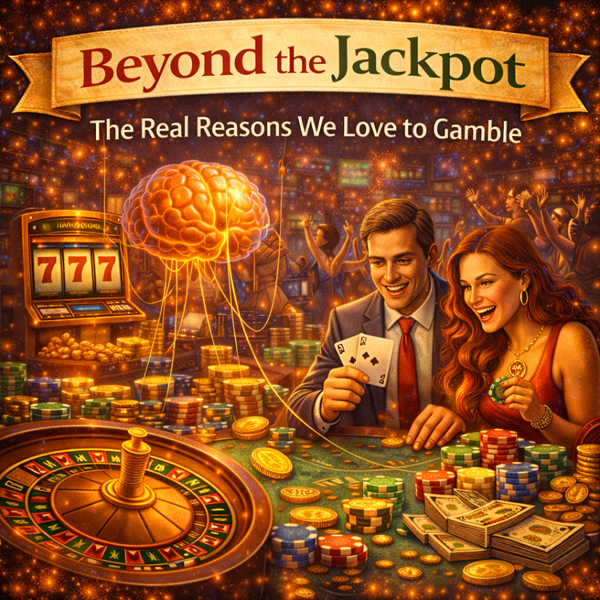
Gambling is far more than a simple calculation of odds or a pursuit of profit; it is a deeply human experience rooted in our biology. While the math usually favors the house, we find ourselves drawn to the table by a complex mix of emotion, hope, and the electric thrill of the unknown. It is a universal impulse, driven not by a lack of logic, but by the way our brains process risk and the fundamental human need for connection.
The Chemical Rush of “What If?”
Our attraction to betting starts deep within the brain’s reward system, where specific chemicals turn uncertainty into a powerful physical sensation. It isn’t just about the final result, but the electric tension of what might happen next that keeps us coming back.
- Dopamine isn’t just about the “win”; it’s about the electric hum of the chase. Imagine the roulette ball clattering against the wood—your brain fires most intensely while it’s bouncing between red and black, long before it settles, proving that the thrill is in the waiting.
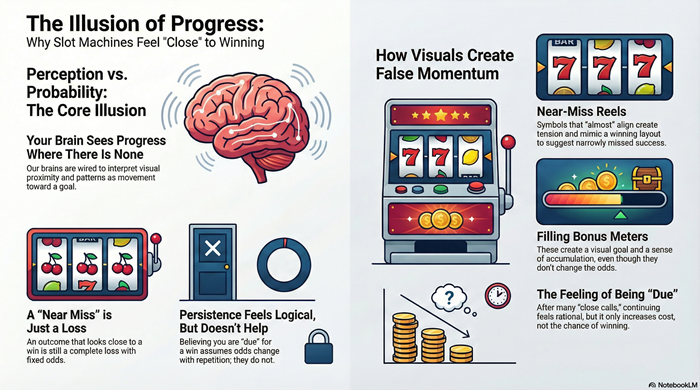
- The “near miss” is a clever psychological trap where our brains interpret an “almost” win—like two matching symbols on a slot machine—not as a loss, but as a sign we are learning. It triggers a dopamine rush similar to a victory, tricking the mind into believing we are getting closer to the goal and that the next success is imminent.
- To understand why players stay engaged, we have to look at B.F. Skinner’s experiments with rats and random rewards. He found that when rewards are unpredictable—known as variable ratio reinforcement—it creates a frantic, obsessive engagement where the subject presses the lever over and over, driven by the mystery of when the next payout will drop.
Finding Community at the Table
Beyond the flashing lights, gambling serves as a unique social glue that brings people together in a shared pursuit. Whether in a crowded casino or a digital space, it creates an environment where strangers and friends alike can bond over a common goal.
- There is an unmistakable sense of “in the trenches” camaraderie when you stand shoulder-to-shoulder with strangers at a craps table. This dynamic often pits the players against the house, turning a group of nobodies into a temporary team that erupts in high-fives and shared joy the moment the dealer busts.
- Even in the digital landscape, we find ways to satisfy our fundamental need for company through modern technology. Live dealers and real-time chat functions bridge the gap, allowing us to celebrate wins and lament losses with a global community so that the experience never feels truly isolating.
- Sports betting takes our natural tribalism and dials it up, turning a casual Sunday game into a shared emotional investment among friends. Whether it’s sharing parlay slips in a group chat or the collective groan when a referee makes a bad call, these wagers act as a social glue that deepens our connections through shared risk.
The Comfort of the “Zone”
For many, the true draw of a game is the chance to step away from the weight of daily responsibilities and find a moment of peace. It offers a focused mental space where the noise of the outside world finally goes quiet, allowing for a temporary escape.
- Psychologists call it the “flow state,” but most of us just know it as “the zone”—that immersive place where time seems to stop and the outside world’s worries temporarily disappear. Gambling is uniquely good at inducing this state, demanding enough focus and constant micro-decisions to quiet the anxious noise of our daily lives.
- Physical casinos are masterfully engineered to maintain this bubble, stripping away windows and clocks to detach you from the natural rhythms of day and night. They use specific scents, temperature control, and winding, labyrinthine aisles to create a sensory playground where the rules of reality are temporarily suspended.
- Digital gaming offers a modern, portable version of this escape, acting as a “mental palate cleanser” during our most stressful routines. A few minutes of play on a loud, crowded train or during a hectic work break can provide a quick sensory sanctuary, helping us reset our minds before diving back into the grind.
Testing Our Wits and Strategy
There is a specific satisfaction in believing we can outsmart the system through our own knowledge and strategy. This side of gambling appeals to our ego, turning a game of luck into a test of intellectual strength and personal control.
- We often gravitate toward games like poker or sports betting because they offer a sense of intellectual validation that pure chance cannot. In these arenas, we believe our preparation and strategy actually impact the outcome, turning a win into a personal victory for our own smarts rather than just a stroke of luck.
- This feeds into the “illusion of control,” a psychological quirk that makes us believe our lucky routines—like blowing on dice or tracking “hot” numbers—can influence random events. It’s our ego’s way of making the risk feel lower and the potential reward feel like something we’ve personally earned through our systems.
- When a complex, multi-leg sports bet finally pays off, it provides an intoxicating ego trip that confirms our status as the “armchair quarterback” who knew better than the pros. It allows us to feel like the smartest person in the room for a moment, proving that we’ve successfully outmaneuvered the odds through our own wits and preparation.
For More
For more insights and tips on how these games work, check out the article Slot Machine Guides.
Plus, for a more detailed look, I suggest the Ebook called Why Do People Gamble: Understanding the Psychology, Thrill, and Social Dynamics of Betting available on Google Books.