
Why Small Wins Feel Like Progress (Losses Disguised as Wins)
🎰📉 Many slot players believe frequent small wins mean they’re doing something right. The machine keeps paying, the balance doesn’t drop sharply, and the experience feels active instead of punishing. Players often describe these sessions as “holding steady” or “almost breaking even.”
In reality, many of these “wins” are losses. They return less money than was wagered — but are presented in ways that make them feel positive. To understand why this illusion is so effective, you have to separate financial outcome from emotional feedback. As explained in our guide on how slot machines really work, slot outcomes are fixed by math, but how those outcomes are framed determines how players respond to them.
This article explains what losses disguised as wins are, why they feel like progress, and how they keep players spinning without changing odds.
What a Loss Disguised as a Win Actually Is
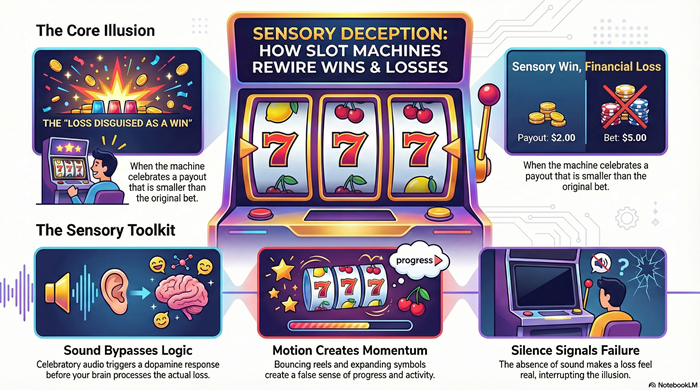
A loss disguised as a win occurs when:
- The payout is smaller than the bet
- The machine celebrates anyway
- The player feels rewarded
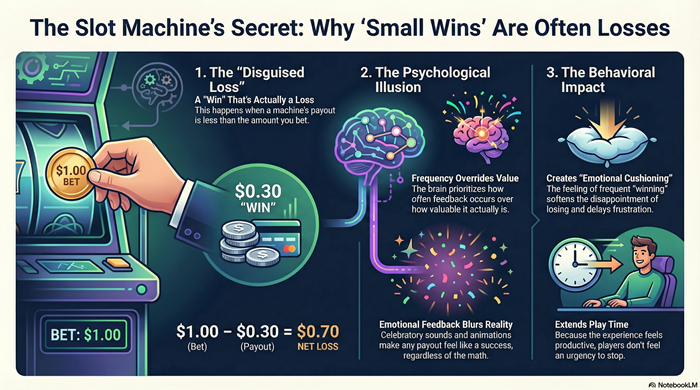
For example, wagering $1.00 and receiving $0.30 back is still a loss. But when that $0.30 triggers sounds, animations, and positive feedback, the brain registers it as success.
From an accounting perspective, nothing positive happened.
From a psychological perspective, it feels like momentum.
Why the Brain Mislabels These Outcomes
Human brains are not wired to track micro-losses well.
Instead, we rely on:
- Visual cues
- Emotional signals
- Frequency of feedback
When feedback is frequent and positive, the brain interprets it as progress — even when the net result is negative.
Slot machines exploit this disconnect deliberately.
Frequency Over Magnitude: The Key Illusion
Small wins feel powerful because they occur often.
Players tend to value:
- How often something happens
- More than how valuable it actually is
A session with many small celebratory moments feels more successful than one with a single larger payout, even if the financial outcome is worse.
Frequency overrides arithmetic.
How Slot Design Encourages Misinterpretation
Slot machines are designed to:
- Trigger sound and animation on small returns
- Blur the distinction between wins and partial refunds
- Reduce attention to net loss
When celebration is tied to any payout, players stop distinguishing between winning money and getting some money back.
The line between success and failure dissolves.
Why These Wins Extend Play Time
Losses disguised as wins create emotional cushioning.
Instead of sharp disappointment:
- Losses feel softened
- Frustration is delayed
- Persistence increases
The player doesn’t feel urgency to stop because the experience feels productive.
This prolongs play without altering the underlying cost.
How Volatility Interacts With Disguised Losses
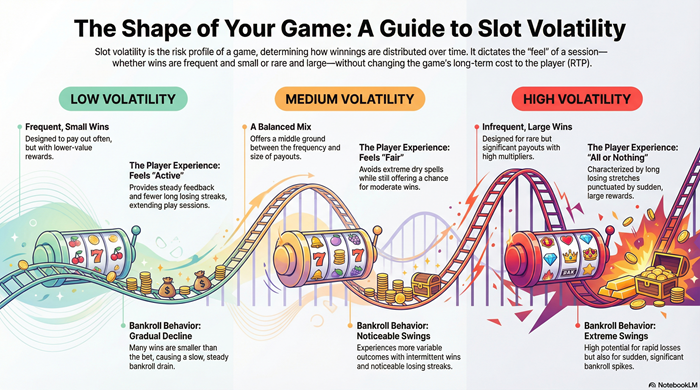
Low-volatility slots rely heavily on disguised losses.
They produce:
- Frequent small returns
- Fewer large wins
- A sense of steady activity
High-volatility slots rely less on disguised losses and more on rare big events. Both designs extract value — they just feel different.
Why Players Overestimate Their Performance
Because many spins trigger celebration:
- Players believe they’re “winning a lot”
- The balance decline feels slow
- Losses feel manageable
When sessions end, players are often surprised by how much they spent.
The experience didn’t match the outcome.
Sound and Visuals Reinforce the Illusion
Celebration seals the deception.
When sounds and visuals:
- Appear instantly
- Are bright and rewarding
- Follow small returns
the brain treats these moments as wins without checking the math.
Emotion overrides accounting.
Online Slots Make This Worse
Online slots:
- Spin faster
- Celebrate instantly
- Hide bet comparisons
Losses disguised as wins occur rapidly and repeatedly, creating a continuous illusion of engagement while the balance declines.
Speed compresses awareness.
Why This Design Is Legal
Regulators focus on:
- Correct payout tables
- Accurate RTP
- RNG integrity
They do not regulate how losses are emotionally framed.
As long as the math is honest, presentation is allowed — even when it misleads perception.
What Changes When You Recognize Disguised Losses
Recognizing disguised losses doesn’t:
- Improve odds
- Reveal winning patterns
What it does change is behavior.
Players who recognize disguised losses:
- Stop interpreting small returns as success
- Track net outcomes
- End sessions sooner
Awareness restores realism.
Continue Learning About Slot Machines
If you want to understand how slot machines reshape perception without altering probability, these guides explain the mechanics and psychology behind modern slot design:
- How Slot Machines Really Work
- What Is RTP in Slot Machines?
- Slot Volatility Explained (Low vs Medium vs High)
- How Slot Sound and Visuals Influence Player Behavior
- How Near Misses Manipulate Player Perception
- Does Auto-Spin Increase Losses?
- Are Online Slots Rigged?
Each article explains one reason slot play feels productive even when it isn’t.
Final Thought: Feeling Busy Isn’t the Same as Winning
Slot machines don’t need to drain balances aggressively to be effective. They only need to keep players feeling engaged.
Small wins that celebrate losses create the illusion of progress — and illusion is powerful.
When you separate feeling from math, clarity returns.
And clarity shortens sessions.