
How Video Poker Paytables Determine Long-Term Results
This article is part of our complete guide on How Video Poker Really Works: Paytables, Probability, and Why Myths Persist, which explains video poker paytables, expected value, probability, variance, and why common myths fail.
What a Video Poker Paytable Actually Is
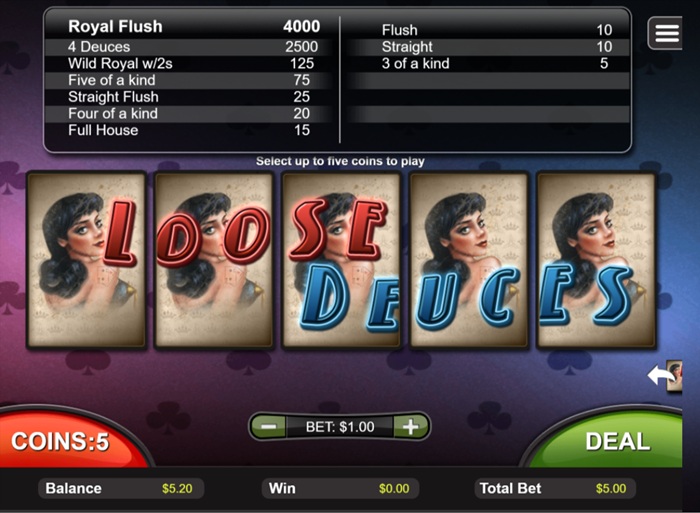
A video poker paytable is often treated as a list of prizes. In reality, it is something far more important: a mathematical contract that defines how outcomes are valued over time.
The paytable exists before a single card is dealt. It does not respond to player decisions, session length, or perceived skill. It simply assigns payouts to completed hands based on predefined categories.
This distinction matters because video poker outcomes are not evaluated emotionally or contextually. They are evaluated mechanically. Once a hand is complete, the paytable determines its value without reference to how the hand was played or what preceded it.
The game does not “reward” good play. It evaluates results.
Paytables Encode Expected Outcomes, Not Advice
Payout Ratios Reflect Hand Frequency
Hands that appear rarely pay more because they occur less often. Hands that appear frequently pay less because they occur more often. This relationship is not symbolic — it is mathematical.
A paytable is designed so that:
- Common hands contribute small, frequent payouts
- Rare hands contribute large, infrequent payouts
- The balance between the two defines long-term return
This balance is invisible during short sessions. It only becomes clear across large numbers of hands, which is why paytables are so often misunderstood.
Why Small Changes Matter So Much
Two paytables can look nearly identical while behaving very differently over time. A small adjustment to a single payout changes the weight of that outcome across thousands of hands.
Because rare hands contribute a disproportionate share of long-term results, even slight changes in how they are valued can dramatically alter expected outcomes. This is why focusing on visible wins or favorite hands misses the point entirely.
The structure of the table does the work, not the player’s perception of it.
Why Players Consistently Misread Paytables
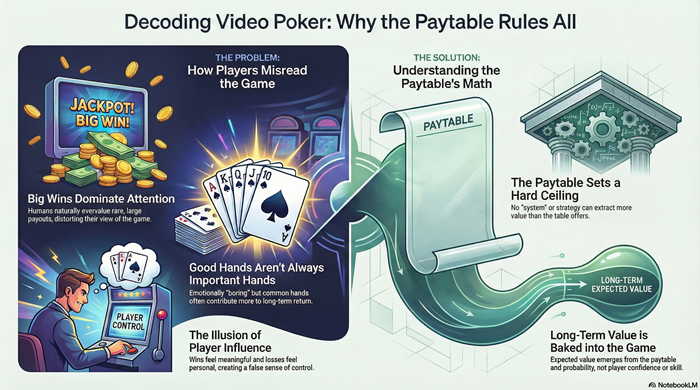
Big Wins Dominate Attention
Humans naturally focus on large, memorable events. In video poker, this means oversized attention is paid to rare hands with large payouts.
This creates a distorted view of importance. A hand that appears once in tens of thousands of deals feels more meaningful than hands that appear constantly — even if those common hands contribute more to long-term results.
The paytable does not prioritize excitement. It prioritizes arithmetic.
“Good Hands” vs. “Important Hands”
Some hands feel good to hit. Others barely register emotionally. This emotional hierarchy rarely matches mathematical importance.
Hands that feel boring often dominate long-term return because they occur so frequently. Hands that feel dramatic often matter less than players expect because of how rarely they appear.
Paytables do not care how a hand feels. They care how often it occurs.
The Paytable Is Static — Player Experience Is Not
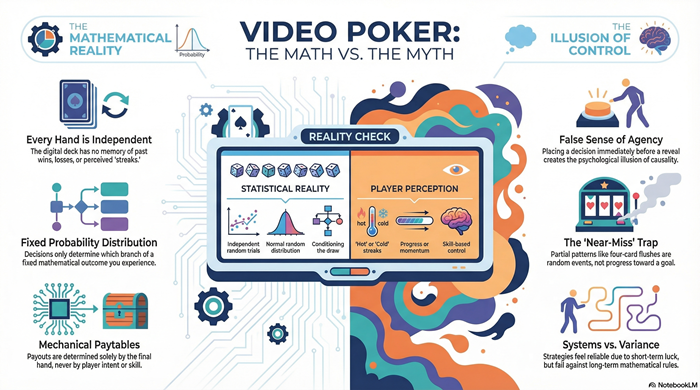
A paytable does not adjust to the player. It does not react to confidence, frustration, or perceived momentum.
What does change is player experience:
- Wins feel meaningful
- Losses feel personal
- Near misses feel instructional
This mismatch creates the illusion that behavior influences outcomes, when in reality only the distribution of hands interacting with the paytable determines results.
The table remains fixed. Interpretation does not.
Why Paytables Override “Systems”
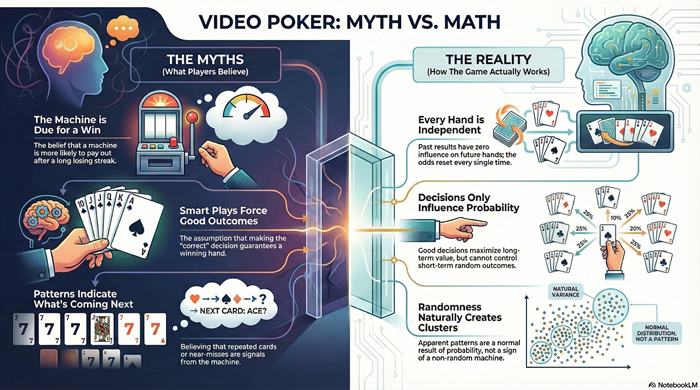
Many video poker systems implicitly assume that decision-making can overcome payout structure. This assumption fails for a simple reason: the paytable defines the ceiling.
No system can extract value that the paytable does not provide. Decisions may influence which hands are encountered, but they cannot create payouts that are not encoded in the table itself.
This is why arguments about “better play” often collapse when examined mathematically. Without understanding the paytable, discussions about performance float without an anchor.
How Paytables Connect to Expected Value
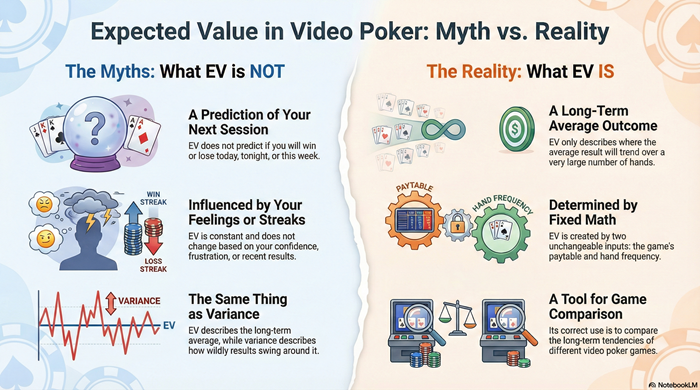
Expected value is not a property of the player. It is a property of the game structure.
The paytable assigns payouts. The deck determines hand frequency. Expected value emerges from the interaction between the two across a very large number of hands.
This is why:
- Expected value can be calculated without observing play
- Short-term experience routinely contradicts long-term expectation
- Confidence does not alter outcomes
Expected value is the math behind the table, not the story told about it.
How Paytables Connect to Variance
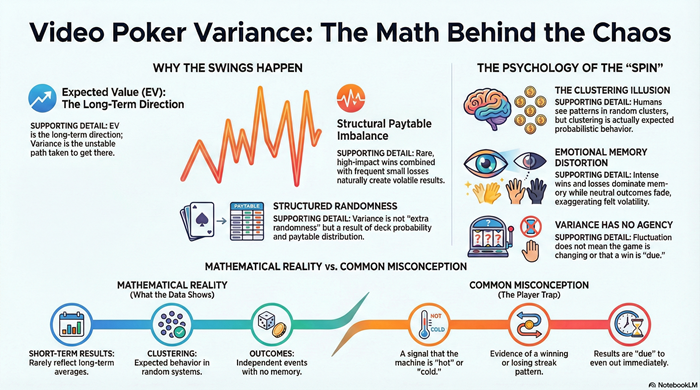
Variance explains why results fluctuate even when the underlying structure is unchanged.
Because paytables rely on a mix of frequent small outcomes and rare large ones, results naturally cluster unevenly in the short term. Long stretches without significant wins are not anomalies — they are expected behavior in a probabilistic system.
Variance is not a flaw. It is the consequence of how paytables distribute value across outcomes.
Understanding this connection is critical. Without it, players interpret normal fluctuation as signal, mistake noise for feedback, and invent explanations that do not exist.
Why This Changes How Video Poker Should Be Understood
Once paytables are recognized as the primary determinant of long-term results, several common misunderstandings fall away:
- Decisions do not rewrite probability
- Confidence does not influence return
- Patterns in short sessions do not persist
- Outcomes do not validate reasoning
Everything else — strategy debates, system arguments, anecdotal success — becomes secondary to the structure encoded in the paytable.
This is not a matter of opinion. It is a property of the system.