
Does Machine Location Matter in Slots?
🎰📍 Many slot players believe where a machine is placed inside a casino affects how it pays. Machines near entrances are thought to be looser, those in high-traffic areas are assumed to pay more, and secluded machines are often labeled as traps designed to quietly drain bankrolls. These beliefs feel intuitive because casinos are carefully designed spaces — and design implies intention.
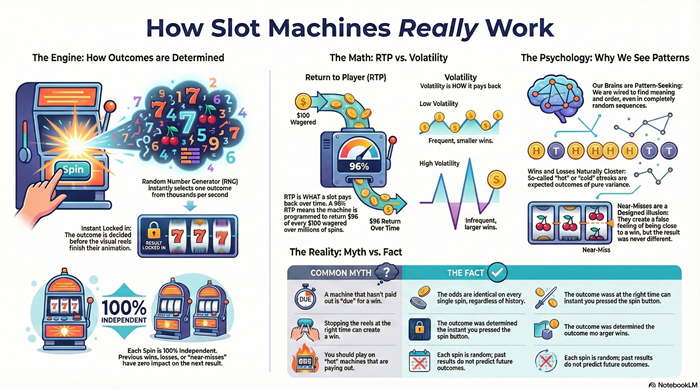
But intention in layout does not equal intention in odds. To determine whether machine location actually matters, we need to separate casino psychology from slot mechanics. As explained in our guide on how slot machines really work, slot outcomes are governed by fixed probabilities and independent random number generation, not by where a machine sits on the floor.
This article explains why location myths persist, how casino layout influences behavior (not odds), and why machine placement does not change slot payouts.
What Players Mean by “Machine Location”
When players talk about machine location, they usually mean:
- Slots near entrances or exits
- Machines along main walkways
- Slots close to bars or restaurants
- Isolated machines in corners
- High-limit room placement
The assumption behind all of these ideas is that casinos adjust slot generosity based on visibility or foot traffic.
That assumption misunderstands how slots are regulated and how casinos profit from them.
Why the Location Myth Feels Logical
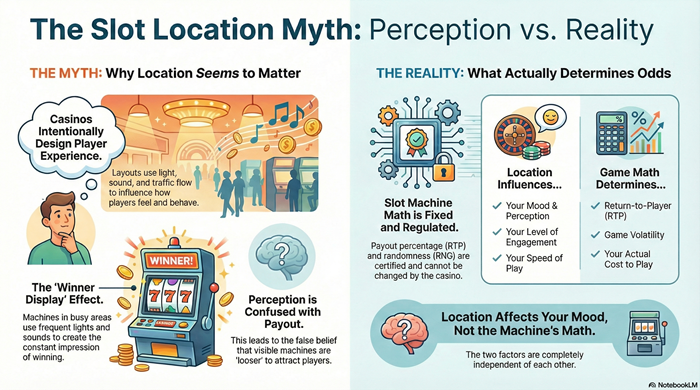
Casinos are intentionally designed environments.
They control:
- Lighting
- Sound
- Traffic flow
- Sightlines
Because casinos design spaces carefully, players assume game behavior is also spatially optimized.
This leads to beliefs like:
- “They want people walking in to see winners”
- “Hidden machines are colder”
- “Busy areas mean better payouts”
Design influences perception, not probability.
How Slot Machines Are Actually Regulated
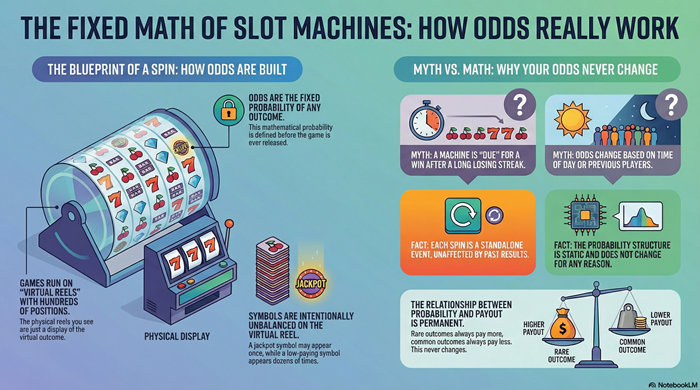
Slot machines are certified as individual games, not as floor-dependent systems.
Once a slot is approved:
- RTP is fixed
- Probability weighting is fixed
- RNG behavior is fixed
Casinos cannot:
- Increase odds based on placement
- Adjust payout frequency by location
- Change outcomes dynamically
Doing so would violate gaming regulations and invalidate certification.
A slot machine’s math is the same regardless of where it sits.
Why Casinos Still Care Deeply About Placement
Although casinos can’t change odds by location, placement still matters — for behavioral reasons.
Casinos use placement to:
- Attract attention
- Increase play time
- Encourage impulsive spins
- Maximize exposure
Machines near entrances are chosen because they are:
- Visually engaging
- Loud
- Familiar
They are not chosen because they pay more.
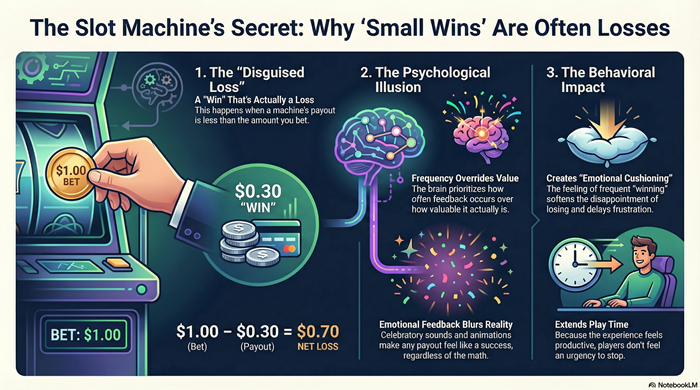
The “Winner Display” Effect
High-traffic areas often feature machines that:
- Display frequent small wins
- Use bright animations
- Play celebratory sounds
These features create the impression that machines are paying constantly.
In reality:
- Many of these wins are below the bet amount
- Net losses are masked by celebration
- Frequency is confused with generosity
The location amplifies perception, not payout.
What About Casinos Wanting to “Hook” Players?
Another belief is that casinos loosen machines near entrances to hook new players.
This theory fails for a simple reason:
- Casinos don’t need to hook players with generosity
- They hook players with novelty and stimulation
The house edge already ensures profitability. There is no mathematical incentive to temporarily give away advantage.
Does Location Affect Online Slots?
The location myth exists online too.
Players may believe:
- Certain lobbies pay better
- New games are looser
- Featured slots are more generous
Online platforms use visibility to drive clicks, not to alter odds. Featured placement affects what you play, not how it pays.
The same principle applies: presentation changes behavior, not probability.
Why Corner Machines Feel “Colder”
Secluded machines often feel colder because:
- There’s less stimulation
- Losses are more noticeable
- Fewer distractions exist
Without noise and visual reinforcement, losses feel heavier.
The machine didn’t change. The environment did.
High-Limit Rooms and the Location Fallacy
High-limit rooms are often assumed to offer better odds.
Sometimes:
- RTP may be higher
- Volatility may be lower
But this is a game choice difference, not a location effect.
If a high-limit slot pays better, it’s because it was designed that way — not because of where it sits.
Why Players Keep Switching Locations
Players move around because:
- It feels proactive
- It avoids confronting losses
- It creates a sense of strategy
Switching machines feels like making an adjustment, even though nothing materially changes.
Movement provides relief, not advantage.
What Actually Matters Instead of Location
What actually affects slot cost:
- RTP
- Volatility
- Speed of play
- Bet size
Location affects:
- Mood
- Perception
- Engagement
Confusing the two leads to false conclusions.
Why Location Myths Persist
Location myths persist because:
- Casinos are designed environments
- Wins are memorable
- Losses are diffuse
- Stories are compelling
It’s easier to believe placement matters than to accept randomness combined with house edge.
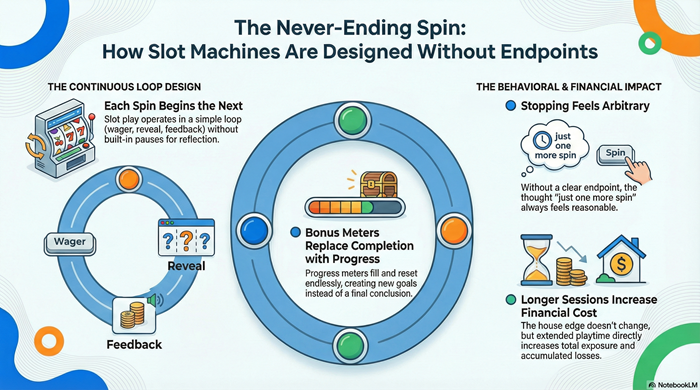
What Understanding Location Really Changes
Understanding that location doesn’t matter does not:
- Improve odds
- Create better machines
What it does change is behavior.
Players who abandon location myths:
- Stop wandering endlessly
- Make fewer impulsive spins
- Walk away sooner
That restraint matters far more than location ever could.
Continue Learning About Slot Machines
If you want to understand why environment influences perception — but not probability — these guides explain the mechanics that actually determine slot outcomes:
- How Slot Machines Really Work
- What Is RTP in Slot Machines?
- Slot Volatility Explained (Low vs Medium vs High)
- RNG Explained — Are Slots Truly Random?
- Do Hot and Cold Slots Exist?
- Can Slot Timing Affect Wins?
Each article explains one reason why slots feel reactive even though they are not.
Final Thought: Location Shapes Experience, Not Math
Casinos use layout to guide behavior, not to adjust odds.
A machine near the door and a machine in the corner operate on the same mathematics. What changes is how the experience feels — not what the game returns.
Once you understand that distinction, location loses its mystique.
And with it, one more expensive myth disappears.