
How Near Misses Manipulate Player Perception
🎰🧠 Near misses are one of the most powerful — and least understood — elements of slot machine design. Seeing two jackpot symbols land perfectly on the payline while the third barely slips past feels meaningful. It feels intentional. Most players interpret it as being “close” to winning.
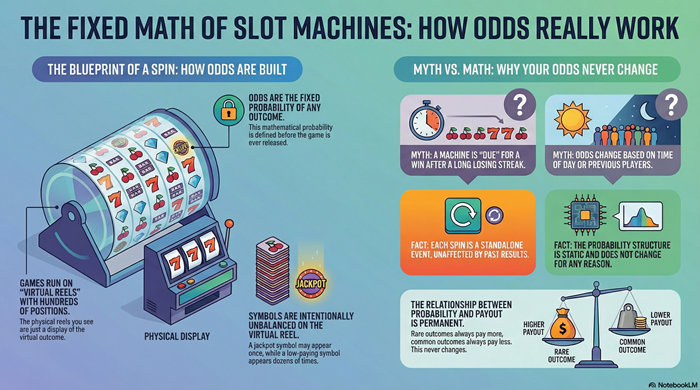
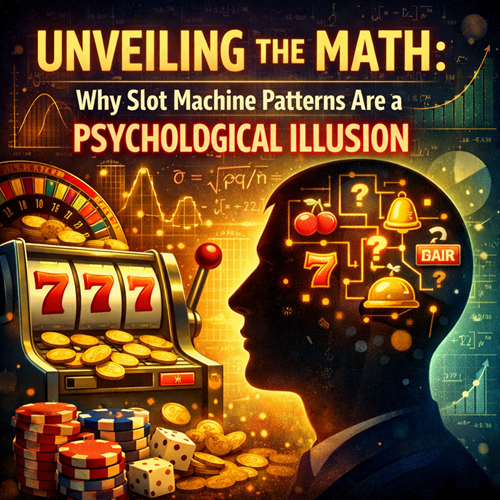
But that feeling is manufactured. Near misses do not indicate progress, improved odds, or readiness to pay. They are psychological triggers designed to extend play. To understand why they are so effective, you have to separate outcome probability from outcome presentation. As explained in our guide on how slot machines really work, slot results are determined by fixed probabilities — but how those results are displayed is carefully engineered.
This article explains what near misses actually are, how they influence perception, and why they keep players spinning even though they provide no advantage.
What a Near Miss Actually Is
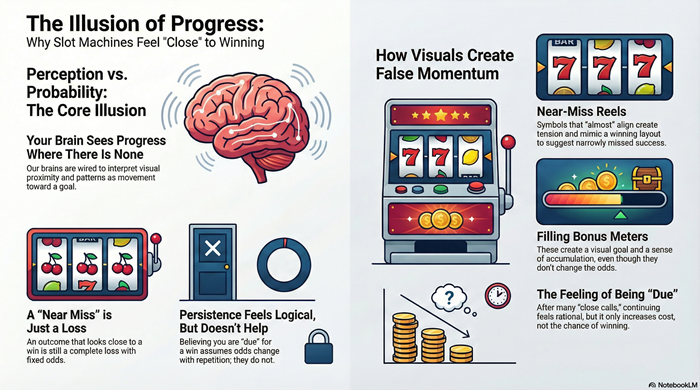
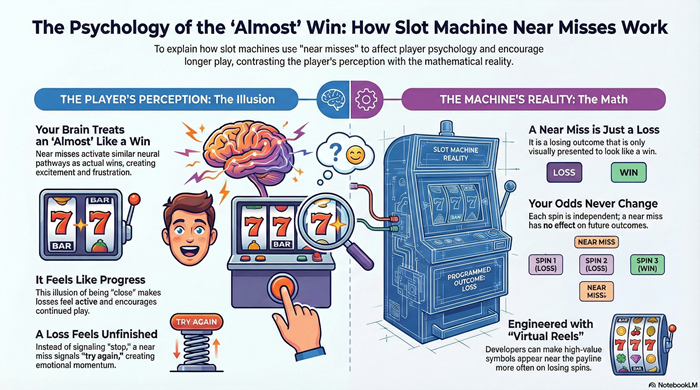
A near miss is a losing outcome that visually resembles a winning one.
Examples include:
- Two jackpot symbols on the payline, third just above or below
- Bonus symbols clustered tightly without triggering
- High-value symbols aligning except for one position
Despite how they look, near misses:
- Are mathematically identical to other losses
- Do not affect future outcomes
- Do not indicate increased probability
They are not accidents. They are design choices.
Why Near Misses Feel So Powerful
Near misses exploit how the human brain processes reward.
Psychologically, an “almost win” triggers:
- Frustration
- Excitement
- Motivation to continue
Studies show near misses activate similar neural pathways to actual wins. The brain treats “almost” as meaningful feedback, even when it shouldn’t.
Slots leverage this response to make losses feel active instead of final.
Near Misses vs Actual Probability
A critical misunderstanding is believing near misses indicate closeness.
They do not.
From a probability standpoint:
- A near miss is not closer than any other loss
- Outcomes are not sequentially linked
- Odds do not change after a near miss
The RNG already determined the losing outcome before symbols were arranged visually.
The “closeness” exists only in presentation — not in math.
How Near Misses Are Engineered
Slots use virtual reels, not physical ones.
Virtual reels allow developers to:
- Weight symbols unevenly
- Place high-value symbols near paylines more often
- Create losing outcomes that look close
The visual reel you see is a display layer. The probability lives behind it.
Near misses are visual storytelling layered on top of predetermined outcomes.
Why Near Misses Increase Play Time
Near misses increase play because they:
- Suggest progress where none exists
- Create emotional momentum
- Reduce the feeling of finality
A clean loss signals “stop.”
A near miss signals “almost.”
That distinction keeps players engaged longer without changing odds.
Near Misses and the Illusion of Skill
Near misses create the illusion that player actions matter.
Players may believe:
- Spin timing caused the miss
- Bet size influenced the outcome
- Persistence is being rewarded
In reality, player input affects nothing beyond wager size.
Near misses encourage the belief that success is being earned — not randomly granted.
Why Near Misses Are Common in High-Volatility Slots
High-volatility slots have:
- Rare wins
- Long losing stretches
- Large potential payouts
Near misses help sustain engagement during dry spells by simulating proximity to a win.
They make inactivity feel like buildup.
Are Near Misses Allowed by Regulators?
Yes.
Regulators allow near misses because:
- They do not alter probability
- They do not misrepresent payout tables
- They are classified as presentation, not math
Regulation focuses on fairness of odds — not fairness of experience.
Near misses are legal because they don’t change the expected return.
Why Near Misses Feel Worse Online
Online slots amplify near-miss effects because:
- Spins are faster
- Visuals are larger and clearer
- Feedback is immediate
When near misses occur rapidly and repeatedly, they create the illusion of momentum even during sustained losses.
Speed magnifies perception.
Why Players Remember Near Misses More Than Wins
Near misses are emotionally unresolved.
Wins resolve tension. Losses resolve disappointment. Near misses linger.
That lingering emotional state:
- Encourages continued play
- Increases recall
- Reinforces belief
People remember unfinished stories more vividly than completed ones.
What Understanding Near Misses Actually Changes
Understanding near misses does not:
- Improve odds
- Predict wins
What it changes is interpretation.
Players who recognize near misses for what they are:
- Stop chasing “almosts”
- Break play loops earlier
- Reduce emotional escalation
Awareness interrupts the manipulation.
Continue Learning About Slot Machines
If you want to understand how perception is shaped separately from probability, these guides explain the mechanics and psychology behind modern slot design:
- How Slot Machines Really Work
- What Is RTP in Slot Machines?
- Slot Volatility Explained (Low vs Medium vs High)
- RNG Explained — Are Slots Truly Random?
- Does Auto-Spin Increase Losses?
- Can Slot Timing Affect Wins?
- Are Online Slots Rigged?
Each article explains one reason why slot play feels intentional even though outcomes are fixed.
Final Thought: Near Misses Don’t Mean Close — They Mean Engaged
A near miss is not a step toward winning.
It’s a step toward continuing.
Slots don’t need to cheat to keep players spinning. They just need to make losses feel unfinished.
Understanding near misses doesn’t change the math — but it does remove their power.