
How Slot Sound and Visuals Influence Player Behavior
🎰🔊 Slot machines don’t just take money — they shape perception. Lights flash, reels bounce, coins clatter, and music swells even when the result is technically a loss. To most players, these effects feel cosmetic or entertaining. In reality, they are among the most powerful tools in slot machine design.
Sound and visuals don’t change slot outcomes, but they dramatically change how outcomes feel. To understand why players continue spinning despite consistent losses, you have to examine how sensory feedback interacts with probability. As explained in our guide on how slot machines really work, slot outcomes are fixed by math — but how those outcomes are presented is intentionally engineered.
This article explains how slot sounds and visuals influence player behavior, why they make losses feel less severe, and how they extend play without changing odds.
Why Slot Machines Are Sensory Systems First
Slot machines are designed as sensory environments, not just games.
Every spin produces:
- Motion
- Color
- Sound
- Feedback
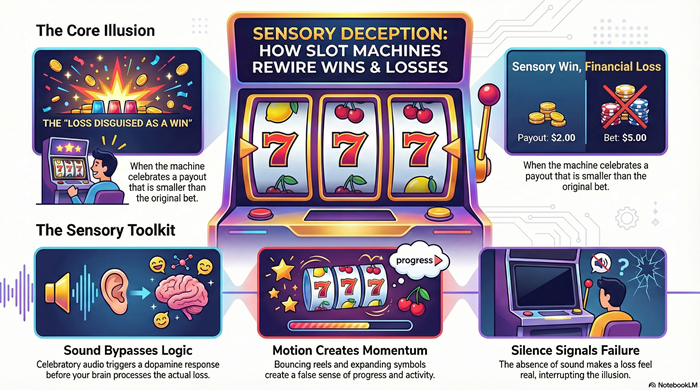
These elements are carefully synchronized to create engagement regardless of outcome. Silence signals failure. Activity signals progress. Slot machines ensure silence is rare.
A noisy, animated loss feels fundamentally different than a quiet one — even if the financial result is identical.
The Illusion of Winning Without Winning
One of the most important concepts in slot design is the loss disguised as a win.
This occurs when:
- The machine celebrates
- Music plays
- Coins animate
—but the payout is less than the bet.
From a financial perspective, this is a loss. From a sensory perspective, it feels like success.
Sound and visuals convert losing outcomes into emotionally positive experiences, blurring the distinction between wins and losses.
Why Sound Is So Effective
Sound bypasses rational processing.
Celebratory audio:
- Triggers dopamine responses
- Reinforces behavior
- Reduces perceived loss
Slot sounds are tuned to:
- High pitch
- Rapid tempo
- Reward-style cues
These cues resemble the feedback used in video games and mobile apps, where engagement — not accuracy — is the goal.
The brain responds before logic intervenes.
Visual Motion and the Sense of Progress
Movement creates meaning.
Reels that:
- Bounce
- Expand
- Highlight symbols
suggest activity and progress. Even when nothing valuable happens, motion implies momentum.
This is why static displays feel “dead” and animated ones feel “alive,” even though both represent the same probabilities.
Progress is simulated visually, not mathematically.
Why Wins Feel Bigger Than They Are
Visual effects inflate perceived value.
A small win paired with:
- Large animations
- Loud sound effects
- Screen-filling celebration
feels significant, even if it barely returns a fraction of the wager.
The presentation overwhelms the math. Players remember the feeling, not the amount.
Sound and Visuals Reduce Loss Salience
Loss salience refers to how noticeable a loss feels.
Slot design reduces loss salience by:
- Masking losses with sound
- Animating near misses
- Celebrating partial returns
When losses don’t feel like losses, players are less likely to stop.
Reduced loss awareness extends sessions without changing the house edge.
The Role of Color and Contrast
Colors influence emotion.
Slots often use:
- Bright, warm colors for wins
- Softer transitions for losses
- High contrast to direct attention
This guides focus toward exciting outcomes and away from negative ones.
Attention is steered deliberately.
Why Silence Feels So Uncomfortable
Silence interrupts the illusion.
When a slot produces:
- No sound
- No animation
- No feedback
the loss feels real. Silence creates reflection.
Slot machines minimize silence because silence invites stopping.
How Online Slots Amplify Sensory Effects
Online slots intensify sensory manipulation.
They feature:
- Larger animations
- Headphone-enhanced sound
- Faster transitions
Combined with speed of play, these effects compress time perception and accelerate spending without conscious awareness.
The result is immersion without pause.
Why Sensory Design Doesn’t Violate Regulations
Regulators focus on:
- Probability fairness
- Disclosure
- RNG integrity
They do not regulate emotional impact.
Sound and visuals are considered presentation, not deception — even when they materially influence behavior.
Legal does not mean neutral.
Why Players Underestimate Sensory Influence
Players believe:
- They’re immune to effects
- Sounds are “just noise”
- Visuals don’t matter
But behavioral research consistently shows sensory feedback alters risk-taking and persistence.
Influence doesn’t require belief — it requires exposure.
What Understanding Sensory Manipulation Changes
Understanding sensory influence does not:
- Improve odds
- Reveal strategies
What it does change is awareness.
Players who recognize sensory manipulation:
- Mute sound
- Reduce session length
- Identify disguised losses
Awareness restores friction — and friction limits cost.
Continue Learning About Slot Machines
If you want to understand how slot machines shape perception beyond probability, these guides explain the mechanics and psychology that drive player behavior:
- How Slot Machines Really Work
- What Is RTP in Slot Machines?
- Slot Volatility Explained (Low vs Medium vs High)
- Does Auto-Spin Increase Losses?
- How Near Misses Manipulate Player Perception
- Can Slot Timing Affect Wins?
- Are Online Slots Rigged?
Each article explains one way slot machines influence behavior without altering outcomes.
Final Thought: Slots Don’t Just Play Sounds — They Play You
Slot machines don’t rely on luck alone. They rely on feedback.
Lights and sounds don’t change probabilities — they change perception. And perception determines persistence.
When outcomes are fixed, experience becomes the battlefield.
Understanding that doesn’t beat slots.
It reveals why they don’t need to be beaten to win.