
Why Wagering Requirements Are So Hard to Beat
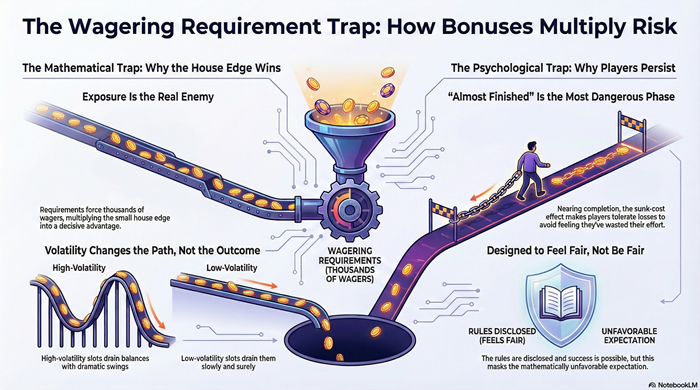
🎰📊 Wagering requirements are often treated as a simple hurdle: play enough, meet the requirement, and the bonus becomes real money. On paper, they look like a test of patience or luck. In reality, wagering requirements are one of the most effective mechanisms casinos use to convert bonuses into extended losses.
What makes wagering requirements so difficult isn’t trickery or hidden rules. It’s the combination of probability, exposure, and human behavior. To understand why they are stacked against players, you have to look beyond the bonus headline and into how slots actually work. As explained in our guide on how slot machines really work, slot outcomes are governed by fixed probabilities — and the longer you play, the more reliably those probabilities assert themselves.
This article explains why wagering requirements are mathematically unfavorable, why they exploit persistence psychology, and why most players underestimate their cost.
What Wagering Requirements Actually Do
A wagering requirement specifies how much must be bet before bonus funds (and often winnings from those funds) can be withdrawn.
For example:
- A $100 bonus with a 30× requirement requires $3,000 in wagers
- Those wagers must usually be completed on slots
- Losses during wagering are real and permanent
The requirement doesn’t change odds. It increases exposure.
Exposure Is the Real Enemy
Every wager carries a house edge.
When wagering requirements force:
- Thousands of spins
- Over extended sessions
- At fixed probabilities
the expected value becomes increasingly negative.
Even small house edges become decisive when multiplied over large wagering volumes.
The longer you play, the more the math stabilizes — and stabilization favors the house.
Why Players Focus on the Bonus, Not the Cost
Players naturally focus on:
- Bonus size
- Potential payout
- Completion possibility
They rarely focus on:
- Total amount wagered
- Expected loss per wager
- Time required to complete wagering
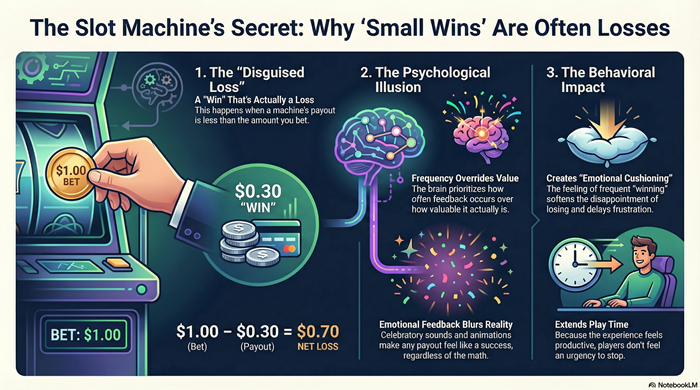
The bonus feels like value. The wagering requirement feels abstract.
Abstract costs are easy to ignore.
Why “Almost Finished” Is the Most Dangerous Phase
Wagering requirements create a powerful psychological trap near completion.
When players are:
- 70–90% finished
- Down some money
- Emotionally invested
Quitting feels wasteful.
This is the sunk-cost effect in action. Players tolerate worsening outcomes because stopping feels like losing twice — once financially, and once psychologically.
Volatility Makes Wagering Requirements Worse
Slot volatility plays a major role during wagering.
High-volatility slots:
- Create dramatic swings
- Can wipe balances quickly
- Tempt players with recovery
Low-volatility slots:
- Drain balances slowly
- Extend sessions
- Still converge toward expected loss
There is no volatility setting that reverses the math. Each simply changes how the loss arrives.
Why “Smart Play” Doesn’t Save Wagering
Players often believe:
- Choosing the right slot helps
- Betting patterns matter
- Timing affects completion
None of these meaningfully improve expected value.
Wagering requirements are designed so that:
- Variance may delay loss
- Persistence ensures exposure
- Completion odds decline over time
What feels like strategy is usually just endurance.
Why Free Spins and Small Bets Don’t Fix the Problem
Free spins and minimum bets feel safer.
In reality:
- Free spins still expose players to house edge
- Small bets extend wagering duration
- Longer duration increases exposure
Reducing bet size slows loss rate but increases total spins — often producing the same outcome over more time.
Why Casinos Love Wagering Requirements
Wagering requirements work because they:
- Increase time on device
- Increase total wagers
- Reduce withdrawal frequency
They convert promotional cost into guaranteed volume.
From a casino perspective, wagering requirements turn uncertain bonuses into predictable revenue.
Why Some Players Do Beat Wagering (Briefly)
Occasionally, players complete wagering and cash out.
This happens because:
- Variance allows short-term wins
- Some sessions run above expectation
But survivorship bias hides the full picture. The players who fail far outnumber those who succeed — and they leave quietly.
Why Wagering Requirements Feel Fair
Wagering requirements feel fair because:
- Terms are disclosed
- Participation is optional
- Success is possible
Fairness of disclosure does not mean fairness of expectation.
The rules are honest. The outcome is still unfavorable.
What Understanding Wagering Requirements Changes
Understanding wagering requirements does not:
- Turn bonuses into profit
- Create advantage
What it changes is expectation.
Players who understand wagering:
- Treat bonuses cautiously
- Set hard stop points
- Walk away sooner
Awareness limits damage.
Continue Learning About Slot Machines
If you want to understand how math, psychology, and incentives work together to extend slot play, these guides explain the related mechanisms behind wagering and persistence:
- How Slot Machines Really Work
- What Is RTP in Slot Machines?
- Slot Volatility Explained (Low vs Medium vs High)
- Do Slot Bonuses Change Player Behavior?
- Does Auto-Spin Increase Losses?
- Why Slot Sessions Feel Shorter Than They Are
- Are Online Slots Rigged?
Each article explains a different lever casinos use to increase exposure without changing odds.
Final Thought: Wagering Requirements Aren’t Tests — They’re Funnels
Wagering requirements don’t test discipline or intelligence.
They test endurance.
By forcing extended exposure to fixed probabilities, they funnel bonus value back to the house over time.
Understanding this doesn’t make bonuses profitable — but it makes the cost visible.
And visibility is the first step toward control.