
Blackjack Myths That Cost Players the Most Money
💸 Blackjack has more myths than almost any other casino game. Some are passed down by other players. Some are reinforced by movies. Others feel so intuitive that players never question them. The problem is that these beliefs don’t just shape how people think about blackjack — they shape how people play it, often at a significant cost.
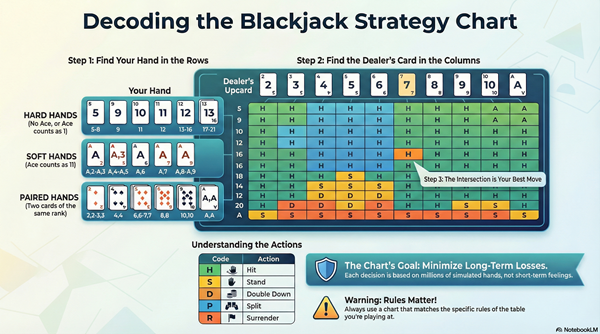
Blackjack is a math-driven game disguised as a social one. As explained in our Blackjack Basic Strategy guide, long-term results are determined by probabilities and decisions, not stories or instincts. Myths survive because they feel helpful, not because they are.
This article breaks down the most expensive blackjack myths, explains why they persist, and shows how believing them quietly increases the house edge over time.
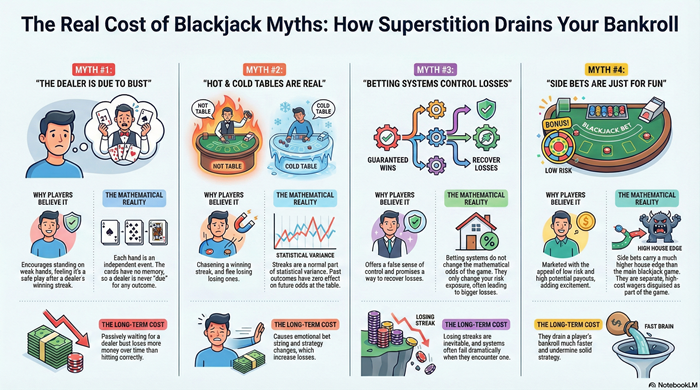
Myth #1: “The Dealer Is Due to Bust”
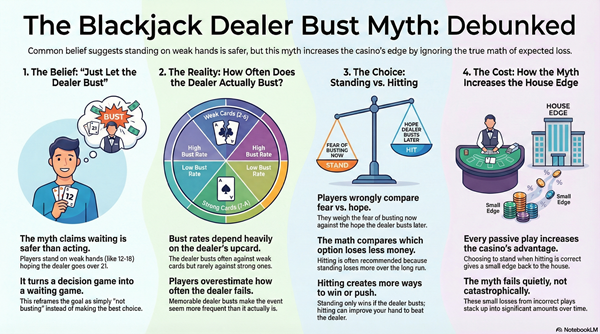
This is one of the most common and costly beliefs in blackjack. Players stand on weak hands because they believe the dealer must eventually fail.
The reality:
- Each hand is independent
- The dealer has no memory
- Being “due” does not exist in probability
Standing on weak totals to wait for a dealer bust often loses more money than hitting — even though it feels safer. This myth encourages passive play, which blackjack punishes.
Myth #2: “Hot and Cold Tables Are Real”
Players constantly chase hot tables and flee cold ones. Wins feel contagious. Losses feel ominous.
In reality:
- Streaks are normal variance
- Tables don’t retain momentum
- Past outcomes don’t affect future odds
Belief in hot and cold tables leads to:
- Emotional bet sizing
- Strategy deviations
- Table hopping
All of these behaviors increase losses without changing the math.
Myth #3: “Seat Position Affects the Cards”
First base. Third base. Middle seats. Players attach meaning to all of them.
The truth is simple:
- Cards are dealt from a fixed order
- Seat position only changes who gets a card
- It does not change which cards exist
Blaming seat position distracts players from their own decisions and creates unnecessary tension at the table.
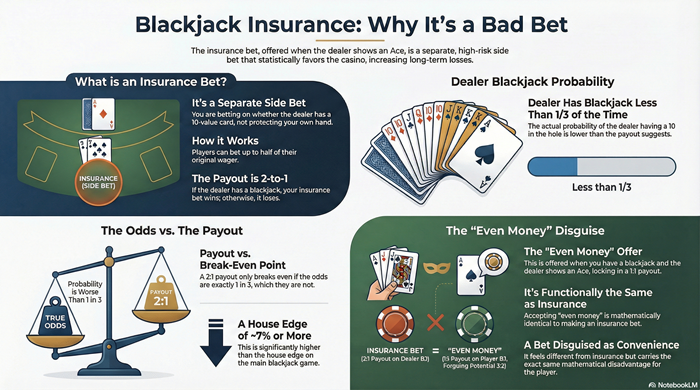
Myth #4: “Insurance Is a Smart Defensive Bet”
Insurance sounds responsible. It feels like protection.
It isn’t.
Insurance is a side bet with a high house edge. It loses money over time because the dealer does not have blackjack often enough to justify the payout. Taking insurance repeatedly adds a costly wager to an otherwise low-edge game.
It protects emotions, not bankrolls.
Myth #5: “Betting Systems Control Losses”
Martingale. Fibonacci. Positive progression. Players love systems because they promise structure and recovery.
The problem:
- Betting systems don’t change expected value
- They only change exposure
- Losing streaks are inevitable
Systems often fail dramatically or quietly — but they always fail eventually. Blackjack is not beaten by rearranging bet sizes.
Myth #6: “Side Bets Are Just for Fun”
Side bets are marketed as harmless excitement. Small wagers. Big payouts.
What players miss:
- Side bets carry very high house edges
- They drain bankrolls faster than main bets
- They undermine good strategy
Side bets turn blackjack from a low-cost game into a high-cost one — quietly.
Myth #7: “You Can Play by Feel Once You’re Experienced”
Some players believe experience replaces discipline. After enough hands, they trust instinct over charts.
This is backwards.
Experience without structure increases confidence, not accuracy. Blackjack intuition is unreliable because human instincts struggle with probability and variance. Deviating from correct decisions based on feeling consistently increases losses.
Myth #8: “Short-Term Results Prove a Strategy Works”
Players often judge decisions by what just happened.
Examples:
- “That hit was wrong — I busted.”
- “Standing worked — the dealer busted.”
- “Splitting ruined the hand.”
This thinking ignores expected value. Correct decisions can lose. Incorrect decisions can win. Strategy is evaluated over hundreds of hands, not one outcome.
Myth #9: “6:5 Blackjack Isn’t That Bad”
Reduced payouts feel minor because the difference is small per hand.
Over time, they are devastating.
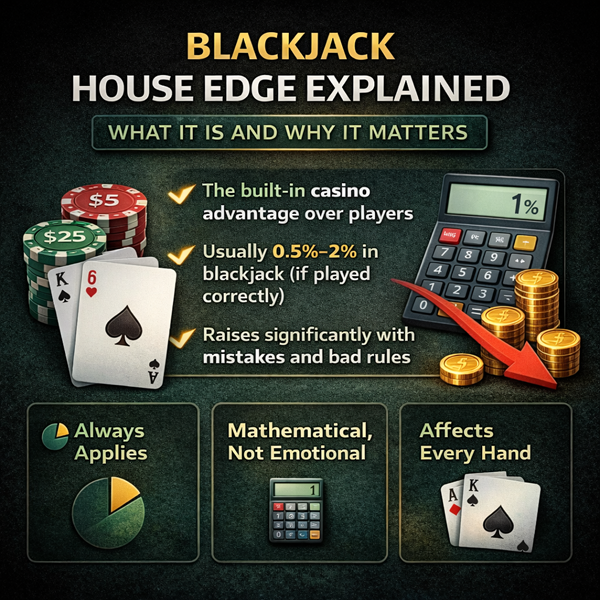
6:5 payouts more than double the house edge compared to 3:2 games. No amount of good play can compensate for a bad payout structure. This myth costs players far more than most strategy mistakes.
Myth #10: “You’ll Know When It’s Time to Walk Away”
Many players rely on gut feeling to decide when to stop playing.
Unfortunately:
- Fatigue clouds judgment
- Emotion escalates risk
- Longer sessions increase losses
Walking away is not intuitive. It requires rules and discipline. Waiting for a feeling usually means staying too long.
🧠 Why These Myths Survive
Blackjack myths persist because they:
- Simplify complex math
- Reduce emotional discomfort
- Provide narratives for losses
- Shift blame away from decisions
They make players feel involved rather than accountable.
The casino doesn’t need these myths to exist — but it benefits when they do.
📉 How Believing Myths Raises the House Edge
Each myth encourages behaviors that:
- Increase variance
- Reduce discipline
- Add high-cost bets
- Distract from strategy
Individually, the cost feels small. Together, they explain why many players lose far more than expected.
📌 What Replaces Myths in Good Blackjack Play
Strong blackjack play is boring by design.
It relies on:
- Fixed decisions
- Consistent bet sizing
- Ignoring streaks
- Choosing good rules
Replacing myths with structure removes drama — and saves money.
🔚 Final Thought: Blackjack Is Expensive When Stories Replace Math
Blackjack myths don’t survive because they’re true.
They survive because they feel useful.
The moment players stop explaining losses with stories and start examining decisions, blackjack becomes clearer — and far less costly.
Myths make the game emotional.
Math makes it honest.
🔗 Recommended Internal Links