
When to Walk Away From a Blackjack Table
🚶One of the hardest decisions in blackjack isn’t whether to hit or stand. It’s knowing when to stop playing. Many players believe quitting early is cowardly or that walking away breaks some unwritten rule of gambling. Others convince themselves they’ll leave “after one more hand.”
Blackjack doesn’t reward endurance. It rewards discipline. As explained in our Blackjack Basic Strategy guide, good play is about minimizing long-term cost, not proving toughness. Knowing when to walk away is part of that discipline — and ignoring it quietly increases losses.
This article explains when walking away from a blackjack table is the correct move, why players resist it, and how poor exit decisions undo otherwise solid play.
🧠 Why Players Struggle to Walk Away
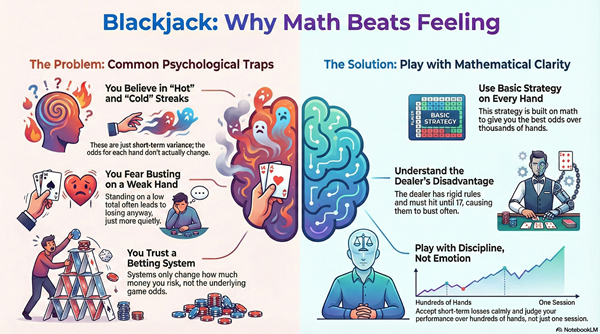
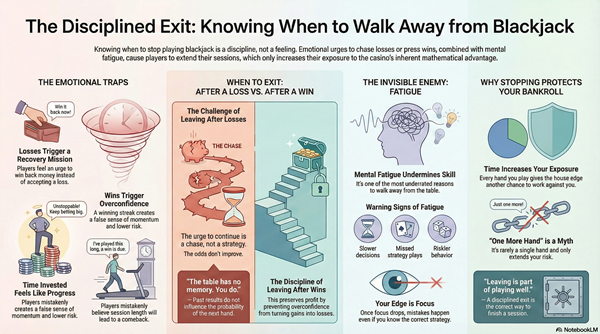
Walking away feels wrong because it clashes with several instincts:
- Losses trigger the urge to recover
- Wins trigger the urge to press
- Time invested feels like progress
- Leaving feels unfinished
These reactions are emotional, not mathematical. Blackjack doesn’t care how long you’ve played, how close you feel, or how tired you are.
The table has no memory. You do.
🎯 Walking Away After Losses: The Hardest Exit
Most players struggle to leave after losing. They tell themselves:
- “I’ll win it back”
- “The table has to turn”
- “I’m due”
This thinking turns blackjack into a recovery mission instead of a cost-controlled activity.
Walking away after losses is not admitting defeat. It’s recognizing that continuing to play does not improve your odds — it only increases exposure to them.
📊 Why Chasing Losses Never Works
Chasing losses fails because:
- Each hand has the same expectation
- Increasing time or bet size doesn’t change probability
- Emotional play increases mistakes
Losses already happened. Continuing to play cannot undo them. It can only create new ones.
Blackjack punishes urgency.
🧠 Walking Away After Wins: The Overlooked Discipline
Leaving after a win feels just as difficult, but for different reasons.
Players often stay because:
- Confidence is high
- Risk feels lower
- Wins feel like momentum
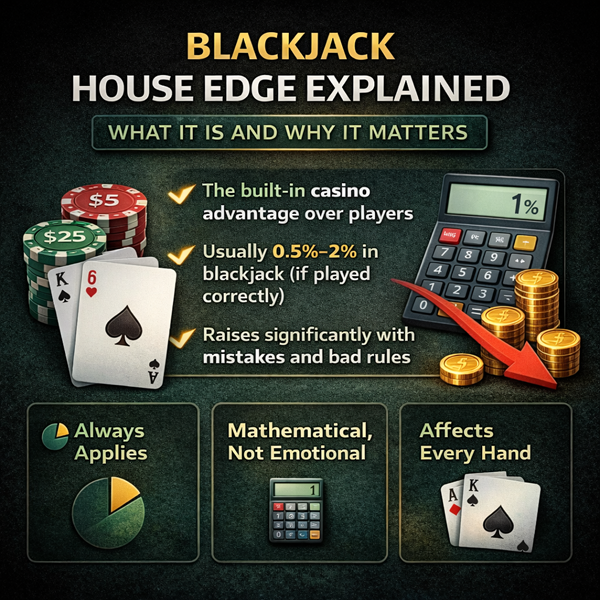
This is when discipline matters most. Winning streaks do not reduce the house edge. They simply delay its effect.
Walking away after a win preserves profit by preventing emotional overconfidence from turning gains into losses.
⚠️ The Myth of “One More Hand”
“One more hand” is rarely one hand.
It becomes:
- One more shoe
- One more hour
- One more attempt to feel satisfied
There is no mathematical justification for extending play once a session goal is reached. The longer you play, the more the house edge asserts itself.
Stopping is not arbitrary. Continuing is.
🧪 Fatigue: The Invisible Enemy
Mental fatigue is one of the most underrated reasons to walk away.
Fatigue causes:
- Slower decisions
- Missed strategy spots
- Emotional shortcuts
- Riskier behavior
Blackjack requires consistency. Once focus drops, even correct strategy knowledge doesn’t prevent errors.
Walking away when tired protects the edge you worked to preserve.
🏛️ External Factors That Signal It’s Time to Leave
Sometimes the table environment itself changes.
Examples include:
- Rule changes mid-session
- Dealer speed increases
- New distractions arrive
- Social pressure intensifies
These factors don’t change the math directly, but they influence decision quality. If the environment works against focus, walking away is the smart move.
📉 Why Session Length Matters More Than Outcome
Blackjack losses scale with time played, not mood or confidence.
Even perfect play loses slowly. Long sessions turn slow losses into certain ones.
Short, controlled sessions:
- Limit exposure
- Reduce variance damage
- Preserve bankroll longevity
Walking away shortens the window in which the house edge operates.
🧠 Stop-Losses and Win Goals: Helpful or Harmful?
Some players set:
- Loss limits
- Win targets
These can help psychologically, but they do not change expectation.
Used correctly:
- They enforce discipline
- They create exit structure
Used emotionally:
- They encourage chasing
- They distort decisions
Goals are tools — not guarantees.
📌 The Real Rule for Walking Away
The correct time to leave is not based on:
- Being up or down
- Feeling lucky or unlucky
- Hitting a dramatic moment
It’s based on:
- Mental clarity
- Discipline stability
- Session intent
When your decision quality starts to slip, the session is already over — whether you acknowledge it or not.
🧠 Why Pros Walk Away So Often
Professional players walk away more frequently than casual players because they understand one thing clearly: time is not your friend in a negative-expectation game.
They don’t wait for permission.
They don’t chase closure.
They don’t need the table’s approval.
They leave when the conditions are no longer favorable — even if nothing “bad” has happened yet.
🔚 Final Thought: Leaving Is Part of Playing Well
Walking away from a blackjack table isn’t quitting. It’s finishing the session correctly.
Every extra hand increases exposure. Every delayed exit gives the house more time to work.
The best blackjack players don’t just know how to play hands.
They know when the session is over.
🔗 Recommended Internal Links