
Blackjack Rules Explained: What Every Player Must Know Before They Play
🃏Blackjack looks simple on the surface, but most players lose money not because they gamble badly — they lose because they don’t understand the rules they’re playing under. Small rule differences can quietly change the math of the game, turning a “good” table into a bad one without the player realizing it.
Before anyone thinks about systems, tricks, or betting progressions, it’s critical to understand the foundation of the game. This article breaks down all the essential blackjack rules, what they mean in real play, and why knowing them is one of the biggest advantages a player can have before ever placing a bet.
As explained in our Blackjack Basic Strategy guide, every optimal decision in blackjack is built on specific rule assumptions, which is why understanding the rules comes before any talk of systems or tricks.
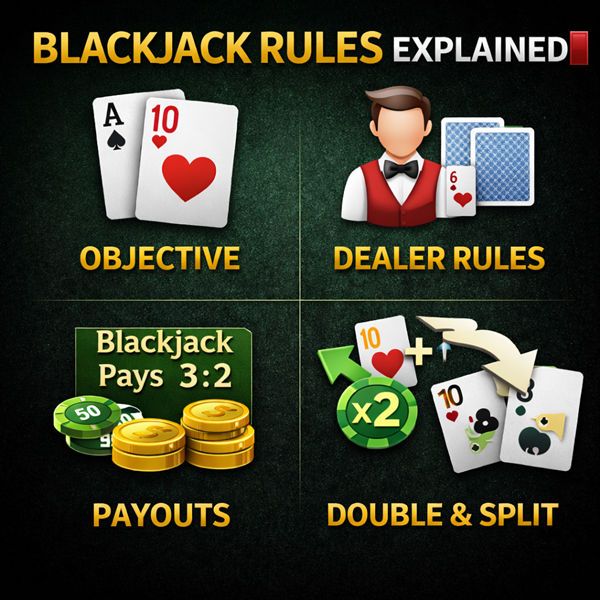
🎯 The Objective of Blackjack (Simple, but Often Misunderstood)
The goal of blackjack is not to beat other players at the table. It’s not even to get 21. The objective is simple:
Beat the dealer’s hand without going over 21.
You can do this by:
- Having a higher total than the dealer
- The dealer busting (going over 21)
- Getting a blackjack (an Ace + a 10-value card)
This matters because many bad decisions come from players trying to “play against the table” instead of the dealer — something blackjack rules never reward.
🂡 Card Values and Hand Totals
Understanding card values is basic, but the flexibility of the Ace is where many new players get confused.
- Cards 2–10 are worth face value
- Face cards (Jack, Queen, King) are worth 10
- Aces are worth 1 or 11, whichever benefits the hand
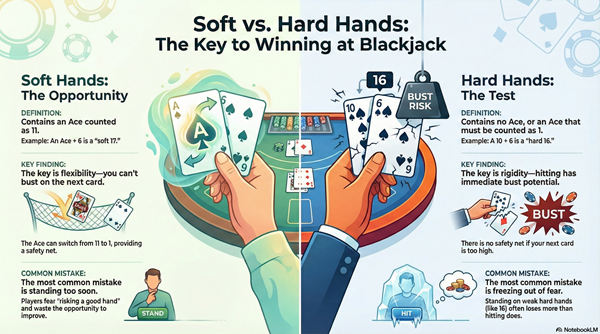
This flexibility creates two types of hands:
- Hard hands (no Ace counted as 11)
- Soft hands (Ace counted as 11)
Most strategy errors happen when players don’t recognize which type of hand they have.
🃏 The Dealer’s Rules (They Don’t Get Choices)
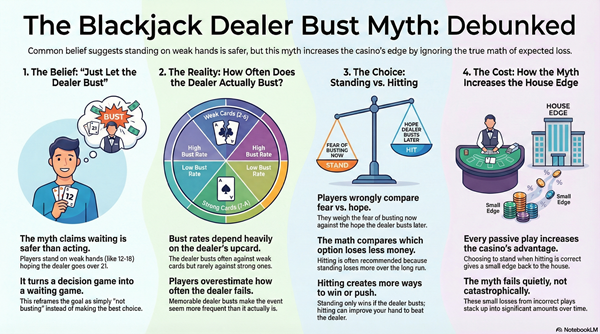
One major advantage the casino has is that the dealer follows fixed rules. They don’t think, adapt, or make judgment calls.
Dealers must:
- Hit until reaching at least 17
- Stand on 17 or higher
However, this is where a critical rule variation appears:
🟢 Stand on Soft 17 (S17)
The dealer stands on A-6.
🔴 Hit on Soft 17 (H17)
The dealer hits A-6.
This single rule change increases the house edge and directly affects basic strategy decisions. Many casual players never notice which rule is in effect — and pay for it over time.
💰 Blackjack Payout Rules (Where Many Players Lose Value)
The best possible starting hand in blackjack is a natural blackjack — an Ace and a 10-value card.
However, payout rules vary:
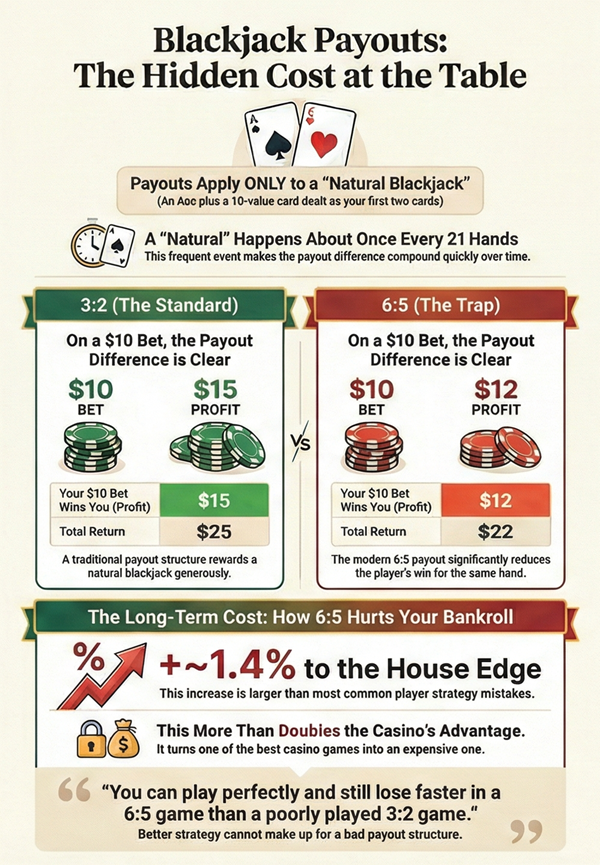
- 3:2 payout (standard and player-friendly)
- 6:5 payout (heavily favors the casino)
A 6:5 table increases the house edge dramatically, even if everything else looks good. This rule alone is enough to make many tables unplayable for anyone who understands the math.
If you take only one rule lesson seriously, let it be this:
Avoid 6:5 blackjack tables whenever possible.
➕ Doubling Down Rules
Doubling down allows the player to double their bet in exchange for committing to stand after receiving one more card.
Rule variations include:
- Doubling on any two cards
- Doubling only on totals of 9–11
- Doubling after splitting (DAS) allowed or not
These details matter because basic strategy assumes specific doubling permissions. Restrictive doubling rules increase the house edge and reduce the effectiveness of otherwise strong hands.
🔀 Splitting Pairs (And Why the Rules Matter)
When dealt two cards of the same value, players may have the option to split them into two separate hands.
Key rule variations include:
- Which pairs can be split
- Whether re-splitting is allowed
- Whether splitting Aces allows only one card per Ace
Splitting rules dramatically affect optimal play. For example, splitting Aces is one of the strongest moves in blackjack — unless the table restricts what you can do afterward.
🚪 Surrender Rules (The Most Ignored Option)
Surrender allows a player to forfeit half their bet and end the hand immediately.
There are two types:
- Late surrender (most common)
- Early surrender (rare and very player-friendly)
Surrender is not a sign of weakness. It’s a mathematically optimal escape in certain high-risk situations. Many players never use it simply because they don’t understand when it’s allowed.
🧠 Why Rules Matter More Than Systems
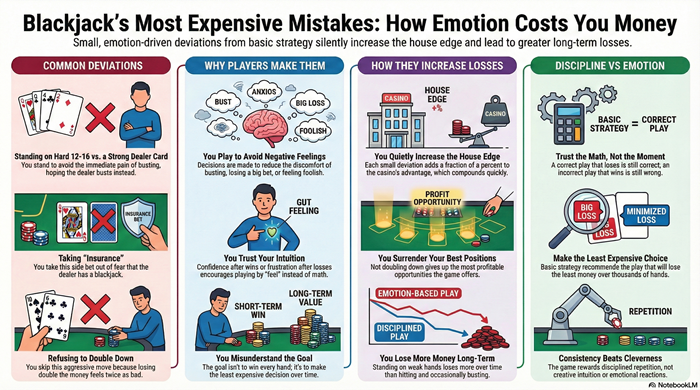
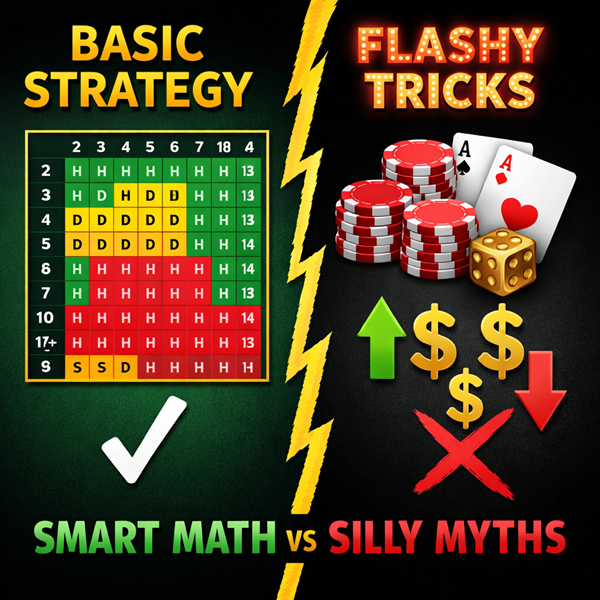
Most blackjack players obsess over systems, betting patterns, and seat position while completely ignoring table rules. This is backwards.
Rules determine:
- The house edge
- Which strategy chart is correct
- How effective doubling and splitting are
- Whether the game is even worth playing
As shown in our Blackjack Basic Strategy pillar page, optimal decisions are built on rule assumptions. Change the rules, and the correct play changes with them.
No system can fix a bad ruleset.
🏛️ Table Limits and Why They’re Not Just About Bankroll
Minimum and maximum bets are not neutral features. They shape player behavior and interact with betting systems in dangerous ways.
Low minimums help disciplined players. Low maximums protect the casino by preventing recovery during winning streaks. This is one reason betting systems fail so consistently — table limits quietly break them.
📌 Online vs Live Dealer Rule Differences
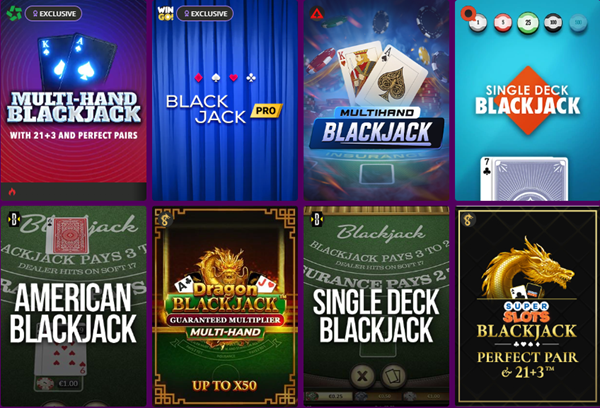
Online blackjack often looks identical to casino blackjack, but rule differences are common:
- Fewer decks
- Faster dealing
- No physical shuffle
- Sometimes worse payout rules
Always check the rule panel before assuming a game is favorable. Visual familiarity does not guarantee mathematical fairness.
🔚 Final Thoughts: Know the Rules or Pay for Them
Blackjack is one of the most transparent casino games — but only if you know what to look for. The rules are not decoration. They are the engine that determines how much the game costs you over time.
Before learning strategy charts, before rejecting systems, and before worrying about discipline, players should understand the game they’re actually playing.
The casino already knows the rules.
The smart player does too.
🔗 Recommended Internal Links