
Why Baccarat Betting Systems Fail Mathematically
This article is part of our complete guide on How Baccarat Really Works: Odds, House Edge, and Why Systems Fail, which explains baccarat odds, house edge, card structure, and why betting systems fail.
This article explains why no betting system can overcome baccarat’s mathematics, regardless of progression, timing, or pattern interpretation. It does not discuss how to wager, which outcomes to choose, or how to manage money. Its purpose is to show, step by step, why systems fail at the level of probability and expectation.
What Is Meant by a “Betting System”
A betting system is a set of rules that determines when wagers are placed and how their size changes over time. In baccarat, systems commonly rely on one or more of the following ideas:
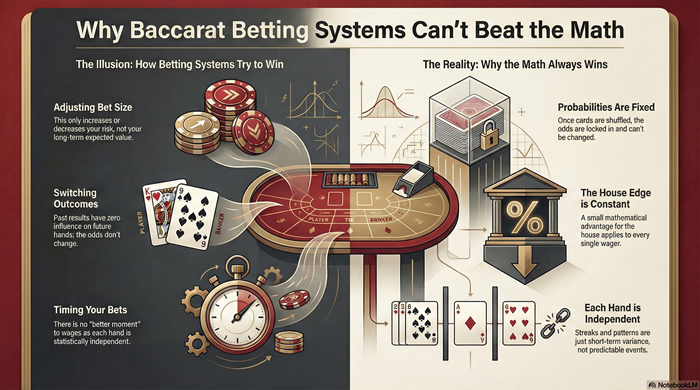
- Adjusting wager size after wins or losses
- Switching outcomes based on recent results
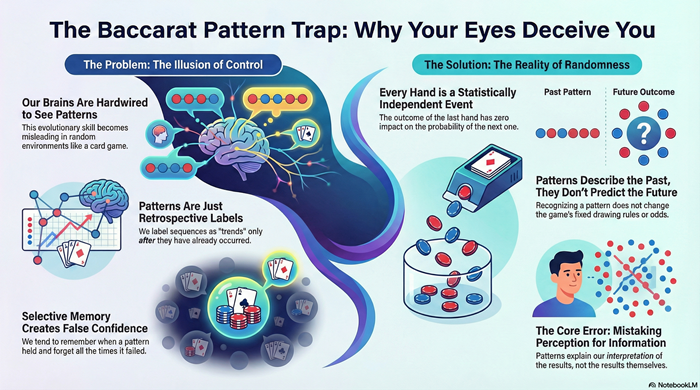
- Responding to perceived streaks or patterns
These systems differ in presentation but share the same mathematical objective: to alter results without changing the game’s rules.
The Fixed Mathematics of Baccarat
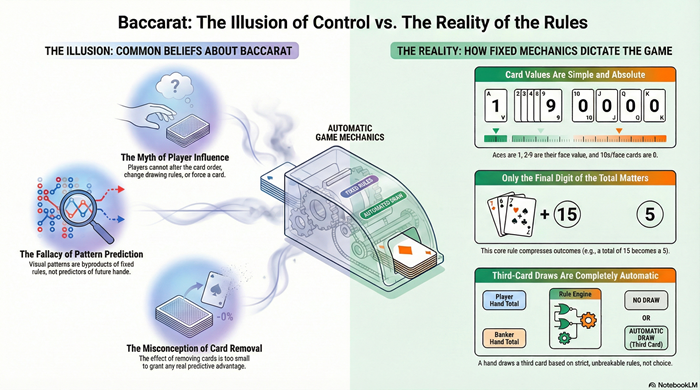
Baccarat’s core mathematics are invariant. Once the cards are shuffled and the rules are set, the game’s probabilities and expected values are fully determined.
Key properties that do not change:
- Outcome probabilities are fixed by the rules
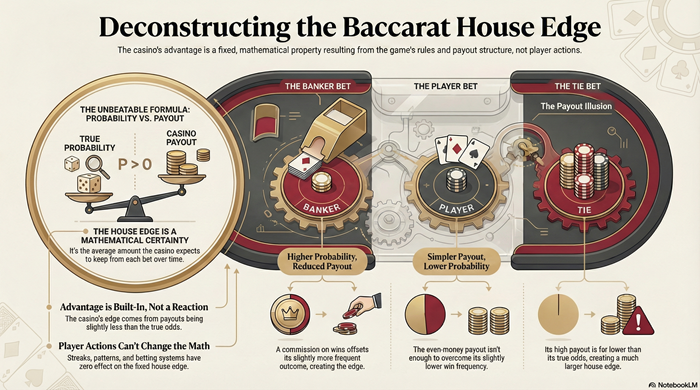
- House edge applies to every qualifying wager
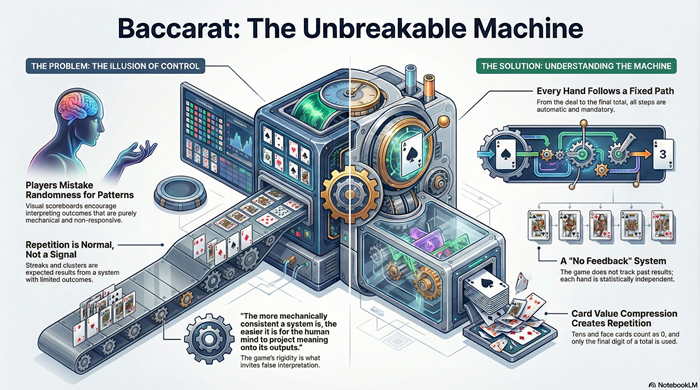
- Each hand is statistically independent
Because these properties are constant, no external structure can modify them.
Why Changing Bet Size Cannot Change Expected Value
Expected value in baccarat scales linearly with wager size. Doubling a wager doubles the expected gain or loss; halving a wager halves it.
This relationship means:
- Larger bets increase variance, not advantage
- Smaller bets reduce exposure, not expectation
- Sequences of bets do not compound value
Progressions redistribute outcomes over time, but they do not improve the underlying expectation.
Why Outcome Switching Does Not Alter Probability
Some systems attempt to improve results by switching between outcomes based on recent history. This approach assumes that probability shifts with prior outcomes.
In baccarat:
- Outcomes do not become more likely after appearing or disappearing
- The probability of each outcome is unaffected by sequence
- Past results provide no forward influence
Switching outcomes changes only what is wagered, not how the game behaves.
The Role of Variance in System Illusions
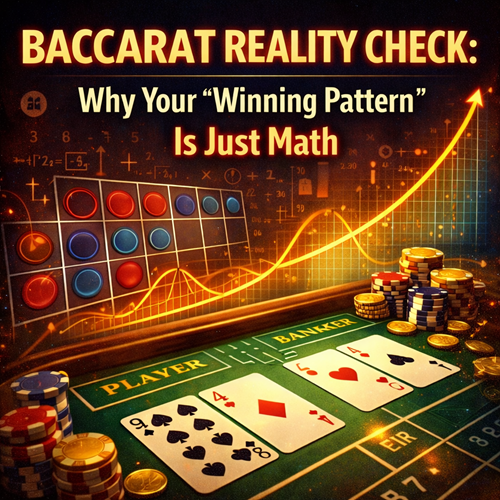
Short-term variance can make systems appear effective. Clusters of favorable outcomes can coincide with a system’s rules, producing temporary gains.
These gains occur because:
- Variance allows deviations from expectation
- Systems select portions of randomness retroactively
- Losses are deferred, not removed
Over time, variance diminishes relative to expectation, and the house edge reasserts itself.
Why Timing-Based Systems Fail
Timing-based systems attempt to identify “better moments” to wager. This relies on the assumption that probability fluctuates within a session.
Baccarat offers no such fluctuation:
- Each hand is resolved independently
- No corrective mechanism exists
- The house edge applies uniformly
Waiting, accelerating, or pausing wagers does not alter expected outcomes.
Why Systems Cannot Combine to Create an Edge
Some approaches layer multiple ideas—progression plus outcome switching plus timing. Combining systems increases complexity but does not change the math.
Because each component fails independently, their combination fails collectively. Complexity can disguise losses, but it cannot eliminate expectation.
What Betting Systems Can and Cannot Do
Betting systems can:
- Change the distribution of wins and losses
- Increase or decrease volatility
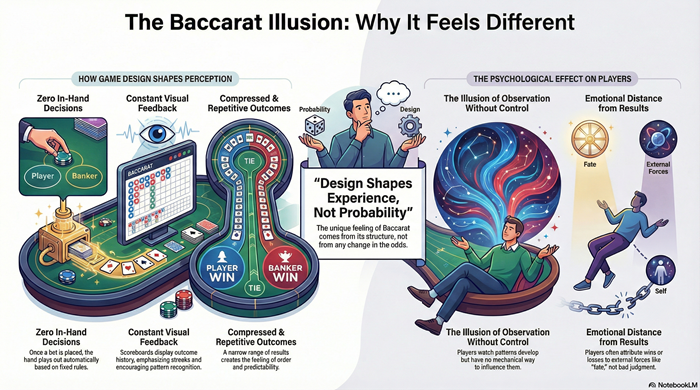
- Affect how results feel psychologically
Betting systems cannot:
- Alter outcome probability
- Reduce house edge
- Create positive expected value
Understanding this boundary clarifies why systems persist despite consistent failure.
Conclusion: Systems Fail at the Mathematical Level
Baccarat betting systems fail not because they are poorly executed, but because they attempt to change properties of the game that are fixed.
No wager size, sequence, or timing method can convert a negative expectation into a positive one without altering the rules. The mathematics apply uniformly, regardless of structure or belief.